


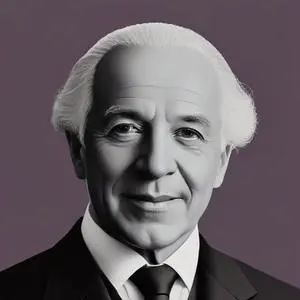
The 7th Prime Minister of Canada, a champion of national unity and French-English relations, who navigated the country through significant industrial and economic growth. He's also known for his role in shaping Canada's autonomy from Britain.
Wilfrid Laurier, the seventh Prime Minister of Canada, is renowned for his unwavering commitment to bridging the linguistic and cultural divide between English and French Canada. His remarkable 15-year tenure, from 1896 to 1911, remains the longest uninterrupted term of office among Canadian prime ministers, cementing his status as a unifying force in Canadian politics.
Born on November 20, 1841, in Saint-Lin, Quebec, Laurier was destined for greatness. He studied law at McGill University and practiced as a lawyer before entering politics in 1871, when he was elected to the Legislative Assembly of Quebec. His dedication to public service earned him a seat in the Canadian House of Commons in 1874, where he would serve for an unprecedented 45 years.
Laurier's oratory prowess and commitment to French Canadian rights earned him a large following among Quebecers. He became the leader of the Liberal Party in 1887, positioning himself as a strong advocate for bilingualism and federalism. Although defeated in the 1891 federal election, Laurier's popularity continued to grow, ultimately propelling him to victory in 1896.
The genesis of Laurier's prime ministership was the Manitoba Schools Question, a contentious issue sparked by the Manitoba government's decision to eliminate funding for Catholic schools. Laurier's compromise – allowing Catholic students to receive a Catholic education on a school-by-school basis – was met with both praise and criticism. Despite the controversy, his solution earned him the nickname "The Great Conciliator" for his ability to find common ground between English and French Canada.
During his tenure as prime minister, Laurier implemented numerous reforms, including the establishment of the Royal Canadian Mint and the creation of the Department of Labour. He also played a crucial role in shaping Canada's foreign policy, particularly in relation to the British Empire. Laurier's leadership was marked by a commitment to compromise and cooperation, earning him a special place in Canadian history.
Laurier's legacy extends far beyond his time in office. He played a pivotal role in shaping Canada's identity as a bilingual and multicultural nation. His commitment to compromise and cooperation has inspired generations of Canadian politicians, ensuring his influence continues to be felt in modern Canadian politics.
"Canada is free, and freedom is its nationality."
"The 19th century was the century of the United States. I think we can claim that it is Canada that shall fill the 20th century."
Wilfrid Laurier's remarkable career and enduring legacy have cemented his place as one of Canada's most revered leaders. His commitment to bilingualism, federalism, and compromise has left an indelible mark on Canadian politics, ensuring his influence will be felt for generations to come.
Born in 1815
The first Prime Minister of Canada, a key figure in the country's formation and development, known for shaping its early years and creating a unified nation.
92 Years Old
The 20th Prime Minister of Canada, serving from 1993 to 2003, known for his leadership during the Quebec sovereignty movement and his role in shaping Canada's national unity. He implemented policies like the Clarity Act and the National Child Benefit.
Born in 1919
The charismatic leader who championed Canadian unity and implemented progressive policies, known for his iconic style and influential legacy in shaping modern Canada.
Born in 1882
The 12th Prime Minister of Canada, a strong leader who played a crucial role in shaping the country's post-war economy and foreign policy, and is credited with establishing universal hospital insurance and old-age pensions.
Born in 1874
The tenth Prime Minister of Canada, serving for a record 22 years, is most known for leading the country through significant periods of economic and social change, including the Great Depression and World War II.
79 Years Old
The first and only female Prime Minister of Canada, serving for a brief four months in 1993, known for her efforts to reform the country's justice system. She was also a strong advocate for women's rights and gender equality.
97 Years Old
The 17th Prime Minister of Canada, serving from 1984 to 1985, is most known for his brief tenure and struggles to maintain party unity. He's also recognized for his prior role as Minister of Justice, where he introduced significant reforms.
45 Years Old
American professional ice hockey player who won two Stanley Cup championships and was a four-time NHL All-Star. Known for his rugged defensive play and physical presence on the ice.
