


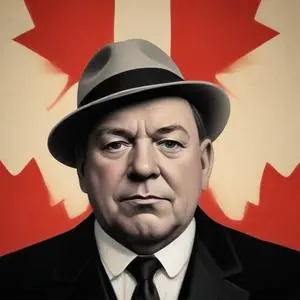
The tenth Prime Minister of Canada, serving for a record 22 years, is most known for leading the country through significant periods of economic and social change, including the Great Depression and World War II.
William Lyon Mackenzie King, the tenth Prime Minister of Canada, is renowned for leading the country through some of its most tumultuous periods, including the Great Depression and World War II. With a record-breaking 21 years and 154 days in office, he remains the longest-serving prime minister in Canadian history, leaving an indelible mark on the nation's trajectory.
Born on December 17, 1874, in Berlin, Ontario (now Kitchener), King's fascination with politics and social welfare began at an early age. He pursued higher education, studying law and political economy in the 1890s, and eventually earned a PhD – a distinction unmatched by any other Canadian prime minister.
King's career in politics began in 1900, when he became the deputy minister of the Canadian government's new Department of Labour. He entered the House of Commons in 1908 and later became the federal minister of labour in 1909 under Prime Minister Wilfrid Laurier. Although he lost his seat in the 1911 federal election, King continued to work for the Rockefeller Foundation and as an industrial consultant, honing his skills and preparing for future leadership roles.
Following the death of Laurier in 1919, King assumed the leadership of the Liberal Party, inheriting a fractured party torn apart by the Conscription Crisis of 1917. Through his diplomatic efforts, he successfully unified both the pro-conscription and anti-conscription factions, leading the party to victory in the 1921 federal election.
As prime minister, King established a post-war agenda that lowered wartime taxes, moderately reduced tariffs, and developed the national capital, Ottawa. He strengthened Canadian autonomy by refusing to support Britain in the Chanak Crisis without Parliament's consent and negotiating the Halibut Treaty with the United States without British interference. King's leadership during World War II played a crucial role in shaping Canada's international reputation as a middle power fully committed to world order.
King's legacy extends to the establishment of the Canadian welfare state. He introduced policies that paved the way for social security measures, such as old-age pensions, and expanded the role of government in addressing social and economic issues. His commitment to social welfare reform continues to inspire generations of Canadians.
King's personal life was marked by his deep spirituality and interest in the occult. He was known for his introspective nature and kept a diary throughout his life, which has since been published. Despite his strong leadership, King was not without his eccentricities – he was often seen communicating with his deceased mother and brothers, seeking guidance and wisdom.
William Lyon Mackenzie King's profound influence on Canadian history is undeniable. His leadership during times of crisis, his commitment to social welfare, and his role in shaping Canada's international reputation have left a lasting legacy. As the longest-serving prime minister in Canadian history, King's impact continues to be felt, inspiring future generations of Canadians to strive for greatness.
In conclusion, William Lyon Mackenzie King's remarkable life and legacy continue to captivate Canadians and inspire future leaders. His unwavering commitment to social welfare, his diplomatic prowess, and his unrelenting dedication to Canada's growth and development have cemented his place as one of the nation's most revered statesmen.
Born in 1795
A Scottish-Canadian journalist and politician who played a key role in the Upper Canada Rebellion and later became the first mayor of Toronto, known for his advocacy of democratic reforms. He's a significant figure in Canadian history, particularly in the country's struggle for independence and self-governance.
Born in 1815
The first Prime Minister of Canada, a key figure in the country's formation and development, known for shaping its early years and creating a unified nation.
Born in 1882
The 12th Prime Minister of Canada, a strong leader who played a crucial role in shaping the country's post-war economy and foreign policy, and is credited with establishing universal hospital insurance and old-age pensions.
Born in 1897
A Canadian leader who served as Prime Minister and won the Nobel Peace Prize for resolving the Suez Canal Crisis, known for his diplomatic efforts and peacekeeping initiatives.
Born in 1919
The charismatic leader who championed Canadian unity and implemented progressive policies, known for his iconic style and influential legacy in shaping modern Canada.
92 Years Old
The 20th Prime Minister of Canada, serving from 1993 to 2003, known for his leadership during the Quebec sovereignty movement and his role in shaping Canada's national unity. He implemented policies like the Clarity Act and the National Child Benefit.
45 Years Old
American professional ice hockey player who won two Stanley Cup championships and was a four-time NHL All-Star. Known for his rugged defensive play and physical presence on the ice.
54 Years Old
The 23rd Prime Minister of Canada, known for his progressive policies and charismatic leadership, has been a prominent figure in Canadian politics since 2015. He has been a strong advocate for climate action, diversity, and inclusion.
