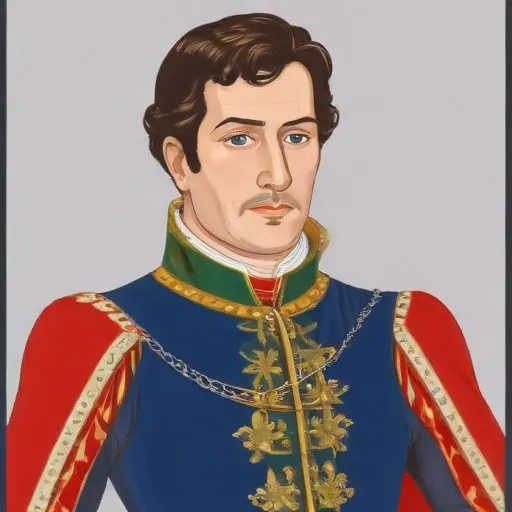
Louis II, Duke of Bavaria: The Resilient Ruler of Upper Bavaria
A Life of Power and Controversy
Louis II, Duke of Bavaria, also known as Louis the Strict, was a dominant figure in 13th-century German politics. He is renowned for his unwavering determination and unrelenting pursuit of power, which earned him a reputation as a formidable leader in the medieval era.
Early Life and Family
Born on April 13, 1229, in Heidelberg, Louis was the son of
Otto II Wittelsbach, Duke of Bavaria, and Agnes of the Palatinate. His family's rich heritage and influential connections set the stage for his future rise to power.
Rise to Power
In 1246, the young Louis supported his brother-in-law, King
Conrad IV of Germany, against the usurpation of Heinrich Raspe. This early display of loyalty and strategic thinking paved the way for his future success. Following his father's death in 1253, Louis succeeded him as Duke of Bavaria, a position that granted him significant authority and influence.
Divided Loyalties and Conflicts
The Wittelsbach country was divided among Otto's sons in 1255, with Louis receiving the Palatinate and Upper Bavaria, while his brother, Duke Henry XIII of Bavaria, received Lower Bavaria. This partition sparked controversy and tension between the brothers, who frequently clashed over territorial control.
The German Interregnum and Royal Elections
During the German interregnum, which followed King William's death in 1256, Louis supported King Richard of Cornwall. As one of the Prince-electors of the empire, he played a crucial role in the royal elections for nearly four decades. His involvement in these elections often led to tense rivalries and shifting alliances.
Conflict and Excommunication
Louis's support for his young Hohenstaufen nephew, Conradin, in his duchy of Swabia, led to his excommunication by the pope in 1266. This dramatic turn of events was a testament to the complex web of loyalties and rivalries that defined Louis's life.
Legacy and Impact
Despite the turmoil that characterized his reign, Louis II left an indelible mark on the history of Bavaria. His unwavering determination, strategic thinking, and ability to navigate complex power dynamics cemented his position as a formidable leader of the medieval era.
Personal Milestones and Key Life Events
- 1246: Supported King Conrad IV of Germany against Heinrich Raspe
- 1251: Went to war against the bishop of Regensburg
- 1253: Succeeded his father as Duke of Bavaria
- 1255: Partition of the Wittelsbach country among Otto's sons
- 1256: Supported King Richard of Cornwall during the German interregnum
- 1266: Excommunicated by the pope for supporting Conradin
Inspirational Quotes
"A true leader must be willing to take risks and face challenges head-on. Anything less is a dereliction of duty."
Historical Context and Legacy
Louis II's life and reign serve as a testament to the complex, often treacherous, nature of medieval politics. His legacy, marked by both triumph and controversy, continues to fascinate historians and scholars alike.
FAQ
What was Louis II, Duke of Bavaria, known for during his reign?
Louis II, Duke of Bavaria, was known for his eccentric behavior and his love of architecture and art. He commissioned several grand buildings and projects during his reign, including the Neuschwanstein Castle and the Herrenchiemsee Palace.
What was the relationship between Louis II, Duke of Bavaria, and Richard Wagner?
Louis II, Duke of Bavaria, was a patron and friend of Richard Wagner, and the two men had a close relationship. Wagners opera Parsifal was even dedicated to Louis II.
How did Louis II, Duke of Bavaria, die?
Louis II, Duke of Bavaria, died under mysterious circumstances in 1886. He was found drowned in Lake Starnberg, and it is still unclear whether his death was an accident or a suicide.
What legacy did Louis II, Duke of Bavaria, leave behind?
Louis II, Duke of Bavaria, left behind a legacy of grand architectural projects and a love of art and music. He is still remembered today as the Fairy Tale King of Bavaria.
What was the impact of Louis II, Duke of Bavaria, on the Kingdom of Bavaria?
Louis II, Duke of Bavaria, had a significant impact on the Kingdom of Bavaria, modernizing infrastructure and promoting tourism in the region. He also strengthened the Bavarian economy and promoted the arts and culture.