


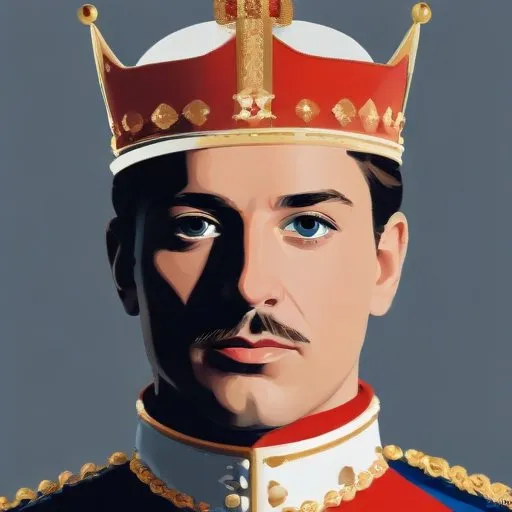
Ruler of Monaco from 1922 to 1949, he modernized the country, introduced a constitution, and promoted tourism. He's also known for his philandering and scandals.
Louis II, Prince of Monaco, is renowned for transforming the principality into a cultural and economic hub, earning him the nickname "The Builder Prince." During his reign from 1922 to 1949, he implemented various reforms, invested in education, and promoted tourism, cementing Monaco's status as a luxurious destination.
Born on July 12, 1870, in Baden-Baden, Germany, Louis II was the only child of Albert I, Prince of Monaco, and Lady Mary Victoria Hamilton. His early life was marked by his parents' tumultuous marriage, which ended in annulment in 1880. Louis was raised in Germany by his mother and stepfather, Count Tassilo Festetics von Tolna.
At the age of 11, Louis returned to Monaco to begin his training for future princely duties. He went on to attend the French national military college, Saint-Cyr, and later served with the French Foreign Legion and the Chasseurs d'Afrique regiment in Algeria.
Upon his father's death in 1922, Louis II ascended to the throne, determined to modernize and develop Monaco. He oversaw the construction of roads, schools, hospitals, and luxury hotels, earning him recognition as a visionary leader.
One of his most notable achievements was the establishment of the Monaco Oceanographic Museum, which showcased the principality's commitment to marine science and conservation. Louis II also supported the arts, attracting prominent artists and intellectuals to Monaco, and founding the Monte Carlo Philharmonic Orchestra.
Louis II's personal life was marked by controversy, particularly his relationship with Marie Juliette Louvet, a cabaret singer. Despite his father's disapproval, Louis pursued a romantic relationship with Juliette, who was already a mother of two. Although the couple never married, Juliette remained a significant figure in Louis's life.
Louis II's reign had a profound impact on Monaco, transforming it into a thriving economy and cultural hub. He played a crucial role in shaping the country's modern identity and solidifying its position as a luxury tourist destination.
Honoring his legacy, the Louis II Stadium, a prominent sports venue in Monaco, was named in his honor. Additionally, the Prince Louis II medal, established in 1945, recognizes outstanding achievements in various fields, including science, arts, and philanthropy.
Louis II's reign coincided with significant global events, including World War I and the rise of fascism in Europe. Despite these challenges, he maintained Monaco's neutrality and independence, ensuring the principality's continued prosperity.
Louis II's legacy extends beyond Monaco's borders, inspiring future generations of leaders to invest in education, culture, and innovation. His commitment to modernizing and developing his country has left a lasting impact on the world.
Born in 1923
The ruler of Monaco from 1949 to 2005, known for modernizing and expanding the country's economy, and marrying American actress Grace Kelly. He brought international attention and glamour to the small principality.
68 Years Old
The ruler of Monaco, known for his philanthropic efforts and commitment to environmental conservation, particularly in the areas of marine biology and sustainable development.
69 Years Old
Heir to the Monaco throne and philanthropist, known for her humanitarian work and elegant style.
