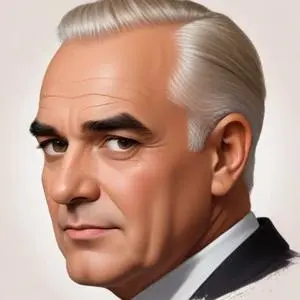
Rainier III, Prince of Monaco: The Architect of Monaco's Transformation
A Visionary Ruler and Economic Reformer
Rainier III, Prince of Monaco, is renowned for transforming the Principality of Monaco from a small, casino-dependent economy to a thriving tax haven and cultural destination. During his 56-year reign from 1949 to 2005, Rainier implemented significant constitutional reforms, limiting the powers of sovereign rule and paving the way for Monaco's modern prosperity.
Early Life and Education
Born on May 31, 1923, at the Princes Palace of Monaco, Rainier was the only son of Hereditary Princess Charlotte and Prince Pierre. He was the first native-born prince since Honor IV in 1758. Rainier's mother, Charlotte, was the only child of
Louis II, Prince of Monaco, and his lover, Marie Juliette Louvet, and was legitimised through formal adoption.
Rainier received his education in England, attending Summerfields in St Leonards-on-Sea, Sussex, and later Stowe School in Buckinghamshire. He then studied at the Institut Le Rosey in Rolle and Gstaad, Switzerland, before earning a Bachelor of Arts degree from the University of Montpellier in France in 1943.
A Fairytale Romance and Royal Marriage
Rainier's marriage to American film star
Grace Kelly in 1956 captivated the world's attention. The union produced three children: Caroline, Albert, and Stephanie. This iconic royal marriage not only brought glamour to the Monaco throne but also helped to boost the principality's international reputation.
Reform and Modernization
Rainier's visionary leadership transformed Monaco's economy, shifting its reliance on casino gambling to a diverse range of industries, including tourism, finance, and real estate. He also oversaw the reform of Monaco's constitution, introducing checks and balances on the monarch's power and ensuring the country's stability.
Personal Milestones and Key Life Events
- 1956: Married American actress Grace Kelly, cementing a legendary royal romance
- 1958: Signed a treaty with France, solidifying Monaco's sovereignty and independence
- 1962: Implemented constitutional reforms, limiting the powers of the monarch
- 1963: Opened the Monaco Grand Prix, solidifying the principality's reputation as a hub for motorsports
- 2005: Passed away on April 6, succeeded by his son, Albert II
Legacy and Impact
Rainier III's enduring legacy lies in his transformation of Monaco into a thriving, modern nation. His economic reforms and constitutional changes have ensured the country's stability and prosperity, while his royal marriage to Grace Kelly continues to captivate the world's imagination. As the longest-reigning monarch in Monaco's history, Rainier III will be remembered as a visionary leader who shaped the course of his country's history.
FAQ
What was Rainier IIIs role in Monacos development?
Rainier III, Prince of Monaco, played a crucial role in modernizing and developing Monaco, transforming it into a prosperous and popular tourist destination.
Who did Rainier III marry?
Rainier III married American actress Grace Kelly in 1956, and they had three children together, including the current ruler of Monaco, Prince Albert II.
What were Rainier IIIs interests?
Rainier III was interested in philanthropy, sports, and the environment. He established the Princely Governments Department of the Environment and founded the Monaco Red Cross.
How did Rainier IIIs reign impact Monacos economy?
Rainier IIIs reign saw significant economic growth in Monaco, driven by his initiatives to develop the countrys infrastructure, tourism, and financial sector.
What is Rainier IIIs legacy?
Rainier IIIs legacy is that of a visionary leader who transformed Monaco into a modern, prosperous state while maintaining its independence and sovereignty.