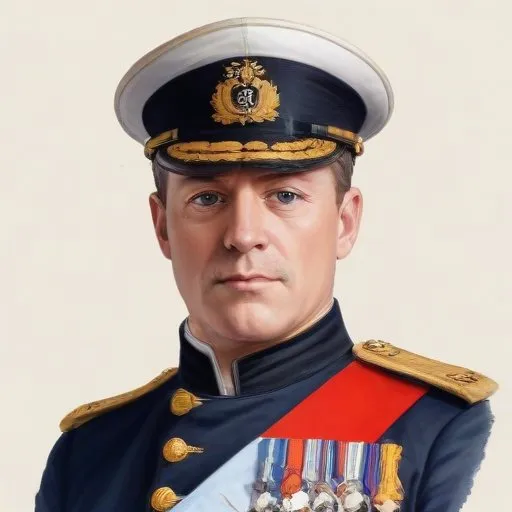
Louis Le Bailly: The Illustrious Royal Navy Officer and Writer
A Leader in Naval Intelligence and Beyond
Louis Le Bailly is renowned for his exceptional service as a Royal Navy officer, culminating in his role as Director-General of Intelligence at the Ministry of Defence. This distinguished career was followed by his successful stint as a writer, cementing his legacy as a multifaceted individual.
Early Life and Naval Career
Born on July 18, 1915, Le Bailly was the son of Robert Francis Le Bailly and Ida Gaskell Le Bailly (née Holland). He attended the Britannia Royal Naval College in Dartmouth from 1929 to 1932 and later served as a midshipman on HMS Hood. After completing his engineering training at the Royal Naval Engineering College in Keyham, he rejoined HMS Hood as an engineer lieutenant.
Wartime Service and Heroism
During World War II, Le Bailly served on HMS Naiad, surviving the ship's sinking in 1942. He later joined the battleship HMS Duke of York, where he was present at the Japanese surrender. These experiences would shape his future roles in naval intelligence.
After the war, Le Bailly held various positions at the Admiralty, including Assistant Engineer-in-Chief and Naval Assistant to the Controller of the Navy. He served as Deputy Director of Marine Engineering, Naval Attaché, and Head of the Royal Navy Staff in Washington, D.C. In 1971, he became the Deputy Chief of Defence Staff Intelligence before retiring from the Royal Navy in 1972.
Directorgeneral of Intelligence and Later Life
Le Bailly's post-retirement appointments included Director-General of Intelligence at the Ministry of Defence (1972) and Vice-Chairman of the Institute for the Study of Conflict. He also chaired the Civil Service Selection Board. In his later years, he became an avid letter writer, penning pieces for newspapers such as The Times and The Daily Telegraph on topics ranging from British withdrawal from the European Union to more whimsical matters.
Legacy and Impact
Throughout his remarkable career, Le Bailly demonstrated unwavering dedication to his country and profession. His contributions to naval intelligence and his post-war appointments solidified his position as a respected figure in British history. As a writer, he continued to share his insights and perspectives, leaving behind a lasting legacy.
Personal Milestones and Achievements
- Appointed Knight Commander of the Order of the British Empire (KBE) in 1971
- Received the Companion of the Order of the Bath (CB)
- Led a campaign to rename a local pub in St Tudy, Cornwall, after William Bligh, who was born in the village
Conclusion
Louis Le Bailly's remarkable career spanned naval service, intelligence, and writing. His dedication to his country, profession, and personal passions has left an indelible mark on British history. As we reflect on his achievements, we are reminded of the power of service, leadership, and a lifelong commitment to making a difference.
FAQ
What were the notable naval battles fought by Louis Le Bailly?
Louis Le Bailly fought in several notable naval battles, including the Battle of the Nile and the Battle of Trafalgar, where he played a crucial role in the British Royal Navys victories.
What were Louis Le Baillys contributions to the development of the British Royal Navy?
Le Baillys contributions to the British Royal Navy were instrumental in shaping its modernization and growth. He introduced new tactical maneuvers and strategies that improved the navys performance in battles.
How did Louis Le Bailly rise through the ranks in the British Royal Navy?
Le Baillys rise through the ranks was rapid, thanks to his exceptional leadership skills and bravery in battle. He was promoted to commander and later to captain, serving on several ships, including the HMS Victory.
What were Louis Le Baillys most notable awards and honors?
Le Bailly received several awards and honors for his service, including the Knight Commander of the Order of the Bath and the Naval Gold Medal.
What is Louis Le Baillys legacy in modern naval history?
Le Baillys legacy in modern naval history is that of a pioneering naval officer who shaped the course of the British Royal Navys development and success.