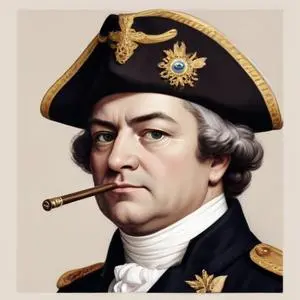
William Bligh: The British Naval Officer Behind the Infamous Mutiny
William Bligh is best known for being the commander of the HMS Bounty during the infamous mutiny of 1789, one of the most dramatic and intriguing events in British naval history. This mutiny, which saw Bligh and his loyal crew members set adrift in a small boat, has been the subject of numerous books, films, and plays, cementing Bligh's place in the annals of history.
A Life at Sea
Born on September 9, 1754, Bligh's early life is shrouded in mystery, with his exact birthplace unknown. However, it is believed that he was born in Plymouth, Devon, where his father, Francis, was a customs officer. Bligh's mother, Jane Pearce, was a widow who married Francis at the age of 40. At the tender age of seven, Bligh was signed up for the Royal Navy, a common practice for young gentlemen seeking to gain experience at sea.
Rise Through the Ranks
Bligh's naval career was marked by a series of rapid promotions. In 1770, at the age of 16, he joined the HMS Hunter as an able seaman, before becoming a midshipman the following year. In 1776, he was selected to serve on the HMS Resolution, one of the ships that accompanied
James Cook on his third voyage of discovery to the Pacific.
The Mutiny on the HMS Bounty
In 1787, Bligh was appointed commander of the HMS Bounty, a ship tasked with collecting breadfruit plants from Tahiti and transporting them to the West Indies. The voyage was marked by tension and conflict between Bligh and his crew, with some crew members growing resentful of Bligh's strict discipline and harsh punishments. On April 28, 1789, a group of 18 mutineers, led by
Fletcher Christian, seized control of the ship and set Bligh and his loyal crew members adrift in a small boat.
The Epic Journey
With minimal supplies and no charts, Bligh and his men embarked on an epic 47-day journey, covering over 3,618 nautical miles to reach the Dutch colony of Timor. During this time, they suffered from exposure, hunger, and exhaustion, but Bligh's navigational skills and leadership ensured their survival.
Governor of New South Wales
In 1806, Bligh was appointed Governor of New South Wales in Australia, with orders to stamp out the corrupt rum trade that had plagued the colony. However, his attempts to reform the trade led to the Rum Rebellion, during which he was deposed from his command and placed under arrest.
Legacy
Despite the controversies surrounding his career, Bligh's legacy is marked by his bravery, navigational skills, and dedication to duty. He died on December 7, 1817, at the age of 63, leaving behind a complex and intriguing legacy that continues to captivate historians and the general public alike.
Fun Facts
- Bligh's ancestral home, Tinten Manor, is located in St Tudy, near Bodmin, Cornwall.
- Bligh's navigational skills were so renowned that he was able to navigate the HMS Bounty back to England after the mutiny.
- Bligh's wife, Elizabeth Betham, was a strong supporter of his career, and the couple had six children together.
Quote
"I am now the happiest man in the world, and I attribute my happiness to my having been thrown out of the Bounty." - William Bligh
FAQ
What was William Blighs role in the Mutiny on the Bounty?
William Bligh was the commander of the HMS Bounty during the infamous mutiny in 1789. He was set adrift in a small boat with 18 loyal crew members and navigated over 3,500 miles to Timor, a Dutch colony in the East Indies.
What were William Blighs accomplishments as Governor of New South Wales?
During his tenure as the 4th Governor of New South Wales from 1806 to 1808, William Bligh implemented several reforms, including the establishment of a police force, a newspaper, and a court system. He also worked to reduce corruption and improve the colonys infrastructure.
What was William Blighs naval career like?
William Bligh had a long and distinguished naval career, serving in several wars and rising through the ranks to become a vice-admiral. He participated in the French Revolutionary Wars and the Napoleonic Wars, and was known for his bravery and seamanship.
Why was William Bligh court-martialed?
William Bligh was court-martialed in 1807 for his alleged role in the Rum Rebellion, a coup by the New South Wales Corps that overthrew him as Governor. Although he was acquitted, the incident damaged his reputation and led to his recall to England.
What is William Blighs legacy in Australian history?
William Bligh is a significant figure in Australian history, known for his role in shaping the early years of the colony. His legacy is complex, with some viewing him as a reformer and others as a strict disciplinarian. Despite this, he is widely recognized as a key figure in the countrys development.