


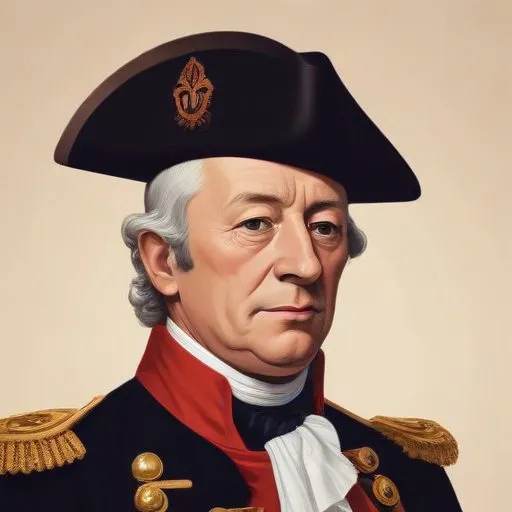
First Governor of New South Wales, establishing the British colony in Australia in 1788, and overseeing its early development. He played a crucial role in shaping the country's early history.
Arthur Phillip, a renowned British Royal Navy officer, etched his name in history as the first governor of New South Wales, laying the foundations for modern Australia. His pioneering spirit, diplomatic acumen, and innovative governance paved the way for the country's growth and development.
Born on October 11, 1738, Phillip's passion for the sea led him to enroll in the Greenwich Hospital School at the age of 13. He later apprenticed on the whaling ship Fortune, honing his sailing skills. The outbreak of the Seven Years' War against France prompted Phillip to join the Royal Navy as a captain's servant, serving on various ships, including HMS Buckingham, Union, and Stirling Castle.
Promoted to lieutenant in 1761, Phillip continued to serve in the Royal Navy, briefly taking on half-pay duties after the war. In 1774, he was seconded to the Portuguese Navy, participating in the war against Spain. He returned to the Royal Navy in 1778, commanding HMS Europa, with a mission to capture Spanish colonies in South America, although an armistice was concluded before he reached his destination.
In 1784, Phillip was employed by the Home Office to survey French defenses in Europe. This experience likely contributed to his subsequent appointment by Lord Sydney as the commander of the First Fleet, tasked with establishing a penal colony and settlement in New South Wales.
Setting sail with 11 ships and over 1,000 passengers, including convicts, soldiers, and free settlers, Phillip arrived in Botany Bay in 1788. However, he deemed the site unsuitable and sought a more habitable location, eventually establishing the settlement at Port Jackson, now Sydney, Australia.
Phillip's forward-thinking governance style recognized the need for a civil administration and a system for emancipating convicts. He worked tirelessly to establish a functional government, although his proposal to bring skilled tradesmen on the First Fleet was initially rejected.
Confronting immense problems with labor, discipline, and supply, Phillip remained committed to his vision. He believed in harmonious relations with the local indigenous peoples, emphasizing that everyone in the colony was a British citizen, entitled to the same rights and protections under the law.
Phillip's tenure as governor lasted until 1792, when he returned to England. During his time in Australia, he oversaw the establishment of the first European settlement, facilitated the exploration of the continent, and implemented policies that shaped the country's future.
Personally, Phillip married Margaret Johnston in 1788, and the couple had no children together. He was knighted in 1796 for his services to the empire and passed away on August 31, 1814, at the age of 75.
Arthur Phillip's pioneering spirit, leadership, and vision have had a lasting impact on Australia's development. His commitment to establishing a functional government, emancipating convicts, and fostering relations with indigenous peoples laid the groundwork for the country's growth and progress.
Today, Phillip is remembered as a founding figure in Australian history, with his legacy continuing to inspire generations. His story serves as a testament to the power of visionary leadership and the importance of harmonious coexistence with the environment and its original inhabitants.
These quotes capture the essence of Phillip's values and principles, which continue to resonate with Australians today.
In recognition of his contributions, Phillip was awarded the Knight Commander of the Order of the Bath in 1796.
Arthur Phillip's legacy is a testament to the complexities of colonialism, the power of visionary leadership, and the importance of understanding the past to shape the future.
As Australia continues to navigate its identity and relationships with its indigenous peoples, Phillip's story serves as a valuable reminder of the country's rich history and the importance of learning from the past to forge a brighter future.
These tidbits offer a glimpse into the fascinating life and times of Arthur Phillip, a true pioneer in Australian history.
Born in 1754
A British naval officer who led the infamous HMS Bounty expedition and later governed New South Wales, known for his strict discipline and mutiny-filled voyages.
Born in 1743
A British naturalist who sailed with Captain Cook on the HMS Endeavour, discovering and cataloging thousands of plant species, and advising on the development of the British colonies. He's considered the "father of Australian botany".
41 Years Old
A Welsh rugby union player who captained Wales and the British and Irish Lions, known for his exceptional skill and leadership on the pitch.
