


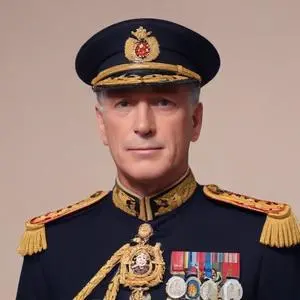
A British naval leader and statesman who played a key role in India's transition to independence, and was a close advisor to royalty and politicians. He's also known for his assassination by the IRA in 1979.
When we think of Lord Louis Mountbatten, we think of a fearless naval commander, a brilliant strategist, and a charismatic leader who played a pivotal role in shaping the course of World War II. He is best known for his integral role in planning the D-Day invasion of Normandy, a bold move that turned the tide of the war in favor of the Allies.
Born on June 25, 1900, to Prince Louis of Battenberg and Princess Victoria of Hesse and by Rhine, Louis Mountbatten was destined for greatness. His early life was marked by adventure and exposure to the British royal family. He joined the Royal Navy at the tender age of 13 and quickly rose through the ranks, earning the admiration of his peers and superiors alike.
Mountbatten's bravery during World War I earned him the respect of his fellow sailors and the accolades of the British Crown. He was awarded the Distinguished Service Cross for his heroic actions during the Battle of Jutland, becoming one of the youngest officers to receive the honor at the time.
In World War II, Mountbatten played a crucial role in planning and executing several key operations, including the Allied invasion of Sicily and the D-Day landings in Normandy. His innovative approach to amphibious warfare and his ability to think outside the box made him an invaluable asset to the Allied forces.
After the war, Mountbatten's expertise in international relations and diplomacy led to his appointment as the last Viceroy of India, overseeing the country's transition to independence. His leadership played a significant role in shaping the modern Indian nation and earning him the respect of both Indian and Pakistani leaders.
In 1959, Mountbatten was appointed as the Chief of the Defence Staff, where he worked tirelessly to modernize the British military and strengthen its alliances with NATO and other international partners.
Throughout his illustrious career, Mountbatten received numerous awards and honors, including the Knight Grand Cross of the Order of the Bath, the Knight Grand Cross of the Royal Victorian Order, and the Distinguished Service Order.
Lord Louis Mountbatten's life was a testament to his unwavering courage, his unshakeable resolve, and his passion for service. His legacy continues to inspire generations of military leaders, diplomats, and statesmen around the world.
In the words of Mountbatten himself, "The greatest adventure is what lies ahead. Today and tomorrow. And someday."
These profound words capture the essence of a man who embodied the spirit of adventure, leadership, and service, leaving behind a lasting impact on the world.
As we reflect on the life and times of Lord Louis Mountbatten, we are reminded of the power of courage, leadership, and service to shape the course of history. His remarkable journey serves as a beacon of inspiration, urging us to embark on our own adventures and make our mark on the world.
Born in 1871
Prolific writer of historical novels and adventure stories, also a talented landscape painter.
Born in 1889
India's first Prime Minister, a key figure in the country's struggle for independence from British rule, and a champion of democracy and secularism. He played a crucial role in shaping modern India's government and economy.
Born in 1869
Indian freedom fighter, activist, and philosopher who led India to independence from British rule through non-violent civil disobedience, inspiring civil rights movements worldwide.
Born in 1917
The first female Prime Minister of India, serving from 1966 to 1977 and again from 1980 until her assassination in 1984, known for her strong leadership and economic reforms.
