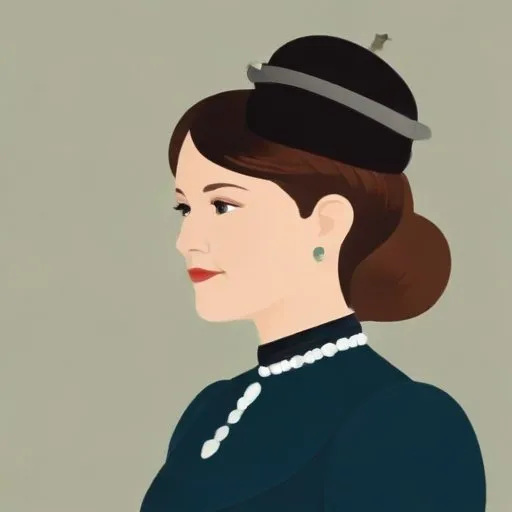
The Unwavering Royal: Princess Victoria of Hesse and by Rhine
Princess Victoria of Hesse and by Rhine, later known as Princess Louis of Battenberg and Victoria Mountbatten, Marchioness of Milford Haven, was a beacon of resilience and strength, known for her libera
l outlook, straightforwardness, and remarkable adaptability in the face of turmoil. Born into royalty, Victoria defied conventions, navigated the complexities of European royalty, and left an indelible mark on history.
Familial Ties and Royal Upbringing
Victoria was born on Easter Sunday, April 5, 1863, at Windsor Castle, in the presence of her maternal grandmother,
Queen Victoria. Her mother,
Princess Alice of the United Kingdom, was the second daughter of Queen Victoria and Prince Albert of Saxe-Coburg and Gotha. Her father,
Louis IV, Grand Duke of Hesse and by Rhine, held significant influence in Germany. Victoria's early life was marked by the tragedy of her mother's early demise, which thrust her into a position of responsibility, caring for her younger siblings.
A Marriage of Love and Defiance
Against her father's disapproval, Victoria married
Prince Louis of Battenberg, a British Royal Navy officer and her first cousin, in 1884. This union not only bridged the gap between German and British royalty but also demonstrated Victoria's unwavering commitment to her choices. The couple's four children, Alice, Louise, George, and Louis, would go on to shape the course of European history.
War, Sacrifice, and Reinvention
During World War I, Victoria and her husband abandoned their German titles, opting for the anglicized surname Mountbatten. This bold move signaled their allegiance to the British Crown and their willingness to adapt in the face of adversity. The war also brought devastating loss, as Victoria's sisters, Elisabeth and Alix, were brutally murdered by communist revolutionaries.
A Legacy of Royalty and Service
Victoria's descendants would go on to occupy prominent positions in European royalty. Her daughter, Louise, became the queen consort of Sweden, while her son, Louis, was appointed the last viceroy of India. Her grandson,
Prince Philip, Duke of Edinburgh, would marry Queen
Elizabeth II, cementing Victoria's legacy in the British monarchy.
Personal Qualities and Philosophical Beliefs
Those closest to Victoria described her as
practical, bright, and liberal in outlook. Her unwavering commitment to her family, her country, and her values in the face of turmoil defines her remarkable character.
Timeline of Milestones
- 5 April 1863: Born at Windsor Castle in the presence of Queen Victoria
- 1884: Married Prince Louis of Battenberg
- 1917: Adopted the surname Mountbatten during World War I
- 1920s: Served as a support system for her royal relatives
- 24 September 1950: Passed away, leaving behind a legacy of resilience and devotion
Victoria's Lasting Impact
In a world of shifting allegiances and royal intrigue, Princess Victoria of Hesse and by Rhine stood as a testament to the power of unwavering commitment, adaptability, and resilience. Her story serves as a beacon, inspiring generations to come, and reminding us that even in the face of turmoil, one's character and values can remain steadfast.