


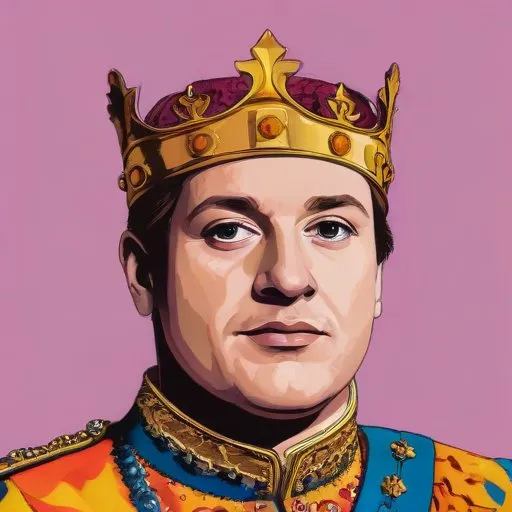
A German nobleman who ruled Hesse-Darmstadt from 1739 to 1768, known for his military campaigns and territorial expansions.
Louis VIII, also known as the Hunting Landgrave, was the Landgrave of Hesse-Darmstadt from 1739 to 1768. He is best known for his passion for hunting and his military career, which earned him the rank of General Field Marshal during the Seven Years War.
Louis VIII was born on April 5, 1691, to Ernest Louis, Landgrave of Hesse-Darmstadt and Margravine Dorothea Charlotte of Brandenburg-Ansbach. In 1717, he married Countess Charlotte Christine of Hanau-Lichtenberg, which added Hanau-Lichtenberg to his dominions.
Louis VIII's military career was marked by his loyalty to the Emperor, and he fought on the imperial side during the Seven Years War. His military prowess earned him the rank of General Field Marshal, a testament to his bravery and strategic thinking.
Louis VIII's passion for hunting earned him the nickname "The Hunting Landgrave." His love for the sport was so great that he even had a special hunting lodge built in the forest of Odenwald. Despite his dedication to hunting, Louis VIII was also a caring ruler, and his establishment of a textile house in 1742 and a state orphanage in 1746 demonstrate his commitment to the welfare of his people.
Louis VIII had a mistress named Helena Martini, which led to controversy and scandal during his reign. Despite this, he remained devoted to his wife and had several children with her, including Landgrave Louis IX, Prince George William, and Princess Caroline Louise.
Louis VIII's legacy is marked by his military achievements, his passion for hunting, and his commitment to the welfare of his people. Despite his personal controversies, he remained a respected and beloved ruler, and his establishment of the textile house and state orphanage continues to benefit the people of Hesse-Darmstadt to this day.
Louis VIII's successor was his son, Landgrave Louis IX, who continued his father's legacy and expanded the territory of Hesse-Darmstadt.
Louis VIII's life and legacy serve as a testament to his dedication to his people, his passion for hunting, and his commitment to the welfare of Hesse-Darmstadt. Despite his personal controversies, he remains a respected and beloved figure in German history.
Born in 1052
King of France from 1060 to 1108, known for his military campaigns and conflicts with the Church, particularly his excommunication by Pope Urban II.
Born in 1214
King of France from 1226 to 1270, leading the Seventh and Eighth Crusades, and establishing a strong, centralized government. He's also revered for his justice and piety.
Born in 1165
King of France from 1180 to 1223, known for his military conquests, including the Battle of Bouvines, and his role in the Third Crusade.
Born in 1338
The King of France from 1364 to 1380, known for his military victories and rebuilding of Paris, earning him the nickname "Charles the Wise".
Born in 1052
King of France from 1060 to 1108, known for his military campaigns and conflicts with the Church, particularly his excommunication by Pope Urban II.
Born in 1319
King of France from 1350 to 1364, known for being captured by the English during the Hundred Years' War and later ransomed.
Born in 1338
The King of France from 1364 to 1380, known for his military victories and rebuilding of Paris, earning him the nickname "Charles the Wise".
