


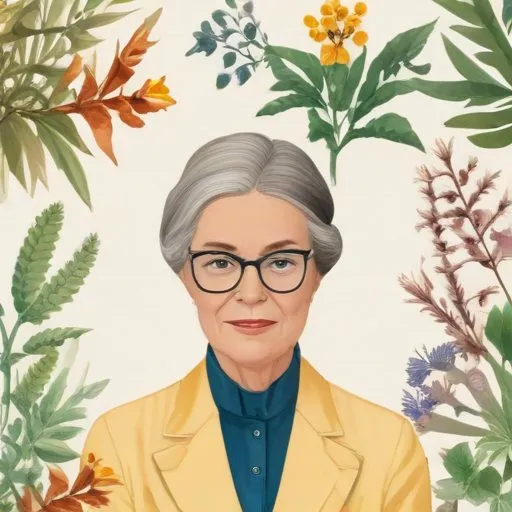
A pioneering South African botanist and taxonomist who discovered and named numerous plant species, significantly advancing the field of botany in Africa.
Louisa Bolus, a South African botanist and taxonomist, is renowned for authoring more land plant species than any other female scientist, with a staggering total of 1,494 species to her credit. Her remarkable contributions to the field of botany have earned her a legacy that continues to inspire and fascinate scientists and enthusiasts alike.
Born on July 31, 1877, in Burgersdorp, Cape Province, South Africa, Louisa Bolus was exposed to the world of botany from a young age, thanks to her grandfather, William Kensit, a serious amateur botanist and specimen collector. This early influence sparked a passion that would drive her to dedicate her life to the study and classification of plants.
Louisa attended Collegiate Girls High School in Port Elizabeth and earned a teaching credential in 1899. She later pursued a degree in literature and philosophy from the University of the Cape of Good Hope, graduating in 1902. It was during her college years that she worked as an assistant to her great-aunt Sophia's husband, Harry Bolus, in his herbarium, laying the foundation for her future career.
In 1903, Louisa Bolus became the curator of the Bolus Herbarium, a position she held for an impressive 52 years. During this time, she was also a founding member of the council of the Botanical Society of South Africa, the Wild Life Protection Society, and a fellow of the Royal Society of South Africa, the Linnean Society, and the Southern Africa Association for the Advancement of Science.
Her remarkable career was marked by numerous publications, including her first book, Elementary Lessons in Systematic Botany, published in 1919, followed by two volumes of books on South African flowers. She also contributed to various botanical journals and edited the Annals of the Bolus Herbarium.
Louisa Bolus's scientific contributions are a testament to her dedication and expertise. Her research on Mesembryanthemum led to the publication of Notes on Mesembryanthemum and Allied Genera in 1927, followed by three books that provided detailed Latin descriptions of approximately 1,500 species.
Her work not only expanded our understanding of plant classification but also paved the way for future generations of botanists. Today, the Bolus Herbarium at the University of Cape Town continues to be a hub for botanical research, reflecting Louisa Bolus's enduring legacy.
"The beauty of nature is not just in its appearance, but in its intricate complexity and the secrets it holds." — Louisa Bolus
Louisa Bolus's contributions to botany have had a profound impact on our understanding of the natural world. Her work has influenced generations of scientists, conservationists, and environmentalists, shaping our approach to plant classification, conservation, and sustainability.
Today, as we face the challenges of climate change, biodiversity loss, and ecosystem degradation, Louisa Bolus's legacy serves as a powerful reminder of the importance of scientific inquiry, dedication, and service to humanity.
Born in 1858
A Dutch physician and academic who discovered that beriberi is caused by a lack of vitamin B in diet, leading to a fundamental shift in the understanding of nutrition and disease. He was awarded the Nobel Prize in Physiology or Medicine in 1929 for his groundbreaking work.
Born in 1862
A trailblazing explorer and writer who ventured into uncharted African territories, documenting her experiences and shedding light on the continent's cultures and customs.
