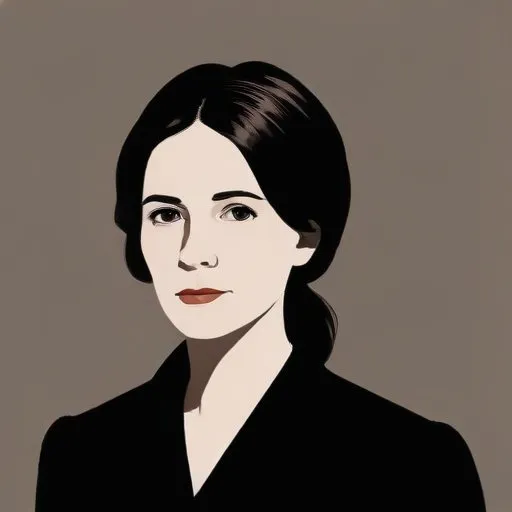
Louisa Lawson: A Trailblazing Australian Poet, Writer, and Suffragist
A Pioneer of Feminism and Australian Literature
Louisa Lawson was a multifaceted Australian icon, renowned for her contributions to literature, poetry, publishing, and the suffragist movement. As the mother of celebrated poet and author
Henry Lawson, Louisa's own accomplishments often overshadowed by her son's fame, yet her legacy remains a testament to her trailblazing spirit.
Early Life and Marriage
Born on February 17, 1848, at Guntawang Station near Gulgong, New South Wales, Louisa Albury was the second of 12 children to Henry Albury and Harriet Winn. Her early life was marked by hardship, and like many girls of her time, she left school at 13. In 1866, she married Niels Larsen Peter Lawson, a Norwegian sailor, and began a life of raising four children, including Henry, Lucy, Jack, and Poppy.
A Mother's Grief and Entrepreneurial Spirit
The loss of her twin daughter Tegan at eight months had a profound impact on Louisa, leading to rifts with her son Henry, who was often left to care for his siblings. However, this difficult period also sparked her entrepreneurial spirit. In 1882, Louisa moved to Sydney with her children and Border Collie Bryn, where she managed boarding houses and saved enough to invest in the radical newspaper
The Republican in 1887.
Publishing Pioneer and Suffragist
Louisa's experience with
The Republican laid the foundation for her most significant achievement: editing and publishing
The Dawn, Australia's first journal produced solely by women, in 1888. This groundbreaking publication addressed feminist issues like women's right to vote, education, and public office, resonating with readers across Australia and overseas.
A Legacy of Feminism and Literary Contributions
Through
The Dawn and her other publications, Louisa Lawson left an indelible mark on Australian literature and the suffragist movement. Her contributions paved the way for future generations of women writers, activists, and leaders. Today, Louisa's legacy serves as a testament to her courage, determination, and dedication to the causes she believed in.
Personal Milestones and Key Life Events
- 1848: Born on February 17 at Guntawang Station near Gulgong, New South Wales
- 1866: Married Niels Larsen Peter Lawson at the Methodist parsonage in Mudgee, New South Wales
- 1882: Moved to Sydney with her children and managed boarding houses
- 1887: Invested in the radical newspaper The Republican
- 1888: Edited and published The Dawn, Australia's first journal produced solely by women
- 1920: Passed away on August 12, leaving behind a legacy of feminist activism and literary contributions
Influence on Modern Society
Louisa Lawson's contributions to Australian literature, feminism, and the suffragist movement continue to inspire generations of women and writers. Her pioneering spirit and dedication to social change have cemented her place as one of Australia's most important and trailblazing figures.
FAQ
What was Louisa Lawsons contribution to Australian literature?
Louisa Lawson was an Australian poet and publisher who made significant contributions to Australian literature. She was one of the first women to publish a book of poetry in Australia.
What was Louisa Lawsons role in the Australian suffrage movement?
Louisa Lawson was a vocal advocate for womens rights and played a key role in the Australian suffrage movement. She believed in the importance of womens education and economic independence.
What were Louisa Lawsons most famous poems?
Louisa Lawson wrote several famous poems, including The Australian Girl and The Distant Country. Her poetry is celebrated for its lyricism, imagery, and exploration of Australian identity.
How did Louisa Lawson influence Australian poetry?
Louisa Lawsons poetry had a lasting impact on Australian literature. She helped establish a distinctly Australian voice and paved the way for future generations of Australian poets.
What was Louisa Lawsons legacy in Australian literature?
Louisa Lawsons legacy in Australian literature is still celebrated today. She is remembered as a pioneering poet and publisher who contributed significantly to the development of Australian literature and culture.