


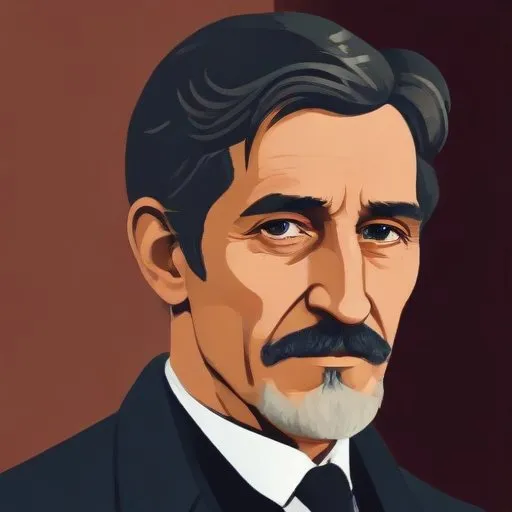
A renowned writer of Australian literature, capturing the country's harsh outback life and folk culture through his vivid stories and poems. His works are considered classics of Australian literature.
Australian literature wouldn't be the same without the powerful and evocative works of Henry Lawson, a poet, short story writer, and novelist who is widely regarded as one of the country's greatest writers. Known for his vivid depictions of life in the Australian outback, Lawson's stories and poems have captivated readers for generations, offering a unique window into the country's colonial past.
Henry Archibald Hertzberg Lawson was born on June 17, 1867, in a small town on the Grenfell goldfields of New South Wales. His father, Niels Hertzberg Larsen, was a Norwegian-born miner, and his mother, Louisa Lawson, was a poet, publisher, and feminist who would later play a significant role in her son's literary development.
Lawson began writing at an early age, and his first published work, a poem titled "A Song of the Republic," appeared in The Bulletin in 1887. Over the next decade, he wrote prolifically, contributing to various publications and publishing several collections of poetry and short stories. His writing often explored themes of Australian identity, nationalism, and the struggles of everyday people.
Some of Lawson's most famous works include "The Drover's Wife," "The Union Buries Its Dead," and "The Man Who Forgot." His short stories are known for their vivid descriptions of the Australian landscape and their gritty, unromanticized portrayals of life on the frontier.
Lawson's writing had a profound impact on Australian literature, helping to popularize the country's unique voice and style. He is often credited with creating a sense of national identity through his stories, which captured the spirit and resilience of the Australian people.
Despite his success, Lawson's life was marked by personal struggles, including battles with alcoholism and mental illness. He spent periods in Darlinghurst Gaol and psychiatric institutions, and his output declined significantly in the later years of his life.
Henry Lawson died on September 2, 1922, after suffering a cerebral hemorrhage. He was the first Australian writer to be granted a state funeral, a testament to his enduring impact on the country's literary landscape.
"He forgot them, for the strength of the spirit is not in Its power to remember, but in Its power to forget."
Lawson's writing remains an essential part of Australian literary heritage, offering a unique window into the country's colonial past. His stories and poems continue to captivate readers today, and his legacy as a pioneering writer and nationalist endures.
Lawson's work is often compared to that of his contemporary, Banjo Paterson, another prominent Australian writer. While both writers explored similar themes, Lawson's work is often characterized by its gritty realism and unsentimental portrayals of life in the outback.
Lawson's mother, Louisa, played a significant role in his early literary development, publishing his first volume of poetry and encouraging his writing. She was a prominent figure in her own right, editing a women's paper called The Dawn and publishing her own poetry and fiction.
Born in 1864
A renowned journalist, author, and poet who wrote iconic Australian literature, including the famous poem "Waltzing Matilda".
Born in 1865
A renowned author and poet, best known for his imaginative and vivid stories, particularly "The Jungle Book", which have captivated readers of all ages with their timeless themes and memorable characters.
Born in 1835
Witty writer of classics like "The Adventures of Tom Sawyer" and "The Adventures of Huckleberry Finn", known for humor and social commentary.
Born in 1876
Wrote classic adventure novels like "Call of the Wild" and "White Fang", exploring the human condition through stories of survival and the American wilderness.
Born in 1850
A Scottish novelist, poet, and essayist who wrote iconic adventure novels, including "Treasure Island" and "Dr. Jekyll and Mr. Hyde", that have captivated readers for generations.
Born in 1885
A pioneering writer of the early 20th century, known for exploring themes of human nature, relationships, and the clash between individual desire and societal expectations through novels like "Sons and Lovers" and "Lady Chatterley's Lover".
Born in 1879
This celebrated author crafted novels and plays that probed the human condition, exploring themes of social class, morality, and personal relationships, with a distinctive wit and insight. Their works continue to captivate audiences with their nuanced portrayals of English society during the early 20th century.
Born in 1819
A celebrated poet, essayist, and journalist who revolutionized American literature with his collection "Leaves of Grass", known for his free verse style and celebration of the human spirit.
