


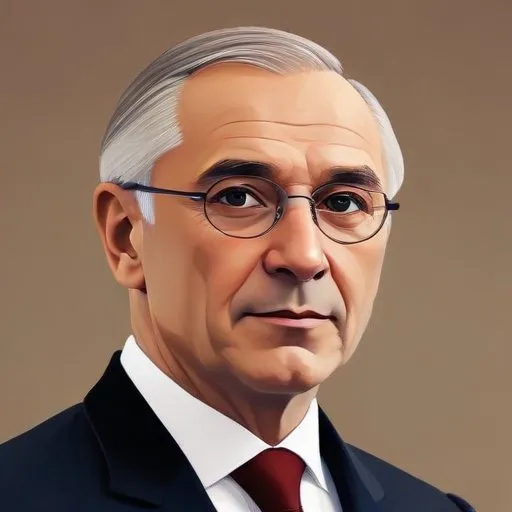
A Slovenian lawyer and politician who played a key role in the country's struggle for independence and was a prominent figure in its early years of statehood. He served as the Minister of Justice and was a strong advocate for human rights.
Lovro Toman, a Slovenian Romantic nationalist revolutionary, is remembered for being the first person to raise the Slovenian tricolor in Ljubljana, a pivotal moment in the country's struggle for independence. This bold act, which took place on Wolf Street 8, was a direct response to the German flag flying atop Ljubljana Castle, and marked a turning point in the country's fight against foreign rule.
Born on August 10, 1827, in Kamna Gorica, Upper Carniola, in what is now present-day Slovenia, Lovro came from a wealthy entrepreneurial family. After completing his studies at the classical lyceum in Ljubljana in 1845, he enrolled at the University of Vienna, where he was exposed to Romantic nationalist ideas that would shape his future.
During his student years, Lovro became increasingly involved in politics, and in April 1848, he was among the students who first raised the Slovenian flag in the center of Ljubljana. This act of defiance sparked a wave of nationalism across the country, and cemented Lovro's position as a leading figure in the Slovenian independence movement.
In the years that followed, Lovro continued to study law, graduating from the University of Graz, and later marrying the poet Josipina Urbani Turnograjska, who came from one of the wealthiest families in Carniola. After her untimely death in 1854, Lovro dedicated himself to his work, becoming a prominent figure in Slovenian politics.
In 1861, he was elected to the Austrian Parliament, where he became a vocal advocate for Slovenian rights and interests. Alongside fellow leaders Janez Bleiweis, Luka Svetec, and Etbin Henrik Costa, Lovro formed the Old Slovene party, which fought tirelessly for Slovenian autonomy and independence.
Lovro Toman's bravery and conviction inspired a generation of Slovenians to fight for their rights and freedoms. His legacy continues to be felt in Slovenia today, where he is remembered as a national hero and a champion of Slovenian identity.
Through his work, Lovro helped to preserve Slovenian culture and language, ensuring that future generations could proudly call themselves Slovenian. His commitment to the Slovenian cause serves as a shining example of the power of activism and the importance of fighting for what one believes in.
As a testament to his enduring impact, Lovro's name is still celebrated in Slovenia today, a reminder of the sacrifices made by those who fought for the country's independence and freedom.
76 Years Old
Slovenia's second president, a key figure in the country's transition to independence and democracy, known for his economic reforms and leadership during a tumultuous period.
