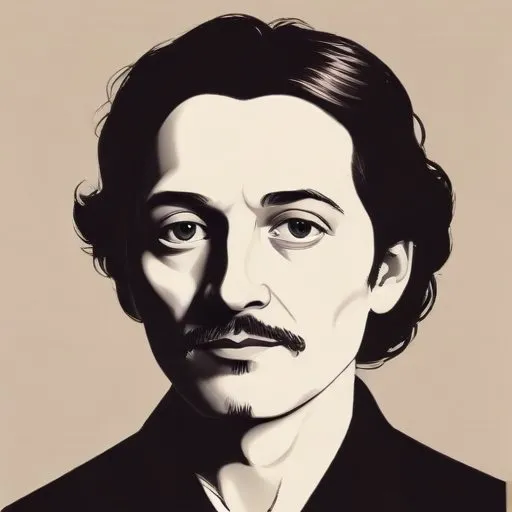
Lucebert: The Poetic Soul of the COBRA Movement
Lucebert, born Lubertus Jacobus Swaanswijk, was a Dutch artist and poet who spearheaded the COBRA movement, a revolutionary art movement that shook the foundations of post-war Europe. He is renowned for his provocative poetry, which laid the groundwork for innovative literary expression in the Netherlands.
The Early Years: A Life of Turmoil and Creativity
Born on September 15, 1924, in Amsterdam, Lucebert's life was marked by turmoil and creative fervor. He entered the Institute for Arts and Crafts in 1938, but his stay was short-lived. Between 1938 and 1947, he chose a life of homelessness, a decision that would later shape his artistic perspective.
The COBRA Movement and Literary Innovation
Lucebert's talent was discovered when he joined the COBRA group, a collective of artists who sought to challenge conventional norms in art and literature. His early work, characterized by a pessimistic outlook on life, resonated with the movement's avant-garde ethos. As a poet, Lucebert's innovative style paved the way for a new generation of Dutch writers.
De Vijftigers and the Birth of Modern Dutch Poetry
Lucebert was an integral part of De Vijftigers, a Dutch literary movement that drew inspiration from European avant-garde movements. His poetry, collected in
Gedichten 1948-1965, reflected a sense of rebellion and nonconformity, establishing him as a leading voice in modern Dutch poetry.
The Visual Arts: A Figurative Expressionist
In the 1960s, Lucebert shifted his focus to visual arts, adopting a figurative expressionist style that continued to reflect his pessimistic worldview. His work, characterized by bold brushstrokes and vibrant colors, further solidified his reputation as a visionary artist.
Legacy: A Defenseless Yet Unshakeable Impact
Lucebert's poetry and art continue to inspire generations of artists and writers. His iconic line, "Alles van waarde is weerloos" ("All things of value are defenseless"), has become a cultural touchstone, symbolizing the fragility and beauty of human existence. Today, his work remains a testament to the power of creative expression and the human spirit.
Selected Works:
- Gedichten 1948-1965 (Collected Poems)
- De zeer oude zingt (The Very Old One Sings)
- Figurative Expressionist Paintings (1960s-1990s)
Influence and Recognition
Lucebert's contributions to Dutch literature and art have been recognized and celebrated worldwide. His work continues to inspire new generations of artists, writers, and thinkers, cementing his legacy as a cultural icon of the 20th century.
FAQ
What was Luceberts most notable literary work?
Lucebert was a Dutch poet and painter who was known for his innovative and expressive style. His most notable literary work is the poetry collection Les liaisons dangereuses, which explores themes of love, desire, and the human condition.
How did Luceberts poetry reflect his experiences as a painter?
Luceberts poetry reflected his experiences as a painter through its use of vivid imagery and bold language. His poetry often explores the intersection of art and life, reflecting his own experiences as a creative person.
What was Luceberts role in the Dutch literary scene?
Lucebert was a prominent figure in the Dutch literary scene, known for his innovative style and his contributions to the development of modern Dutch poetry. He was a key figure in the so-called Vijftigers movement, a group of Dutch poets who sought to revolutionize poetry in the 1950s.
How did Luceberts poetry reflect his cultural context?
Luceberts poetry reflected his cultural context through its exploration of themes such as post-war disillusionment, the search for identity, and the role of the artist in society. His poetry often engaged with the social and political issues of his time, offering a unique perspective on the world around him.
What is Luceberts legacy in the world of literature?
Luceberts legacy in the world of literature is as a pioneering poet and painter who pushed the boundaries of language and form. He inspired a new generation of writers and artists, and his work continues to be celebrated for its innovation, energy, and creativity.