


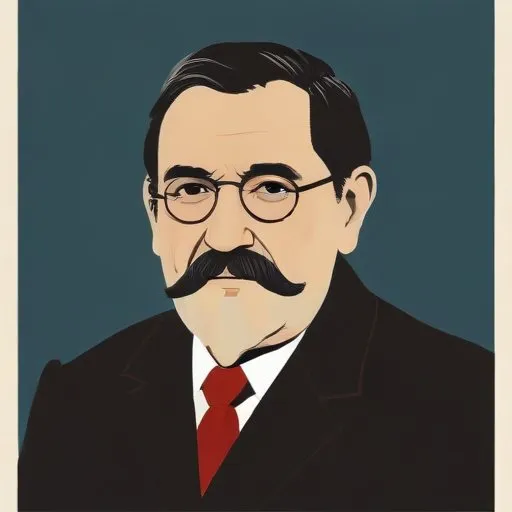
A Flemish literary giant, celebrated for his provocative novels and poetry that explored themes of identity, morality, and the human condition. His works often blended elements of magic realism and absurdism.
Hugo Claus was a renowned Belgian author, known for his profound impact on contemporary literature, drama, and poetry. With a career spanning over five decades, Claus left an indelible mark on the literary world, earning him the title of one of Belgium's most celebrated writers.
Born on April 5, 1929, in Bruges, Belgium, Claus was the eldest of four sons to Jozef Claus and Germaine Vanderlinden. His father, a printer, had a passion for theater, which would later influence Claus's own creative pursuits. During World War II, Claus attended a boarding school led by nuns in Aalbeke, where he was exposed to Flemish nationalism and sympathized with fascist ideologies. This experience would later be reflected in his semiautobiographical novel, The Sorrow of Belgium (1983).
Claus's literary career took off in 1950 with the publication of his debut novel, De Metsiers, at the age of twenty-one. He went on to write numerous novels, plays, and poetry collections, earning him critical acclaim and numerous awards. Claus's work often explored themes of identity, morality, and the human condition, showcasing his versatility as a writer.
Claus was a vocal advocate for socialism and was influenced by his visits to Cuba in the 1960s. He was also drawn to the CoBrA art movement, which emphasized spontaneity and experimentation. Throughout his life, Claus was committed to exploring the human condition, often challenging societal norms and conventions in his work.
Claus married Elly Overzier in 1955, and they had a son, Thomas, in 1963. However, his personal life was not without controversy. In the early 1970s, he had an affair with an actress, which led to public scrutiny. Additionally, Claus's decision to end his life through euthanasia in 2008 sparked a heated debate about the morality and legality of the practice.
Hugo Claus's legacy extends far beyond his literary contributions. He was a pioneering figure in Belgian literature, paving the way for future generations of writers. His work continues to inspire and influence writers, artists, and philosophers around the world. Claus's commitment to exploring the human condition has left an indelible mark on modern society, solidifying his place as one of the most important literary figures of the 20th century.
Through his writing, Claus challenged societal norms, explored the complexities of human identity, and left behind a body of work that continues to captivate and inspire audiences today.
Born in 1912
A Flemish journalist and author who wrote critically acclaimed novels and essays that explored the human condition, social justice, and the search for meaning. His works are considered classics of Flemish literature.
Born in 1822
A Belgian organist and composer who created iconic works that blended Romanticism and Impressionism, leaving a lasting impact on classical music.
Born in 1882
A Flemish writer and poet, known for his satirical and humorous works that critiqued the bourgeoisie and explored themes of identity and morality. His writings are considered a significant part of Flemish literature.
88 Years Old
Lead vocalist of the Zodiacs, known for the 1960 hit "Stay," a doo-wop classic that has been covered by numerous artists and featured in various films and TV shows.
Born in 1869
A French literary giant, renowned for his novels and essays that explored the human condition, morality, and the search for authenticity. His works often blurred the lines between fiction and autobiography.
Born in 1905
Existentialist philosopher and playwright who argued that humans have complete freedom to choose their actions and create their own meaning in life, influencing modern thought on morality and individual responsibility.
Born in 1913
A French novelist, philosopher, and journalist who wrote influential works like "The Stranger" and "The Plague", exploring absurdism and the human condition.
Born in 1889
A renowned French creative force, celebrated for his innovative and surreal works that blurred the lines between literature, art, and cinema, leaving an indelible mark on 20th-century culture.
