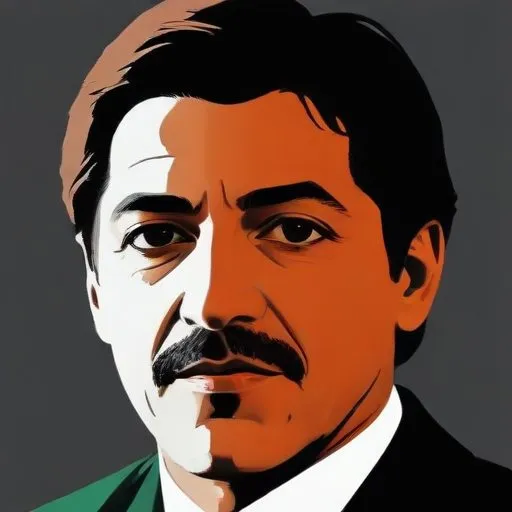
Luciano Fabro: The Visionary Sculptor of Arte Povera
A Pioneer of Conceptual Art
Luciano Fabro was a renowned Italian sculptor, conceptual artist, and writer, best known for his association with the revolutionary Arte Povera movement. Through his innovative and unconventional works, Fabro challenged traditional notions of art, experimenting with industrial and natural materials to create thought-provoking pieces that continue to inspire and intrigue art enthusiasts to this day.
Early Life and Influences
Born on November 20, 1936, in Turin, Italy, Fabro's life was marked by significant events that shaped his artistic journey. After his father's death, he moved to Udine, in the Friuli region, where he developed a deep appreciation for the works of
Yves Klein and
Lucio Fontana. His encounter with Fontana's works at the 1958 Venice Biennale inspired him to relocate to Milan, where he spent the rest of his life pursuing his artistic career.
The Arte Povera Movement
Fabro was a key figure in the Arte Povera group, a collective of Italian artists who sought to challenge the status quo of contemporary art. They experimented with unconventional materials, focusing on process, language, and the body. Fabro's works embodied the spirit of Arte Povera, often incorporating unexpected materials such as steel tubes, cloth, newspapers, and wax, alongside traditional materials like gold, marble, and bronze.
Signature Works and Performative Art
Fabro's oeuvre is characterized by his signature sculptural reliefs of Italy, crafted from diverse materials. One of his earliest pieces,
Tubo da mettere tra i fiori (Tube to place among flowers, 1963), was a site-specific installation designed for a Milanese garden, featuring telescopic steel tubes. He continued to explore the relationship between steel tubes and physical laws of nature in subsequent works. In the mid-1960s, Fabro began to create performative pieces, such as
Indumenti posaseni, calzari, bandoliera (Garments bra, boots, crossbelt, 1966) and
Allestimento Teatrale Cube di specchi (Theatrical Staging Cube of Mirrors, 1967-1975).
Exhibitions and Legacy
Fabro's first solo show was held at the Galleria Vismara in Milan in 1965, where he showcased his innovative use of mirror pieces and spatial lines. In 1967, he participated in the groundbreaking group exhibition
Arte Povera e Im Spazio in Genoa, featuring prominent Arte Povera artists. Throughout his career, Fabro's works have been featured in numerous exhibitions and museums worldwide, including the Museum of Modern Art in New York and the Tate Modern in London.
Personal Life and Later Years
Fabro's life was marked by his passion for art and his dedication to pushing boundaries. He continued to work tirelessly until his untimely death on June 22, 2007, in Milan, following a heart attack. Fabro's legacy extends beyond his art, inspiring generations of artists, curators, and art historians to question and challenge the norms of contemporary art.
Inspirational Quotes
- "The work of art is not a thing, but a way of doing."
- "The artist is not a creator, but a user."
Impact on Modern Society
Fabro's innovative approach to art and his commitment to the Arte Povera movement have had a profound impact on modern society. His works continue to inspire artists, designers, and thinkers to challenge traditional notions of creativity and push the boundaries of what is possible.
FAQ
What style of art did Luciano Fabro practice?
Luciano Fabro was an Italian sculptor and artist known for his work in the Arte Povera movement, which emphasized the use of everyday materials and rejected traditional notions of art.
What materials did Luciano Fabro use in his art?
Luciano Fabro used a range of materials in his art, including metal, fabric, marble, and found objects. He was known for his innovative use of materials and his ability to transform everyday objects into works of art.
What themes did Luciano Fabros work explore?
Luciano Fabros work explored a range of themes, including the relationship between art and everyday life, the role of the artist, and the nature of reality and perception.
Did Luciano Fabro participate in any notable art movements?
Yes, Luciano Fabro was a key figure in the Arte Povera movement, which emerged in Italy in the 1960s. He also participated in the Minimalist and Conceptual Art movements.
What is Luciano Fabros legacy in the art world?
Luciano Fabros legacy in the art world is one of innovation, experimentation, and a commitment to pushing the boundaries of what constitutes art.