


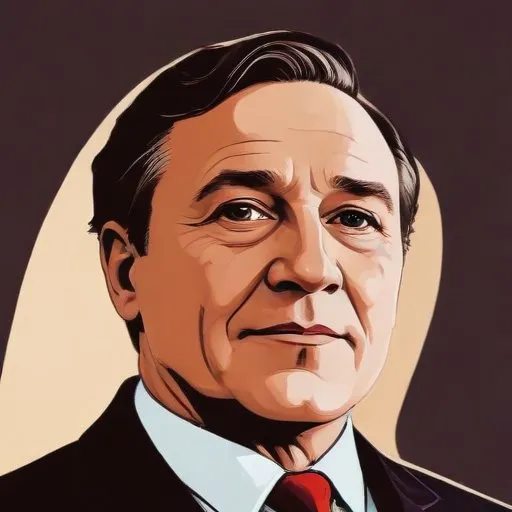
A Canadian lawyer and politician who served as a member of the Legislative Assembly of Quebec and played a key role in shaping the province's education system. He's most known for his efforts to establish free education in Quebec.
Lucien Saulnier, a Canadian politician and administrator, is best known for spearheading Montreal's urban development during the 1960s, earning him the reputation as the mastermind behind the city's transformation into a modern metropolis. As the chair of the Montreal Urban Community during the tumultuous October Crisis, Saulnier's leadership played a pivotal role in shaping the city's infrastructure, economy, and cultural identity.
Born on July 25, 1916, Saulnier's trajectory in public service began in 1954 when he was elected to the Montreal City Council as a member of the Ligue d'Action Civique. His commitment to civic duty led him to co-found the Montreal Civic Party with Jean Drapeau in 1960. This partnership would propel Saulnier to the forefront of Montreal's political landscape, as he became the chair of the executive committee and head of the Montreal Urban Community, a position he held until 1969.
Saulnier's most notable achievement came with the award of Expo 67 to Montreal. Recognizing the event's potential to transform the city, Saulnier championed the construction of the Yellow Line, a metro extension that would connect Expo 67 to the city center. This visionary project not only facilitated the transportation of millions of visitors but also reshaped the urban landscape, earning Montreal a reputation as a hub of innovation and progress.
After leaving politics in 1972, Saulnier went on to hold prominent positions in public agencies, including Hydro-Québec. His contributions to the nation were recognized in 1971 when he was appointed a Companion of the Order of Canada, the country's highest civilian honor, for his exceptional service as an administrator.
Through his remarkable career, Lucien Saulnier demonstrated an unwavering commitment to public service, leaving behind a lasting legacy that continues to inspire generations of Montrealers and Canadians alike.
Saulnier passed away on June 22, 1989, but his vision for a modern, vibrant Montreal remains an enduring testament to his innovative spirit and dedication to the betterment of his community.
Born in 1919
The charismatic leader who championed Canadian unity and implemented progressive policies, known for his iconic style and influential legacy in shaping modern Canada.
92 Years Old
The 20th Prime Minister of Canada, serving from 1993 to 2003, known for his leadership during the Quebec sovereignty movement and his role in shaping Canada's national unity. He implemented policies like the Clarity Act and the National Child Benefit.
Born in 1922
A charismatic leader who championed Quebec's independence and shaped the province's distinct identity through his passionate politics and journalism. He's revered for his role in Quebec's Quiet Revolution.
Born in 1925
A Canadian journalist and politician who served as leader of the Quebec Liberal Party and played a key role in shaping Quebec's politics and identity. He's most known for his efforts to promote Canadian unity and resolve the Quebec sovereignty debate.
93 Years Old
The 22nd Premier of Quebec, a Canadian lawyer and politician, served from 1970 to 1976 and again from 1985 to 1994, known for his role in shaping Quebec's economy and politics. He implemented significant hydroelectric projects and negotiated with the Canadian government on provincial autonomy.
80 Years Old
A Canadian lawyer, physician, and politician who served as the 24th Premier of Quebec, known for his brief but significant tenure in the 1980s. He played a key role in shaping Quebec's politics and healthcare system.
96 Years Old
A Canadian economist and politician who served as the 26th Premier of Quebec, leading the province's sovereignty movement and playing a key role in the 1995 Quebec referendum. He's known for his strong nationalist views and efforts to gain independence for Quebec.
89 Years Old
A Canadian lawyer and politician who served as Premier of Quebec, leading the province's nationalist movement and advocating for Quebec's independence. He's known for his strong stance on Quebec's sovereignty.
