


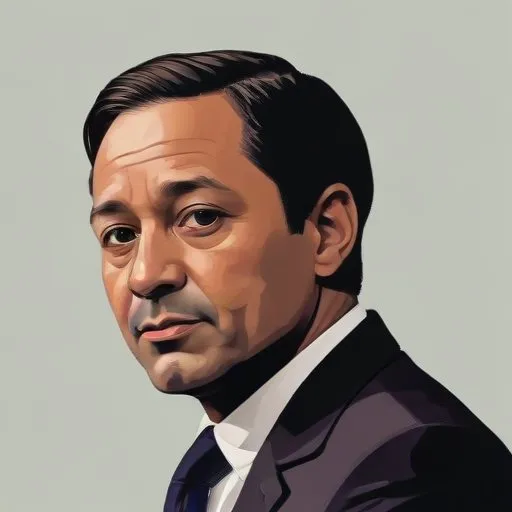
A pioneering figure in Canadian journalism and politics, known for founding the first French-language newspaper in Quebec and advocating for democratic reforms.
Ludger Duvernay is renowned for being a pioneering printer, publisher, and journalist who played a significant role in shaping the cultural and political landscape of 19th-century Canada. He is particularly recognized for publishing the first newspaper in Lower Canada outside of Quebec City and Montreal, the Gazette des Trois-Rivières, and later, La Minerve, which became a powerful voice for the Parti patriote and its leader, Louis-Joseph Papineau.
Born on January 22, 1799, in Verchères, Quebec, Duvernay was raised in a family of modest means. Despite the limitations, he demonstrated a keen interest in printing and publishing, which eventually led him to apprentice with a local printer. In 1825, he established his own printing business, marking the beginning of a remarkable career that would span over two decades.
One of Duvernay's most enduring legacies is the founding of the Association Saint-Jean-Baptiste (today known as the Société Saint-Jean-Baptiste) on April 5, 1834. This organization aimed to promote and celebrate Canadian history and culture, particularly on June 24, which he designated as a day of celebration. This initiative not only showcased Duvernay's commitment to Canadian identity but also solidified his position as a champion of French-Canadian cultural heritage.
Throughout his career, Duvernay faced numerous challenges and obstacles, including imprisonment and censorship. In 1832, he was arrested and jailed for 40 days along with Daniel Tracey, editor of The Vindicator, for criticizing the unelected legislative council that represented the interests of the Château Clique. This incident sparked widespread outrage and public support, ultimately leading to their release.
Undeterred by these setbacks, Duvernay continued to advocate for freedom of expression and the rights of the people. He was arrested on three more occasions, demonstrating his unwavering commitment to his principles.
In 1836, Duvernay engaged in a duel with Clément-Charles Sabrevois de Bleury, which resulted in him being shot in the right knee. This incident, coupled with the rising tensions leading up to the Lower Canada Rebellion, led Duvernay to flee to Burlington, Vermont, in 1837. He returned to Montreal in 1842, resuming publication of La Minerve, which had become a more moderate voice in the political landscape.
Ludger Duvernay's contributions to Canadian history and culture are immeasurable. Through his printing and publishing ventures, he played a significant role in shaping public opinion and promoting the ideals of the Parti patriote. His dedication to celebrating Canadian identity and culture has left an indelible mark on the country's heritage. Today, he is remembered as a fearless promoter of freedom of expression and a champion of Canadian values.
Born in 1786
A Canadian lawyer and politician who played a key role in the Lower Canada Rebellion of 1837-1838, advocating for democratic reforms and responsible government.
Born in 1818
A Scottish-Canadian journalist and politician who served as the 10th Premier of West Canada, known for his leadership during a period of significant growth and development in the region. He was a strong advocate for education and infrastructure development.
Born in 1814
A key figure in Canadian Confederation, instrumental in shaping the country's early years through his leadership and negotiation skills. He played a crucial role in uniting the provinces under a single government.
Born in 1804
A key figure in Canadian history, he played a crucial role in shaping the country's governance and politics, particularly in the areas of responsible government and provincial rights.
Born in 1807
A Canadian lawyer and politician who played a key role in shaping the country's early years, particularly in the formation of responsible government and French-English relations. He's known for his leadership and vision in Canadian politics.
