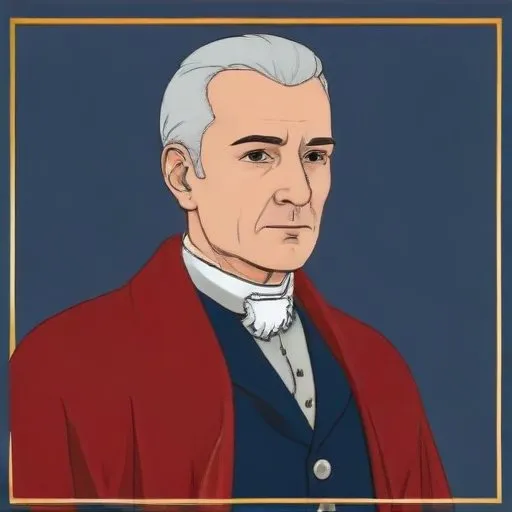
Ludovic Stewart, 2nd Duke of Lennox: A Scottish Nobleman's Legacy
A patrons of colonization and a second cousin to the king
Ludovic Stewart, 2nd Duke of Lennox, is most notable for his involvement in the Plantation of Ulster in Ireland and the colonization of Maine in New England. Through his paternal lines, he was a second cousin of King James VI of Scotland and I of England, making him a prominent figure in Scottish and English history.
Early Life and Origins
Born on September 29, 1574, Ludovic was the eldest son of Esmé Stewart, 1st Duke of Lennox, a Frenchman of Scottish ancestry, and Catherine de Balsac, a daughter of Guillaume de Balsac, Sieur d'Entragues. His father's family had strong ties to the Scottish royal family, with his father being a favourite and first cousin once removed of King James VI of Scotland.
Career in Scotland
After his father's death in 1583, Ludovic returned from France and was taken to meet King James VI of Scotland at Kinneil House. He soon after surrendered the Seigneurie d'Aubigny to his younger brother, Esmé. In the same month, the Earl of Arran installed him in Holyrood Palace, expelling Francis, Earl of Bothwell from his lodgings. The King issued instructions for Ludovic's education and placed him in the royal household under the care of Mr. Gilbert Moncreiff. On December 23, 1583, he was appointed as the High and Great Chamberlain of Scotland and first Gentleman of the King's Bedchamber, a role that included taking oaths of fidelity to the King from the other officers, ushers, and varlets of the Bedchamber and Wardrobe.
Colonization and Legacy
Ludovic's most notable achievements were in the realm of colonization. He played a significant role in the Plantation of Ulster in Ireland, which was a major English colonization effort in the early 17th century. Additionally, he was involved in the colonization of Maine in New England, with Richmond's Island and Cape Richmond named after him. The town of Richmond, Maine, formerly known as Fort Richmond, also bears his name.
Magnificent Monument and Legacy
Ludovic's magnificent monument with effigies survives in Westminster Abbey, a testament to his significant contributions to Scottish and English history. His legacy extends beyond his own achievements, with his involvement in colonization and plantation efforts shaping the course of history in Ireland and North America.
Personal Milestones and Key Life Events
- September 29, 1574: Born in Scotland
- 1583: Returned from France after his father's death and met King James VI of Scotland
- 1583: Appointed as the High and Great Chamberlain of Scotland and first Gentleman of the King's Bedchamber
- 1590: Played cards with King James VI of Scotland for the stake of £100
- February 16, 1624: Died
Historical Context and Legacy
Ludovic Stewart, 2nd Duke of Lennox, lived during a time of great change and upheaval in Scotland and England. His involvement in colonization and plantation efforts reflects the wider trends of European exploration and expansion during the 16th and 17th centuries. His legacy serves as a reminder of the significant impact that Scottish nobles had on the shaping of modern history.
FAQ
What was Ludovic Stewarts role in Scottish politics?
Ludovic Stewart, 2nd Duke of Lennox, played a significant role in Scottish politics, serving as a diplomat and advisor to King James VI of Scotland.
What was Ludovic Stewarts relationship with King James VI?
Ludovic Stewart was a close advisor and confidant of King James VI of Scotland, and played a key role in promoting the kings interests in Scotland and England.
What were Ludovic Stewarts military accomplishments?
Ludovic Stewart served as a military commander and diplomat, leading Scottish forces in battle and negotiating on behalf of the Scottish crown.
How did Ludovic Stewart contribute to the English Renaissance?
Ludovic Stewart was a patron of the arts and a supporter of the English Renaissance, promoting the work of poets and playwrights such as William Shakespeare.
What is Ludovic Stewarts legacy in Scottish history?
Ludovic Stewarts legacy in Scottish history is that of a skilled diplomat and military commander who played a key role in promoting Scottish interests during a time of great change and upheaval.