


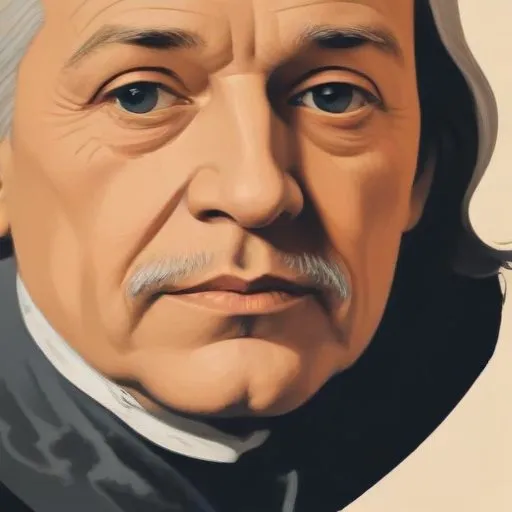
A German Romantic painter and engraver, known for his atmospheric landscapes and portraits that captured the essence of 19th-century German life. His works often featured mystical and fantastical elements.
Ludwig Emil Grimm, a renowned German painter, etcher, and copper engraver, is best known for his remarkable artistry and his connections to the celebrated Brothers Grimm, Jacob and Wilhelm. His works, characterized by meticulous attention to detail and poignant renditions, have left an indelible mark on the art world.
Born on March 14, 1790, in Hanau, Germany, Grimm's early life was marked by artistic inclinations, much like his brothers. His artistic journey began at the Kunsthochschule Kassel, where he honed his skills under the guidance of Philip Otto Runge. Later, from 1809 to 1817, he studied at the Academy of Fine Arts in Munich, further refining his craft.
Grimm's artistic career spanned across various mediums, including painting, etching, and copper engraving. In 1814, he served as an officer in the campaign against Napoleon, an experience that would later influence his artistic themes. His travels to Italy in 1816 introduced him to the art of engraving, under the tutelage of Carl Ernst Christoph Hess. The resulting sketchbook of engravings, based on his Italian journey, marked his first published work.
In 1819, Grimm's collaboration with his brothers led to the creation of the frontispiece for the second edition of Kinder und Hausmärchen (Grimm's Fairy Tales). This partnership not only showcased his artistic prowess but also deepened the bond between the Grimm brothers.
In recognition of his contributions to the art world, the city of Hanau established the Ludwig Emil Grimm Prize in 2012, aimed at supporting young artists. In 2014, a life-size bronze statue of Grimm was dedicated in front of the Zum Riesen hotel, a testament to his enduring legacy.
In 1832, Grimm played a pivotal role in the founding of the artists' colony in Willingshausen, where he became a Professor of history painting at the Kassel Academy. This endeavor not only showcased his artistic vision but also fostered a sense of community among artists.
Throughout his life, Grimm married twice, first to his wife who passed away in 1840, and then to the daughter of Reform theologian Christoph Friedrich Wilhelm Ernst in 1842. His passing on April 4, 1863, due to pneumonia in Kassel, marked the end of an era, but his artistic legacy continues to inspire generations.
Grimm's memoirs, Erinnerungen aus meinem Leben (Memoirs of My Life), edited with commentary by Adolf Stoll, offer a rare glimpse into the life and thoughts of this extraordinary artist. This personal account provides valuable insights into his experiences, artistic philosophy, and personal growth.
Ludwig Emil Grimm's remarkable artistic journey, marked by his exceptional talent, innovative spirit, and dedication to his craft, continues to captivate art enthusiasts to this day. His legacy serves as a testament to the power of art to transcend time and inspire future generations.
Born in 1774
A 19th-century Romantic painter and etcher, renowned for his mystical and contemplative landscapes that often featured ruins, mountains, and misty skies, evoking a sense of spirituality and connection to nature.
Born in 1777
A Romantic-era painter and illustrator renowned for his vibrant, emotive landscapes and portraits that captured the essence of German folklore. His works often featured dreamlike, mystical scenes that evoked a sense of wonder and enchantment.
Born in 1781
A renowned German painter and architect who designed iconic buildings, including the Konzerthaus Berlin, leaving a lasting mark on the city's cultural landscape.
