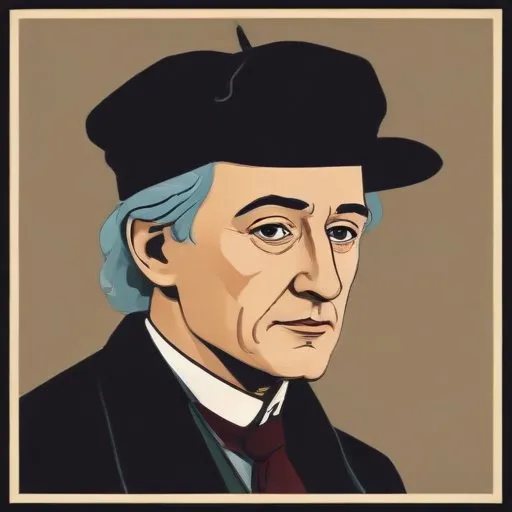
Ludwig Uhland: The Poetic Visionary of German Romanticism
A Life Dedicated to Poetry and Politics
Ludwig Uhland, a luminary of German literature, is renowned for his evocative poetry, which captures the essence of the Middle Ages, and his tireless efforts as a politician, fighting for human liberty and constitutional rights. Born on April 26, 1787, in Tübingen, Württemberg, Uhland's life was a testament to his passion for literature and politics.
Early Life and Education
Uhland's fascination with medieval literature began during his university days in Tübingen, where he studied jurisprudence. His curiosity soon led him to Paris, where he spent eight months immersing himself in the world of poetry. Upon his return, he worked as a lawyer in Stuttgart, further honing his skills as a poet.
Poetic Career
Uhland's poetic journey began in 1807, with contributions to Seckendorff's Musenalmanach. His subsequent works, including Kerners Poetischer Almanach and Deutscher Dichterwald, solidified his position as a leading poet of the German Romantic movement. In 1815, he published his critically acclaimed collection, Vaterländische Gedichte, which showcased his mastery of the lyric form.
A Dramatic Interlude
Uhland's foray into drama resulted in two notable works: Ernst, Herzog von Schwaben (1818) and Ludwig der Baier (1819). Although these plays are overshadowed by his poetic achievements, they demonstrate his versatility as a writer.
Politics and Legacy
Uhland's commitment to politics was evident in his role as a prominent proponent of the old rights of the estates during the controversy surrounding Württemberg's new constitution in 1815. He played a distinguished part in the states assembly, advocating for liberal values and human liberty. His unwavering dedication to these principles earned him recognition as one of the most consistent Old Liberals of his time.
Influence and Impact
Uhland's poetic style, characterized by precision, suppleness, and grace, continues to inspire generations of writers. His works have had a profound impact on German literature, shaping the Romantic movement and influencing notable authors like Hölderlin and Mörike.
Quotes and Memorable Sayings
- "The most beautiful things in life are those that are not seen, but felt in the heart."
- "Poetry is the music of the soul, and the soul is the music of the universe."
Historical Context and Legacy
Uhland's life and works are a testament to the tumultuous times in which he lived. His poetry and politics reflect the struggles and aspirations of the German people during the early 19th century. As a prominent figure in German literature, Uhland's legacy continues to inspire and influence writers to this day.
Awards and Honors
Uhland was recognized for his contributions to literature and politics, receiving numerous accolades and honors during his lifetime.
Personal Milestones and Key Life Events
- 1810: Graduated as a doctor of laws from the University of Tübingen
- 1812-1814: Worked as a lawyer in Stuttgart
- 1815: Published Vaterländische Gedichte, securing a wide circle of readers
- 1819: Played a key role in the states assembly, advocating for liberal values
Trivia and Fun Facts
- Uhland was known for his love of medieval literature and poetry
- He was a prolific writer, publishing numerous works throughout his life
FAQ
What is Ludwig Uhlands contribution to German literature?
Ludwig Uhland was a prominent German poet and philologist who made significant contributions to German literature, particularly in the Romantic era. His works, such as Poetische Werke and Gedichte, showcased his mastery of language and his exploration of themes like love, nature, and national identity.
How did Ludwig Uhlands historical research inform his poetry?
Ludwig Uhlands historical research and interest in medieval studies greatly influenced his poetry. His studies on the Middle Ages and the Renaissance inspired his poetry, which often featured historical and mythological themes.
What is Ludwig Uhlands most famous poem?
One of Ludwig Uhlands most famous poems is Des Sängers Fluch (The Singers Curse), which showcases his mastery of language and storytelling.
What was Ludwig Uhlands role in the German Revolution of 1848?
Ludwig Uhland played a significant role in the German Revolution of 1848, advocating for democratic reforms and national unity. As a member of the Frankfurt Parliament, he argued for a more liberal constitution and greater autonomy for the German states.
What is Ludwig Uhlands legacy in modern German literature?
Ludwig Uhlands legacy in modern German literature is immense. He is celebrated as a pioneering figure of the Romantic movement, and his works continue to inspire writers, poets, and scholars to this day.