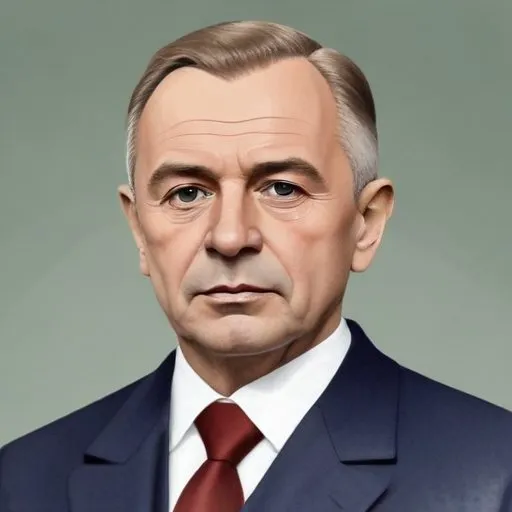
The Revolutionary Spirit of Ludwik Gorzkowski
A Champion of Polish Nationalism and Science
Ludwik Gorzkowski was a trailblazing Polish politician, physicist, and revolutionary activist who played a pivotal role in shaping the course of Polish history. He is best known for his instrumental role in organizing the Kraków uprising and being a key member of the Polish National Government alongside prominent figures like Jan Tyssowski and Aleksander Grzegorzewski.
Early Life and Education
Born on November 21, 1811, in Kraków, Gorzkowski's early life was marked by a passion for learning and a thirst for knowledge. He pursued higher education at the University of Kraków, where he studied mathematics and physics, earning his doctorate in 1835. This academic foundation would later prove instrumental in his contributions to the scientific community.
The Call to Revolution
Gorzkowski's involvement in the Polish National Government was a natural extension of his commitment to the Polish Democratic Society. Alongside his contemporaries, he co-authored a plan for the Kraków uprising in 1846, which aimed to establish a provisional government and reclaim Polish sovereignty. When the initial attempt was met with arrests and setbacks, Gorzkowski refused to relinquish his vision, joining forces with like-minded individuals to form the National Government.
A Blend of Science and Activism
Gorzkowski's unique blend of scientific expertise and revolutionary fervor made him an invaluable asset to the Polish National Government. His contributions extended beyond the realm of politics, as he collaborated with prominent figures like Edward Dembowski to advance the cause of Polish nationalism. This fusion of science and activism not only fueled his own endeavors but also inspired a generation of Polish patriots.
Legacy and Impact
Ludwik Gorzkowski's legacy extends far beyond his pivotal role in the Kraków uprising. His contributions to Polish nationalism, science, and education continue to inspire and educate generations. As a testament to his enduring influence, Gorzkowski's name remains synonymous with Polish revolutionary spirit and scientific innovation. His life serves as a powerful reminder of the transformative power of courage, conviction, and intellectual pursuit.
- Co-authored the plan for the Kraków uprising in 1846
- Member of the Polish National Government alongside Jan Tyssowski, Aleksander Grzegorzewski, and Karol Rogawski
- Doctorate in mathematics and physics from the University of Kraków (1835)
- Collaborated with prominent figures like Edward Dembowski to advance Polish nationalism
Remembering Ludwik Gorzkowski
In the annals of Polish history, Ludwik Gorzkowski's name shines bright, a beacon of courage, conviction, and intellectual pursuit. His remarkable life and contributions serve as a powerful reminder of the enduring power of the human spirit, inspiring generations to come. As we reflect on his remarkable journey, we are reminded that even the most ordinary lives can become extraordinary, leaving an indelible mark on the world.
FAQ
What was Ludwik Gorzkowskis role in the Polish uprising?
Ludwik Gorzkowski was a prominent figure in the Polish uprising, playing a key role in the countrys struggle for independence and self-governance. He was a passionate advocate for Polish sovereignty and democracy.
How did Ludwik Gorzkowskis work impact the Polish scientific community?
Ludwik Gorzkowskis work as a physicist had a significant impact on the Polish scientific community, contributing to the development of the countrys scientific infrastructure and inspiring future generations of scientists.
What were Ludwik Gorzkowskis most notable scientific contributions?
Ludwik Gorzkowskis most notable scientific contributions were in the field of physics, where he made significant discoveries and advancements. His work laid the foundation for future research and innovation in Poland.
How did Ludwik Gorzkowskis revolutionary activism influence Polish politics?
Ludwik Gorzkowskis revolutionary activism had a profound impact on Polish politics, inspiring a new generation of politicians and activists to fight for independence and democracy. His legacy continues to influence Polish politics today.
What is Ludwik Gorzkowskis legacy in Polish history?
Ludwik Gorzkowskis legacy in Polish history is that of a dedicated patriot, scientist, and revolutionary. He is remembered for his tireless efforts to promote Polish independence and self-governance, as well as his contributions to the countrys scientific community.