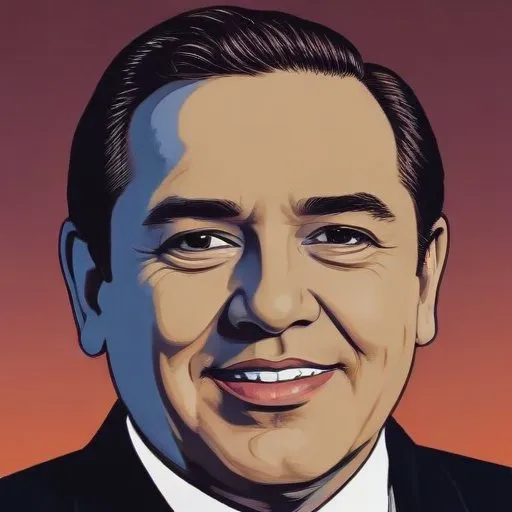
Luis Somoza Debayle: The Powerful Leader of Nicaragua
A Legacy of Power and Controversy
Luis Somoza Debayle, the 50th President of Nicaragua, is known for his strong grip on the country's politics and economy, as well as his influential role in shaping Central America's common market. As the son of Anastasio Somoza García, the former President of Nicaragua, Luis Debayle succeeded his father and ruled the country from 1957 to 1963, leaving a lasting impact on Nicaraguan history.
Early Life and Education
Born on November 18, 1922, in León, Nicaragua, Luis Somoza Debayle was destined for greatness. At just 14 years old, he attended Saint Leo College Prep near Tampa, Florida, before transferring to La Salle Military Academy on Long Island, New York. He then pursued higher education at Louisiana State University, where he was a member of the Phi Sigma Alpha Hispanic fraternity.
Rise to Power
Following the assassination of his father in 1956, Luis Debayle was appointed as acting president, and later elected president in his own right in 1957. During his rule, he maintained a firm grip on power, restricting civil liberties and perpetuating corruption. His brother,
Anastasio Somoza Debayle, headed the National Guard, making him the second most powerful man in the country.
Reforms and Achievements
Despite the criticisms, Luis Debayle introduced several reforms, including the establishment of the Central American Common Market, with the backing of the Alliance for Progress. This move eased trade restrictions and promoted regional cooperation. During his presidency, Nicaragua also played a key role in the Bay of Pigs Invasion, allowing the CIA-trained Cuban rebels to embark from Puerto Cabezas.
Personal Life and Relationships
In 1947, Luis Debayle married Costa Rican Isabel Urcuyo, with whom he had seven children. His family, the Somoza family, was considered one of the most powerful in Nicaragua during his rule.
Legacy and Impact
Although Luis Debayle declined to run for reelection in 1963, he and his brother ensured that the presidency was held by politicians loyal to the Somozas. This allowed Luis to remain the de facto leader of Nicaragua until his death in 1967, when he suffered a massive heart attack at the age of 44.
Philosophical Contributions and Beliefs
Luis Debayle's leadership style was marked by authoritarianism and a strong sense of nationalism. He believed in the importance of maintaining power and stability, even if it meant restricting individual freedoms.
Net Worth and Financial Impact
As the president of Nicaragua, Luis Debayle accumulated significant wealth and power. His family's business empire, which included interests in agriculture, industry, and finance, contributed to their immense wealth and influence.
Personal Milestones and Key Life Events
- 1922: Born in León, Nicaragua
- 1936: Attended Saint Leo College Prep near Tampa, Florida
- 1947: Married Costa Rican Isabel Urcuyo
- 1950-1953: President of the lower chamber of National Congress of Nicaragua
- 1954-1956: President of the lower chamber of National Congress of Nicaragua (second term)
- 1957-1963: President of Nicaragua
- 1963: Declined to run for reelection
- 1965-1966: President of the Senate
- 1967: Died in Managua, Nicaragua, at the age of 44
Influence on Modern Society
Luis Debayle's legacy continues to shape Nicaraguan politics and society. His rule, though marked by controversy, paved the way for future leaders and contributed to the country's economic growth.
Comparative Analysis with Contemporaries
Luis Debayle's leadership style and policies are often compared to those of other authoritarian leaders of the time, such as
Fidel Castro of Cuba and
Rafael Trujillo of the Dominican Republic.
Historical Context and Legacy
Luis Debayle's rule is often seen as a period of relative stability and economic growth in Nicaragua. However, his authoritarianism and human rights abuses have also been widely criticized. His legacy serves as a reminder of the complexities of Nicaraguan history and the ongoing struggle for democracy and human rights in the region.
FAQ
What was Luis Somoza Debayles role in Nicaraguan politics?
Luis Somoza Debayle was the 70th President of Nicaragua, serving from 1957 to 1963. He also held various other political positions, including Minister of Defense and Ambassador to the United States.
What were Luis Somoza Debayles contributions to Nicaraguas economy?
During his presidency, Luis Somoza Debayle implemented several economic reforms, including modernizing the countrys infrastructure, promoting agricultural development, and stimulating foreign investment.
How did Luis Somoza Debayles regime affect human rights in Nicaragua?
Luis Somoza Debayles government was criticized for its authoritarian rule and human rights abuses, including censorship, torture, and repression of political opponents.
What was Luis Somoza Debayles relationship with the United States?
Luis Somoza Debayle maintained close ties with the United States, which provided significant economic and military aid to Nicaragua during his presidency.
What was Luis Somoza Debayles legacy after his presidency?
Luis Somoza Debayles legacy is marked by controversy, with some seeing him as a modernizer who brought economic growth to Nicaragua, while others view him as a dictator who suppressed human rights and perpetuated corruption.