


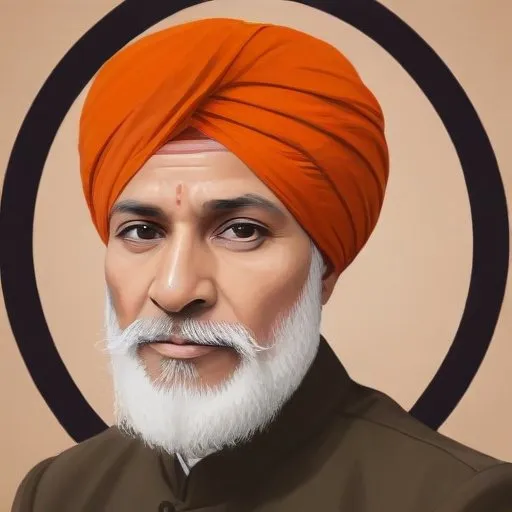
An Indian diplomat, author, and philanthropist who worked tirelessly to promote peace, tolerance, and cultural understanding through his writings and humanitarian efforts. He founded the South Asia Foundation to foster regional cooperation and development.
Madanjeet Singh, a true polymath, is renowned for his multifaceted career as an Indian diplomat, painter, photographer, and writer. Across his life, he traversed the realms of international relations, art, literature, and education, leaving behind a legacy that continues to inspire and promote global harmony.
Born on April 16, 1924, in Lahore, British India, Madanjeet Singh grew up in an era marked by India's struggle for independence. During Mahatma Gandhi's Quit India movement in 1942, Singh was imprisoned, an experience that would shape his future endeavors. After partition in 1947, he worked as a volunteer in refugee camps in Delhi, where he witnessed the plight of those uprooted by partition.
Singh joined the Indian Foreign Service in 1953, embarking on a distinguished diplomatic career that spanned over three decades. He served in various countries, including Italy, Yugoslavia, Greece, Laos, Sweden, Denmark, Spain, USSR, and South Vietnam, where he held the position of Consul General. His diplomatic prowess earned him the respect of nations, and he eventually became Ambassador of India in Asia, South America, Africa, and Europe.
Singh's artistic inclinations flourished alongside his diplomatic career. He wrote several books, starting with Indian Sculpture in Bronze and Stone in 1952, which gained international recognition. This was followed by India in 1954, part of the UNESCO World Art Series. Other notable works include AJANTA, Paintings of the Sacred and the Secular (1964), Himalayan Art (1968), The White Horse (1976), This, My People (1989), and The Sun in Myth and Art (1993).
In 1995, UNESCO created the biennial UNESCOMadanjeet Singh Prize for the Promotion of Tolerance and Non-Violence in recognition of his lifelong commitment to communal harmony and peace. This prestigious award is a testament to Singh's dedication to fostering global understanding and cooperation.
In 2000, Singh was designated a UNESCO Goodwill Ambassador on the United Nations International Day of Tolerance. Throughout his life, he received numerous honors and awards for his contributions to art, literature, and international relations.
Madanjeet Singh's remarkable life and achievements serve as a beacon of inspiration, reminding us of the importance of tolerance, cultural understanding, and the pursuit of knowledge. His multifaceted legacy continues to enrich our world, encouraging future generations to strive for harmony, peace, and artistic expression.
82 Years Old
The 6th Prime Minister of India, a key figure in Indian politics, known for introducing economic reforms and promoting technology in the country. He was also a strong advocate for social justice and equality.
79 Years Old
The first female President of the Indian National Congress, leading the party to a landslide victory in 2004, and playing a crucial role in shaping India's political landscape.
94 Years Old
The 13th Prime Minister of India, a renowned economist who led the country through a period of rapid economic growth and liberalization, implementing reforms that transformed India's economy. He is credited with helping to lift millions of people out of poverty.
91 Years Old
The first female President of India, serving from 2007 to 2012, known for her efforts to empower women and the underprivileged. She played a significant role in shaping India's foreign policy and promoting education.
Born in 1869
Indian freedom fighter, activist, and philosopher who led India to independence from British rule through non-violent civil disobedience, inspiring civil rights movements worldwide.
56 Years Old
Indian National Congress leader and scion of the Nehru-Gandhi family, known for his efforts to revitalize the party and promote social justice.
Born in 1917
The first female Prime Minister of India, serving from 1966 to 1977 and again from 1980 until her assassination in 1984, known for her strong leadership and economic reforms.
Born in 1889
India's first Prime Minister, a key figure in the country's struggle for independence from British rule, and a champion of democracy and secularism. He played a crucial role in shaping modern India's government and economy.
