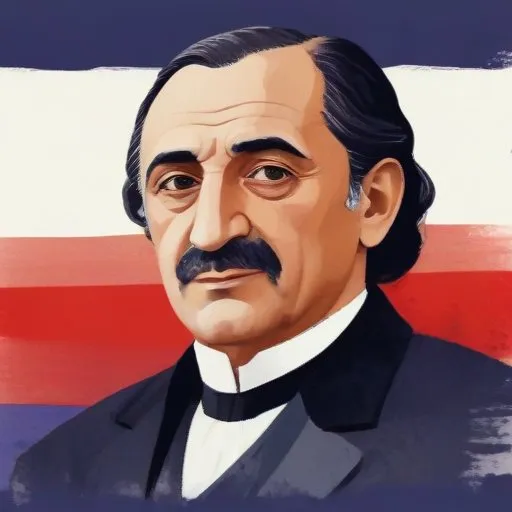
Makar Yekmalyan: The Maestro of Armenian Church Music
A legacy of sacred sounds
Makar Yekmalyan is revered as the mastermind behind the majestic Patarag, the iconic setting of the Armenian Apostolic Church's Divine Liturgy. This monumental composition, completed in 1892, has become an integral part of Armenian cultural heritage, and Yekmalyan's most enduring legacy.
Early Life and Education
Born on February 2, 1856, in Vagharshapat, Yekmalyan's early life was steeped in the rich cultural traditions of Armenia. He began his musical journey at the Echmiadzin seminary, where he developed a deep understanding of the Armenian Church's musical heritage. Later, he traveled to St. Petersburg to study under the renowned composer
Nikolai Rimsky-Korsakov, further refining his skills and artistic vision.
Teaching and Composition
Yekmalyan returned to his homeland and taught music in Tbilisi (then known as Tiflis), where he would eventually settle and devote himself to composition. It was during this period that he poured his heart and soul into the creation of the Patarag, a work that would go on to define his legacy.
The Patarag: A Masterpiece of Armenian Church Music
The Patarag, published in Leipzig in 1896, is a sublime blend of traditional Armenian melodies and harmonies, infused with a deep sense of spirituality and reverence. This masterpiece is a testament to Yekmalyan's innovative genius, as he transformed the traditional Armenian liturgical music into a work of profound beauty and emotional depth.
Legacy and Impact
Yekmalyan's contribution to Armenian church music is immeasurable. The Patarag has become an integral part of the Armenian Apostolic Church's liturgical tradition, with its haunting melodies and soaring harmonies evoking a sense of profound connection to the divine. His work has inspired generations of Armenian composers, and his legacy continues to resonate in the country's rich cultural landscape.
Personal Milestones and Key Life Events
- 1856: Born in Vagharshapat, Armenia
- Studied at the Echmiadzin seminary
- Studied under Nikolai Rimsky-Korsakov in St. Petersburg
- Taught music in Tbilisi (Tiflis)
- 1892: Completed the Patarag
- 1896: Patarag published in Leipzig
- 1905: Passed away in Tiflis
Remembering a Musical Icon
Makar Yekmalyan's life was a testament to his unwavering dedication to his art and his heritage. Through his sublime music, he has left an indelible mark on Armenian culture, ensuring that his legacy will continue to inspire and uplift generations to come.
FAQ
What was Makar Yekmalyans contribution to Armenian music?
Makar Yekmalyan was a renowned Armenian composer who made significant contributions to Armenian music, particularly in the development of classical music and opera.
What is Yekmalyans most famous work?
Yekmalyans most famous work is his opera David Bek, which tells the story of a 18th-century Armenian national hero. The work is considered a masterpiece of Armenian opera and is still performed today.
How did Yekmalyans music reflect Armenian culture?
Yekmalyans music reflected Armenian culture through its use of folk melodies, rhythms, and themes. His work helped to promote Armenian national identity and cultural heritage, both within Armenia and internationally.
What was Yekmalyans role in the development of Armenian classical music?
Yekmalyan played a crucial role in the development of Armenian classical music, helping to establish it as a distinct and important part of Armenian cultural heritage. His work paved the way for future generations of Armenian composers.
How is Yekmalyan remembered in Armenia today?
Makar Yekmalyan is remembered as one of the most important figures in Armenian musical history, celebrated for his contributions to Armenian culture and his role in promoting national identity.