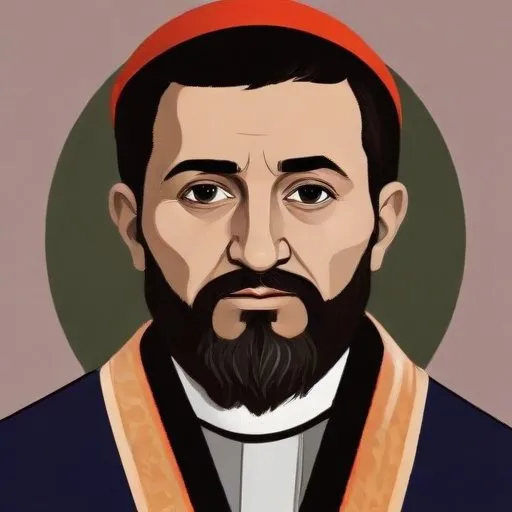
Komitas: The Founder of Armenian National School of Music
A Pioneer in Ethnomusicology
Komitas, born Soghomon Soghomonian, is revered as the founder of the Armenian national school of music and a pioneer in ethnomusicology. This Armenian priest, musicologist, composer, arranger, singer, and choirmaster dedicated his life to preserving and promoting Armenian folk music, earning him recognition as one of the most important figures in Armenian cultural heritage.
Early Life and Education
Orphaned at a young age, Komitas was taken in by the Etchmiadzin, the religious center of Armenia, where he received his education at the Gevorgian Seminary. In 1895, he was ordained as a vardapet (celibate priest) and later pursued music studies at the
Frederick William University in Berlin. This unique blend of Eastern and Western influences would shape his approach to music and ultimately define his legacy.
The Preservation of Armenian Folk Music
Komitas' most significant contribution to Armenian culture was his tireless effort to collect and transcribe over 3,000 pieces of Armenian folk music. Although more than half of these melodies were lost, around 1,200 remain, providing a rich tapestry of Armenia's musical heritage. His work not only preserved Armenia's cultural identity but also introduced Armenian folk music to the world.
A Bridge Between Cultures
Komitas' fascination with other cultures led him to publish the first-ever collection of Kurdish folk songs, titled "Kurdish Melodies," in 1903. This eclectic approach to music allowed him to connect with diverse audiences, earning the appreciation of renowned composers like
Claude Debussy.
A Dark Chapter: The Armenian Genocide
Komitas' life took a devastating turn during the Armenian Genocide in 1915. Along with hundreds of other Armenian intellectuals, he was arrested and deported to a prison camp by the Ottoman government. After his release, the trauma of witnessing the atrocities committed against his people led to a mental breakdown and severe post-traumatic stress disorder (PTSD).
Legacy and Impact
Despite the hardships he faced, Komitas' legacy continues to inspire generations of musicians and musicologists. His choir, which presented Armenian music in numerous European cities, helped establish Armenian folk music as a distinct and valuable part of the world's cultural heritage. Arshag Chobanian aptly called Komitas "the savior of Armenian music."
Awards and Honors
Komitas' contributions to music and culture have been recognized with several awards and honors, including the title of People's Artist of Armenia.
Inspirational Quotes
- "Music is the soul of the people, and the people are the soul of music." - Komitas
Historical Context and Legacy
Komitas' life and work serve as a testament to the power of cultural preservation and the importance of promoting diversity in the face of adversity. His legacy continues to inspire new generations of musicians, musicologists, and cultural enthusiasts, solidifying his place as one of the most influential figures in Armenian cultural heritage.
FAQ
Who was Komitas?
Komitas was an Armenian-French priest, composer, and musicologist who played a crucial role in preserving Armenian folk music. He is considered one of the most important figures in Armenian cultural history.
What was Komitas contribution to Armenian music?
Komitas traveled throughout Armenia, collecting and transcribing over 3,000 folk songs, which he then arranged and harmonized. His work helped to preserve Armenian cultural heritage and contributed to the development of Armenian classical music.
What was Komitas experience during the Armenian Genocide?
Komitas survived the Armenian Genocide, but was deeply traumatized by the experience. He spent the rest of his life in institutions, where he continued to compose music, but struggled with mental illness.
What was Komitas legacy?
Komitas legacy is one of cultural preservation and national pride. His music continues to be celebrated in Armenia and around the world, and he is remembered as a hero of Armenian culture.
How is Komitas remembered today?
Today, Komitas is remembered as a national hero in Armenia, and his music is celebrated through concerts and festivals. His legacy continues to inspire new generations of Armenian musicians and composers.