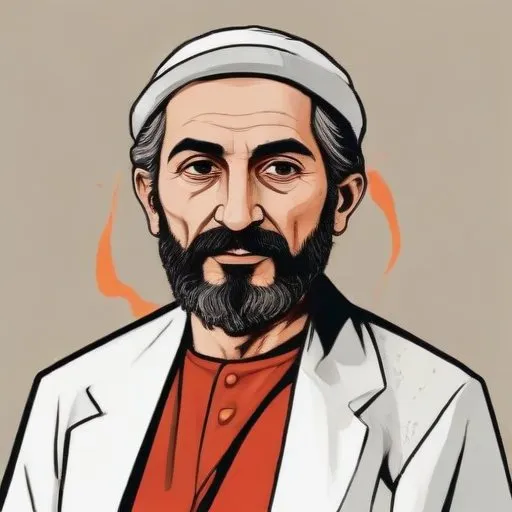
Yeghishe Charents: The Celebrated Armenian Poet and Public Activist
Recognized as the Main Poet of the 20th Century in Armenia
Yeghishe Charents is renowned for his remarkable contributions to Armenian literature, poetry, and public activism. As an early proponent of communism and the USSR, Charents' literary works often revolved around his experiences in the First World War, the Russian Revolution, and the Armenian community.
Early Life and Education
Born Yeghishe Abgari Soghomonyan in 1897 in Kars, Eastern Armenia, Charents hailed from a family involved in the rug trade. His family roots trace back to the Armenian community of Maku, Persian Armenia. Charents attended an Armenian elementary school, followed by a Russian technical secondary school in Kars from 1908 to 1912. During this period, he developed a passion for reading, which would eventually shape his literary career.
Political and Literary Development
In 1912, Charents had his first poem published in the Armenian periodical Patani Tiflis. The following year, amidst the turmoil of the First World War and the Armenian genocide in the Ottoman Empire, he volunteered to fight in a detachment on the Caucasian Front. This experience had a profound impact on his writing, as he witnessed the destruction inflicted upon the Armenian population in Van. These memories would later be reflected in his poems.
Literary Career and Influences
Charents' literary works span a wide range of genres, including poetry, novels, and essays. His poetry often explores themes of love, war, and the Armenian struggle for independence. As a futurist, Charents was heavily influenced by the works of
Vladimir Mayakovsky and Vladimir Kirshon. His unique style blended traditional Armenian motifs with modernist techniques, earning him recognition as a leading figure in Armenian literature.
Political Activism and Controversies
Charents was an ardent supporter of Soviet Armenia, particularly during the period of Lenin's New Economic Policy (NEP). He joined the Bolshevik Party and actively promoted the Stalinist regime. However, as the Soviet Union's direction shifted under Stalin, Charents grew disillusioned and eventually became a vocal critic of the regime. This led to his arrest by the NKVD during the 1930s Great Purge, and ultimately, his tragic demise in 1937.
Legacy and Rehabilitation
After Stalin's death, Charents was exonerated in a 1954 speech by
Anastas Mikoyan, and officially rehabilitated by the Soviet state in 1955 during the Khrushchev Thaw. This posthumous recognition cemented Charents' status as a celebrated figure in Armenian literature and public activism. His works continue to inspire generations of Armenians, and his legacy serves as a testament to the power of art and activism in the face of adversity.
Major Works and Quotes
Some of Charents' most notable works include:
- "The Menu" (1924)
- "The Epoch of Storms" (1925)
- "The Land of Nairi" (1933)
One of his most memorable quotes is: "The fate of the people is not in the stars, but in their own hands." This phrase encapsulates Charents' commitment to Armenian self-determination and his belief in the power of collective action.
Historical Context and Comparative Analysis
Charents' life and works are deeply intertwined with the complex historical context of Armenia and the Soviet Union. His experiences during the First World War, the Russian Revolution, and the Armenian genocide shaped his literary voice and public activism. A comparative analysis of Charents' works with those of his contemporaries, such as Mayakovsky and Kirshon, reveals his unique blend of futurism and Armenian national identity.
Impact on Modern Society and Cultural Significance
Yeghishe Charents' legacy extends beyond the realm of literature to the broader cultural and social spheres. His poetry and public activism continue to inspire Armenian communities worldwide, fostering a sense of national pride and identity. Furthermore, his experiences during the Soviet era serve as a testament to the resilience of the human spirit in the face of political repression.