


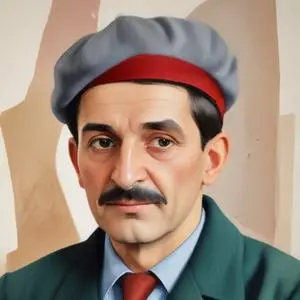
A pioneering abstract expressionist, this artist's bold, emotive works blended surrealism and cubism, influencing a generation of artists. Known for their vibrant, dreamlike paintings that explored the human experience.
Known for his pioneering work in Abstract Expressionism, Arshile Gorky was a renowned Armenian-American painter who left an indelible mark on the art world. Alongside Mark Rothko, Jackson Pollock, and Willem de Kooning, Gorky is hailed as one of the most powerful American painters of the 20th century.
Born Vostanik Manoug Adoian on April 15, 1904, in the village of Khorgom, Ottoman Empire (modern-day Turkey), Gorky's life was marred by tragedy and displacement. His family fled to Russian-controlled territory during the Armenian genocide, and his mother died of starvation in Yerevan in 1919. These early experiences had a profound impact on Gorky's artistic development.
Gorky's artistic journey began in 1923 when he enrolled in the New England School of Art in Boston. Initially influenced by Impressionism, he later transitioned to Post-Impressionism and eventually developed his unique Abstract Expressionist style. Notable works include The Liver is the Cock's Comb (1944), The Plow and the Song (1947), and One Year the Milkweed (1944).
Gorky's innovative style and techniques paved the way for future generations of artists. His emphasis on expressive brushstrokes, vibrant colors, and emotional depth revolutionized the art world. He inspired artists like Mark Rothko, who credited Gorky with teaching him the importance of gesture and spontaneity in painting.
Gorky's artistic philosophy was deeply rooted in his experiences of displacement and loss. He believed that art should be an emotional reflection of the human experience, and that the artist's inner turmoil could be transformed into something beautiful and meaningful.
Gorky's pioneering work in Abstract Expressionism has left an enduring impact on modern art. His influence can be seen in the works of artists like Willem de Kooning, Robert Motherwell, and Franz Kline. Today, his paintings are highly regarded and can be found in prominent museums and private collections worldwide.
Born in 1903
A pioneer of abstract expressionism, creating bold, rectangular color fields that evoke emotions and spark introspection. His works are a testament to the power of art to transcend language and culture.
Born in 1912
Pioneering abstract expressionist artist who splattered and dripped paint to create dynamic, emotive works that redefined modern art. Known for chaotic, intricate pieces that evoke raw emotion.
Born in 1904
A pioneering abstract expressionist, he revolutionized modern art with bold, expressive brushstrokes and vibrant colors, creating dynamic, emotive pieces that continue to inspire.
Born in 1905
A pioneer of Abstract Expressionism, creating bold, color-field paintings that evoke emotions and spirituality. His iconic "zip" paintings feature vibrant, vertical stripes that seem to pulse with energy.
Born in 1904
A pioneering abstract expressionist, creating large-scale, gestural paintings that explored the human experience and the American West. Known for his bold, expressive brushstrokes and vibrant color palette.
Born in 1925
A pioneer of pop art, combining found objects and images to create innovative, thought-provoking works that blurred the lines between art and everyday life.
96 Years Old
A pioneer of pop art, creating enigmatic works that explore the relationship between perception, reality, and meaning, often using common images like flags and targets.
98 Years Old
A renowned artist who blended painting and sculpture to create unique, expressive works that explored ancient mythology and modern abstraction. His distinctive style often featured scribbles, marks, and colorful splatters.
