


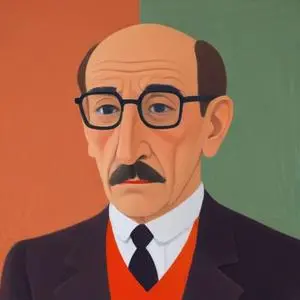
A pioneer of abstract expressionism, creating bold, rectangular color fields that evoke emotions and spark introspection. His works are a testament to the power of art to transcend language and culture.
Mark Rothko is renowned for his captivating color field paintings, characterized by rectangular regions of pure color that evoke emotions and spark introspection. His distinctive style, which he developed in the 1940s, has become synonymous with American abstract expressionism.
Born Markus Yakovlevich Rothkowitz on September 25, 1903, in Daugavpils, Latvia (then under Russian occupation), Rothko immigrated to the United States with his family in 1913. They settled in Portland, Oregon, before moving to New York City in 1923, where Rothko's artistic journey began. Initially, his work focused on urban landscapes, but he soon transitioned to abstract expressionism, drawn to the emotional depth it offered.
In the late 1940s, Rothko's art underwent a transformative phase, as he turned to color field paintings. These works, characterized by rectangular fields of pure color, captivated audiences and cemented his reputation as a master of abstract expressionism. Rothko's use of color was not merely decorative; it was an attempt to convey the sublime, the spiritual, and the emotional.
Rothko's artistic philosophy was rooted in the concept of the sublime, which he believed could be evoked through the use of color and form. He sought to create an emotional connection between the viewer and the artwork, encouraging introspection and self-reflection.
Rothko's work has had a profound impact on modern art, influencing generations of artists, designers, and architects. His use of color has inspired interior design, fashion, and even music. His legacy can be seen in the works of artists like Gerhard Richter, Brice Marden, and Julie Mehretu, among many others.
"A painting is not a picture of an experience, but is the experience."
Mark Rothko's remarkable career, spanning over four decades, has left an indelible mark on the world of art. His innovative approach to color and form continues to inspire and influence artists, designers, and art lovers alike, cementing his position as one of the most important artists of the 20th century.
Born in 1912
Pioneering abstract expressionist artist who splattered and dripped paint to create dynamic, emotive works that redefined modern art. Known for chaotic, intricate pieces that evoke raw emotion.
Born in 1904
A pioneering abstract expressionist, he revolutionized modern art with bold, expressive brushstrokes and vibrant colors, creating dynamic, emotive pieces that continue to inspire.
Born in 1905
A pioneer of Abstract Expressionism, creating bold, color-field paintings that evoke emotions and spirituality. His iconic "zip" paintings feature vibrant, vertical stripes that seem to pulse with energy.
Born in 1904
A pioneering abstract expressionist, creating large-scale, gestural paintings that explored the human experience and the American West. Known for his bold, expressive brushstrokes and vibrant color palette.
Born in 1910
A prominent figure in the abstract expressionist movement, known for bold, expressive brushstrokes and vibrant colors that evoked intense emotions.
Born in 1913
A prominent abstract artist and educator, known for his bold, geometric paintings that explored the spiritual and emotional potential of art. He also wrote extensively on art theory and criticism.
Born in 1925
A pioneer of pop art, combining found objects and images to create innovative, thought-provoking works that blurred the lines between art and everyday life.
96 Years Old
A pioneer of pop art, creating enigmatic works that explore the relationship between perception, reality, and meaning, often using common images like flags and targets.
