


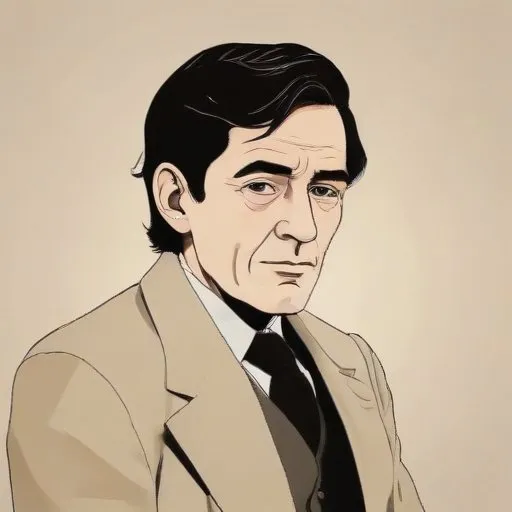
A novelist, poet, and literary critic who championed the Lost Generation of American writers, including Hemingway and Fitzgerald, and wrote influential literary criticism. Known for his insightful essays and poetry that explored the American experience.
Malcolm Cowley, a prominent American writer, editor, historian, poet, and literary critic, is best known for his memoir, Exiles Return, and his role as a chronicler and fellow traveler of the Lost Generation. As an influential editor and talent scout at Viking Press, Cowley played a significant role in shaping the literary landscape of the 20th century.
Born on August 24, 1898, in Belsano, Cambria County, Pennsylvania, to William Cowley and Josephine Hutmacher, Malcolm grew up in the East Liberty neighborhood of Pittsburgh. His father, William, was a homeopathic doctor, and Malcolm attended Shakespeare Street elementary school and Peabody High School, where his boyhood friend Kenneth Burke was also a student. Cowley's first published writing appeared in his high school newspaper.
Cowley attended Harvard University, but his studies were interrupted when he joined the American Field Service during World War I to drive ambulances and munitions trucks for the French army. He returned to Harvard in 1919 and became editor of The Harvard Advocate. He graduated with a B.A. in 1920.
Cowley was one of the many literary and artistic figures who migrated to Paris in the 1920s. He became one of the best-known chroniclers of the American expatriates in Europe, frequently spending time with writers like Ernest Hemingway, F. Scott Fitzgerald, John Dos Passos, Ezra Pound, Gertrude Stein, E. E. Cummings, Edmund Wilson, Erskine Caldwell, and others associated with American literary modernism.
In his poetry collection, Blue Juniata, Cowley described these Americans who traveled abroad during the post-war period as a "wandering, landless, uprooted generation." This sense of uprootedness deeply affected Cowley's appreciation for the necessities of artistic freedom.
Cowley's memoir, Exiles Return, is considered one of his most significant works, offering a firsthand account of the Lost Generation's experiences in Paris. The book was first published in 1934 and revised in 1951.
As an editor at Viking Press, Cowley played a crucial role in discovering and promoting the work of emerging writers, including John Steinbeck, Ernest Hemingway, and William Faulkner.
Cowley's contributions to American literary modernism are undeniable. His work as a chronicler and editor helped shape the literary landscape of the 20th century. His memoir, Exiles Return, remains a seminal work, offering a unique perspective on the Lost Generation.
Cowley's legacy extends beyond his own writing to the many writers he influenced and promoted throughout his career. His commitment to artistic freedom and his appreciation for the Lost Generation's sense of uprootedness continue to inspire writers and readers alike.
"The artist's only responsibility is his art. He will be completely absorbed in it. He will not have a separate scale of values for his art and for the rest of his life."
"The world is a book, and those who do not travel read only one page."
Born in 1896
Author of novels and short stories that capture the essence of the Jazz Age, exploring themes of wealth, class, and the American Dream. Known for timeless classics like "The Great Gatsby" and "Tender Is the Night".
Born in 1874
A pioneering figure in modernist literature, known for experimental writing styles and influential salons that fostered artistic innovation. 82
Born in 1885
A pioneering modernist poet and critic who transformed 20th-century literature with innovative styles and provocative ideas, shaping the course of modern poetry.
Born in 1888
A renowned poet, playwright, and critic who reshaped modern poetry with works like "The Waste Land" and "Old Possum's Book of Practical Cats", influencing literature and art with their unique style.
Born in 1896
A pioneering writer of the Lost Generation, known for experimental novels that capture the spirit of early 20th-century America, blending fiction and journalism.
Born in 1876
A pioneering writer of modernist fiction, known for his innovative and influential short stories that explored the American psyche and the human condition.
Born in 1897
A Nobel Prize-winning author of complex, psychologically rich novels and short stories that explore the American South's troubled history and human nature. His writing style, blending stream-of-consciousness and non-linear narrative, has influenced generations of writers.
Born in 1899
A legendary writer who crafted sparse, powerful prose, capturing the human experience in novels like "The Old Man and the Sea" and "A Farewell to Arms".
