


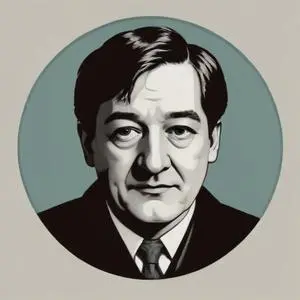
A pioneering writer of modernist fiction, known for his innovative and influential short stories that explored the American psyche and the human condition.
Sherwood Anderson is renowned for his subjective and self-revealing works that captured the essence of American life in the early 20th century. His most enduring work, the short-story sequence Winesburg, Ohio, launched his career and cemented his place as a pioneer of modern American literature.
Sherwood Berton Anderson was born on September 13, 1876, in Camden, Ohio, to Emma Jane and Irwin McLain Anderson. His early life was marked by frequent moves, which would later influence his writing. The family's nomadic existence, coupled with his father's struggles with addiction and financial difficulties, shaped Anderson's perspective on the American Dream.
Anderson's education was largely self-directed, and he developed a passion for literature and writing. He began his career as a successful copywriter and business owner in Cleveland and Elyria, Ohio. However, in 1912, Anderson suffered a nervous breakdown, which led him to abandon his business and family to pursue his dream of becoming a writer.
In Chicago, Anderson found a community of like-minded writers and intellectuals, which inspired him to produce some of his most iconic works. Throughout the 1920s, he published several short story collections, novels, memoirs, essays, and a book of poetry. Although his books sold reasonably well, it was Dark Laughter (1925) that brought him commercial success and critical acclaim.
Sherwood Anderson's writing style, characterized by its subjective and introspective nature, influenced a generation of American writers. His work is marked by its ability to capture the complexities of human relationships, the fragility of the American Dream, and the search for meaning in a rapidly changing world.
Anderson's personal life was marked by four marriages and a series of tumultuous relationships. His experiences with love, loss, and heartbreak are reflected in his writing, which often explores the intricacies of human relationships.
"The whole thing is to hear what is in the silence."
"I think of writing as a way of getting at the truth."
Sherwood Anderson's legacy extends far beyond his own works. He has inspired generations of writers, including William Faulkner, Ernest Hemingway, and John Steinbeck. His innovative storytelling style and ability to capture the essence of American life have cemented his place as a pioneer of modern American literature.
Sherwood Anderson passed away on March 8, 1941, leaving behind a body of work that continues to captivate readers and inspire writers to this day.
Born in 1899
A legendary writer who crafted sparse, powerful prose, capturing the human experience in novels like "The Old Man and the Sea" and "A Farewell to Arms".
Born in 1897
A Nobel Prize-winning author of complex, psychologically rich novels and short stories that explore the American South's troubled history and human nature. His writing style, blending stream-of-consciousness and non-linear narrative, has influenced generations of writers.
Born in 1896
Author of novels and short stories that capture the essence of the Jazz Age, exploring themes of wealth, class, and the American Dream. Known for timeless classics like "The Great Gatsby" and "Tender Is the Night".
Born in 1902
A renowned writer of realistic and powerful novels, often focusing on the lives of the working class and the American Dream, with classics like "Of Mice and Men" and "The Grapes of Wrath".
Born in 1871
A pioneering realist writer who chronicled the lives of the American working class, capturing the gritty realities of urban existence through novels like "Sister Carrie" and "An American Tragedy".
Born in 1868
A lawyer-turned-writer who crafted a collection of free-verse poems, each telling the story of a fictional small-town resident, offering a glimpse into the human experience. His works are celebrated for their innovative style and poignant insights into American life.
Born in 1878
A Pulitzer Prize-winning poet and historian who celebrated the American spirit through his writing, particularly in his biography of Abraham Lincoln.
Born in 1878
A pioneering muckraker, exposing social and economic injustices through influential novels, most notably "The Jungle", which led to significant reforms in the meatpacking industry.
