


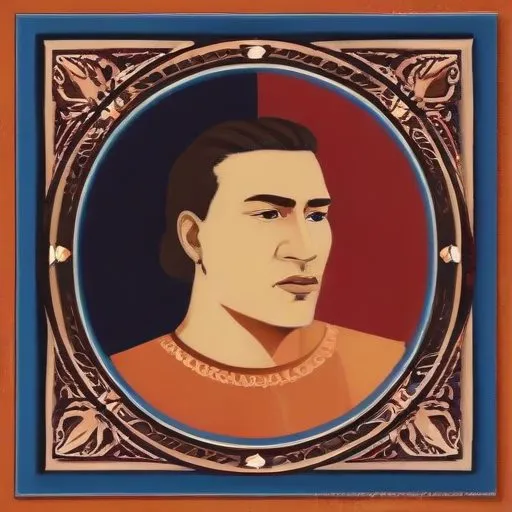
The last ruler of Samoa before it gained independence from New Zealand, serving from 1962 to 2007, and known for his efforts to modernize and develop the country. He played a key role in Samoa's transition to independence and self-governance.
Malietoa Tanumafili II was a Samoan paramount chief who served as the O le Ao o le Malo (Head of State) of Samoa from its independence in 1962 to his death in 2007. He was the first head of state to be a follower of the Bahá'í Faith, a religion that emphasizes the unity of humanity and the importance of education.
Born on January 4, 1913, to Malietoa Tanumafili I and Momoe Lupeuluiva Meleisea, Tanumafili was the third child and son of his parents. He inherited the royal title of Malietoa in 1940, following the death of his father.
Tanumafili was educated at the government-run Leififi School in Samoa and later attended St. Stephens School and Wesley College in Pukekohe, New Zealand.
After becoming Malietoa, Tanumafili was appointed as a special adviser to the New Zealand administration over Samoa, a role he held until Samoa gained independence in 1962. Upon independence, Tanumafili and Tupua Tamasese Meaole became the joint heads of state, serving for a lifetime term.
When Meaole died in 1963, Tanumafili became the sole head of state, a position he held until his own death in 2007. During his tenure, he provided stability to Samoa and worked towards the country's development.
Tanumafili became a follower of the Bahá'í Faith in 1973, making him the first serving head of state to be a member of the religion. He was drawn to the faith's principles of unity, justice, and education.
In 1976, Tanumafili visited the graveside of Shoghi Effendi, the first and last Guardian of the Bahá'í Administrative Order. This visit highlighted his commitment to the faith and its principles.
Tanumafili's leadership and commitment to the Bahá'í Faith had a significant impact on modern Samoan society. He promoted education, unity, and social justice, inspiring a new generation of Samoans.
Under his leadership, Samoa experienced significant economic growth, improved infrastructure, and enhanced international relations.
Tanumafili's legacy is one of stability, unity, and progress. He played a crucial role in shaping modern Samoa and promoting education, social justice, and international cooperation.
As the first head of state to be a follower of the Bahá'í Faith, he demonstrated the relevance and applicability of the faith's principles in modern governance.
Tanumafili's dedication to his country and his faith continues to inspire future generations of Samoans and people around the world.
Born in 1913
The last ruler of Samoa before it gained independence from New Zealand, serving from 1962 to 2007, and known for his efforts to modernize and develop the country. He played a key role in Samoa's transition to independence and self-governance.
Born in 1924
The first Samoan to hold the office, he served as Prime Minister from 1982 to 1985 and is remembered for his efforts to develop the country's economy and infrastructure. He played a key role in shaping Samoa's modern political landscape.
