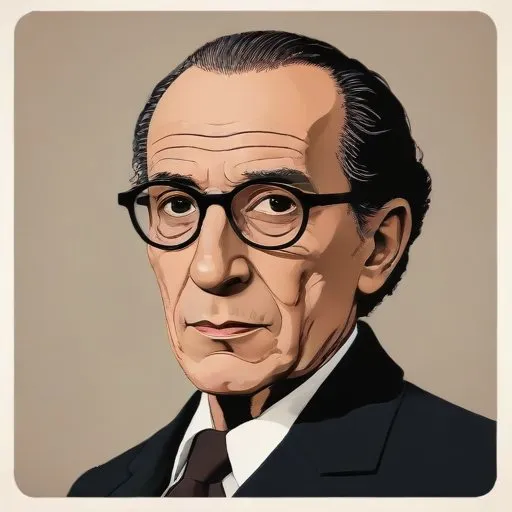
Manoel de Oliveira: The Prolific Portuguese Filmmaker Who Defied Age and Convention
A Century of Cinematic Innovation
Manoel de Oliveira is renowned for being the oldest active film director in the world, having made films well into his 100s. With a career spanning over 80 years, he was a true pioneer of Portuguese cinema, leaving an indelible mark on the industry.
The Early Years: A Legacy in the Making
Born on December 11, 1908, in Porto, Portugal, Oliveira came from a wealthy industrialist family. His father, Francisco José de Oliveira, was a successful entrepreneur who owned a dry goods factory and electric energy plant. Oliveira's education at the Colégio Universal in Porto and later at a Jesuit boarding school in Galicia, Spain, shaped his intellectual curiosity and artistic sensibilities.
The Emergence of a Filmmaker
Oliveira's fascination with cinema began in the 1920s, when he attempted to make a film about World War I with friends. In 1931, he completed his first film,
Douro, Faina Fluvial, a documentary about his hometown of Porto, showcasing his skills in the city-symphony genre. This early work laid the foundation for his subsequent feature films, including his debut,
Aniki-Bób, released in 1942.
A Decades-Long Journey to Acclaim
For the next three decades, Oliveira continued to produce shorts and documentaries, gaining minimal recognition. However, his 1971 film,
Past and Present, a social satire, marked a turning point in his career, earning him international acclaim and establishing him as a major filmmaker.
A Golden Era of Creativity
The 1970s and 1980s saw Oliveira's cinematic vision flourish, with films like
Benzin (1981) and
The Satin Slipper (1985) showcasing his mastery of narrative storytelling. During this period, he received numerous awards and nominations, solidifying his reputation as a master filmmaker.
Awards and Accolades
- Career Golden Lion, 61st Venice International Film Festival
- Special Lion for the Overall Work, 42nd Venice International Film Festival
- Honorary Golden Palm, 2008 Cannes Film Festival
- French Legion of Honor
A Prolific Centenarian
Beginning in the late 1980s, Oliveira became one of the most prolific working film directors, averaging one film per year even after the age of 100. In 2008, he was reported to be the oldest active film director in the world, a testament to his boundless energy and creative spirit.
Legacy and Impact
Manoel de Oliveira's remarkable career has left an indelible mark on the film industry. His innovative storytelling, unique visual style, and tireless work ethic have inspired generations of filmmakers. As a result, he is widely regarded as one of the most important and influential filmmakers of the 20th century.
Quotes andMemorable Sayings
- "Cinema is a way of seeing the world, of revealing the truth about life."
- "I'm not afraid of death, but I'm afraid of not being able to make more films."
A Lasting Legacy
Manoel de Oliveira's remarkable life and career serve as a testament to the power of creativity, perseverance, and dedication. As we celebrate his centennial, we are reminded of the enduring impact of his films, which continue to captivate audiences worldwide, solidifying his place in the pantheon of cinematic greatness.
FAQ
What is Manoel de Oliveiras significance in Portuguese cinema?
Manoel de Oliveira is a highly acclaimed Portuguese film director, producer, and screenwriter who made significant contributions to Portuguese cinema, earning him international recognition and numerous awards.
What are some of Manoel de Oliveiras most notable films?
Manoel de Oliveiras notable films include Aniki-Bóbó, Belle Toujours, and The Strange Case of Angelica, which showcase his unique style of storytelling and experimentation with cinematic techniques.
How did Manoel de Oliveiras early life influence his filmmaking career?
Manoel de Oliveiras early life in Porto, Portugal, and his experiences as an actor and producer influenced his filmmaking career, which spanned over 80 years, earning him the title of Portugals oldest working filmmaker.
What awards did Manoel de Oliveira receive for his films?
Manoel de Oliveira received numerous awards for his films, including the Career Golden Lion at the Venice Film Festival, the Coppa Volpi for Best Director, and the Portuguese Golden Globe for Best Director.
What is Manoel de Oliveiras legacy in world cinema?
Manoel de Oliveiras innovative and influential films have left a lasting legacy in world cinema, inspiring generations of filmmakers and solidifying his place as one of the most important Portuguese filmmakers of all time.