


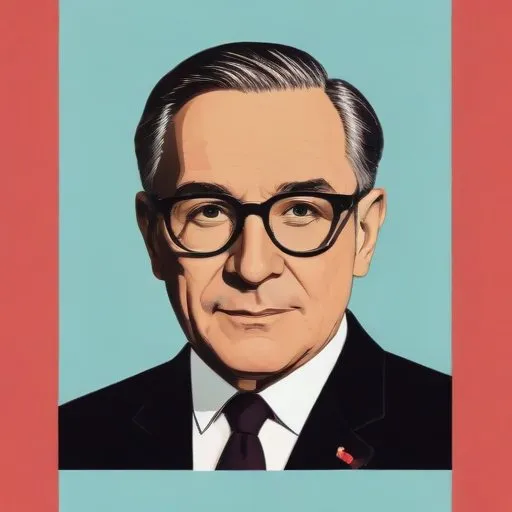
A Canadian biochemist, journalist, and politician who made significant contributions to the fields of science and politics, particularly in the area of Quebec nationalism.
Marcel Chaput, a Canadian scientist and militant, is best known for his unwavering dedication to the independence of Quebec from Canada. As a founding member of the Rassemblement pour l'indépendance nationale (RIN), Chaput played a pivotal role in shaping the Quebec independence movement.
Born on October 14, 1918, in Hull, Quebec, Chaput was the youngest of seven children to Lucia Nantel and Narcisse Chaput, a proofreader at Her Majesty's Printer in Ottawa. He attended cole Lecomte for his primary education and later enrolled in the Collège Notre-Dame de Hull, where he developed an interest in science under the guidance of Brother Ernest.
Chaput's educational pursuits took him to the University of Ottawa's High School, and subsequently, to the école technique de Hull, where he trained as a chemistry laboratory technician, graduating in 1939.
Chaput's involvement in the Quebec independence movement began during his time with the Groupe Reboul of the Association catholique de la jeunesse canadienne-française. It was through his participation in a debating contest on separatism that Chaput became convinced of the need for Quebec's independence.
Although his team lost the debate, Chaput's readings on the subject, particularly Sparatisme, doctrine constructive by Dostaler O'Leary, solidified his stance on separatism. This marked the beginning of his lifelong commitment to the cause.
Chaput's scientific pursuits didn't hinder his activism. In fact, his profession as a chemist often complemented his independence work. As a founding member of the RIN, Chaput worked tirelessly to promote Quebec's independence, collaborating with like-minded individuals, including Andrés D'Allemagne and Jacques Bellemare.
Throughout his life, Chaput remained steadfast in his convictions, even in the face of adversity. His unwavering dedication to the cause earned him recognition as a champion of Quebec independence.
Marcel Chaput's contributions to the Quebec independence movement are undeniable. His relentless efforts helped shape the discourse on separatism, inspiring future generations to take up the mantle.
As a scientist and an activist, Chaput's legacy extends beyond the realm of politics. His commitment to the cause serves as a testament to the power of conviction and the importance of standing up for one's beliefs.
Marcel Chaput's remarkable life serves as a testament to the power of conviction and the importance of standing up for one's beliefs. As a champion of Quebec independence, his legacy continues to inspire and motivate individuals to fight for their rights and freedoms.
Born in 1922
A charismatic leader who championed Quebec's independence and shaped the province's distinct identity through his passionate politics and journalism. He's revered for his role in Quebec's Quiet Revolution.
Born in 1919
The charismatic leader who championed Canadian unity and implemented progressive policies, known for his iconic style and influential legacy in shaping modern Canada.
92 Years Old
The 20th Prime Minister of Canada, serving from 1993 to 2003, known for his leadership during the Quebec sovereignty movement and his role in shaping Canada's national unity. He implemented policies like the Clarity Act and the National Child Benefit.
87 Years Old
The 27th Premier of Quebec, a key figure in the Quebec sovereignty movement, known for leading the province's separatist government and negotiating with Canada's federal government.
96 Years Old
A Canadian economist and politician who served as the 26th Premier of Quebec, leading the province's sovereignty movement and playing a key role in the 1995 Quebec referendum. He's known for his strong nationalist views and efforts to gain independence for Quebec.
93 Years Old
The 22nd Premier of Quebec, a Canadian lawyer and politician, served from 1970 to 1976 and again from 1985 to 1994, known for his role in shaping Quebec's economy and politics. He implemented significant hydroelectric projects and negotiated with the Canadian government on provincial autonomy.
Born in 1925
A Canadian journalist and politician who served as leader of the Quebec Liberal Party and played a key role in shaping Quebec's politics and identity. He's most known for his efforts to promote Canadian unity and resolve the Quebec sovereignty debate.
