


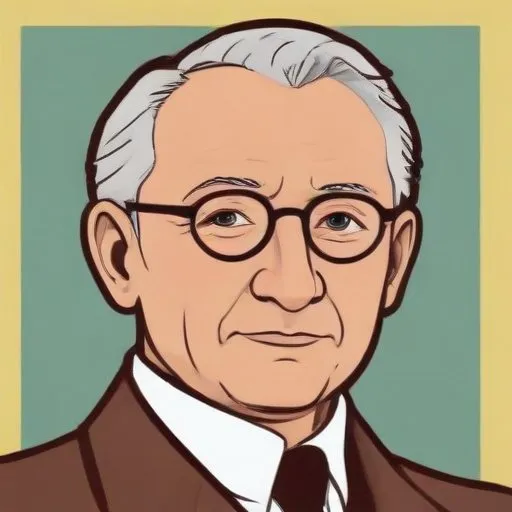
A prominent literary critic and author, known for his influential book reviews and essays that shaped the German literary scene. He was a leading voice in German literature, introducing readers to new authors and ideas.
Known as the "Literaturpapst" or "Pope of Literature" in Germany, Marcel ReichRanicki was a renowned literary critic and member of the influential literary association Gruppe 47. With a career spanning over six decades, he left an indelible mark on German literature, shaping the literary landscape with his incisive critiques and passionate advocacy for literary excellence.
ReichRanicki was born on June 2, 1920, in Wocławek, Poland, to a Polish Jewish merchant father and a German Jewish mother. Growing up in Berlin, he developed a deep love for German literature, which became his salvation during the tumultuous years of World War II. Despite facing expulsion from school and later being denied university admission due to his Jewish heritage, ReichRanicki continued to immerse himself in German classics and theater.
In 1940, ReichRanicki found himself in the Warsaw Ghetto, where he worked as a chief translator for the Judenrat and contributed to the Jewish newspaper Gazeta Żydowska as a music critic. His experiences during this period allowed him to bear witness to the meetings between Jewish and Nazi authorities, giving him a unique perspective on one of humanity's darkest moments.
After the war, ReichRanicki joined the Polish People's Army and eventually became a prominent literary critic in Germany. His scathing reviews and insightful essays made him a household name, earning him both admiration and criticism from the literary establishment. As a member of Gruppe 47, he played a key role in shaping German literature, promoting new talent, and challenging the status quo.
ReichRanicki's literary critiques were not just limited to aesthetic evaluations; he was also a fierce advocate for moral and social responsibility in literature. He believed that literature had the power to shape society and that writers had a duty to engage with the world around them. His philosophical approach to literary criticism has had a lasting impact on German literature, influencing generations of writers and critics.
ReichRanicki's impact on German literature and society cannot be overstated. He has inspired generations of writers, critics, and readers, shaping the literary landscape and influencing public opinion. His commitment to moral and social responsibility in literature has made him a revered figure in German cultural life.
Marcel ReichRanicki's life and work serve as a testament to the human spirit's capacity for resilience, creativity, and intellectual curiosity. His legacy continues to shape German literature and culture, inspiring new generations of writers, critics, and readers. As a critic, writer, and public intellectual, ReichRanicki has left an indelible mark on the literary landscape, ensuring his place among the giants of German literary history.
"Literature is not just a matter of aesthetics; it is a matter of morals."
"A writer's duty is not to please, but to provoke."
99 Years Old
A prominent German literary figure, known for his provocative and introspective works that explore the human condition, often focusing on post-war German identity and morality.
Born in 1917
A German novelist and short story writer, known for his critical and satirical portrayals of post-war German society, exploring themes of morality, politics, and identity. His works often blended realism with fantastical elements, offering a unique perspective on the human condition.
Born in 1877
A renowned poet, novelist, and painter, celebrated for his thought-provoking and introspective works that explore the human condition, spirituality, and the search for meaning. His writings often blended elements of psychology, philosophy, and mysticism.
Born in 1875
A renowned literary mastermind, celebrated for crafting complex, psychologically rich novels that probed the human condition, often blending philosophy and art.
Born in 1898
A German-Swiss soldier and author, best known for writing the classic novel "All Quiet on the Western Front", a powerful anti-war tale that vividly depicts the horrors of World War I.
