


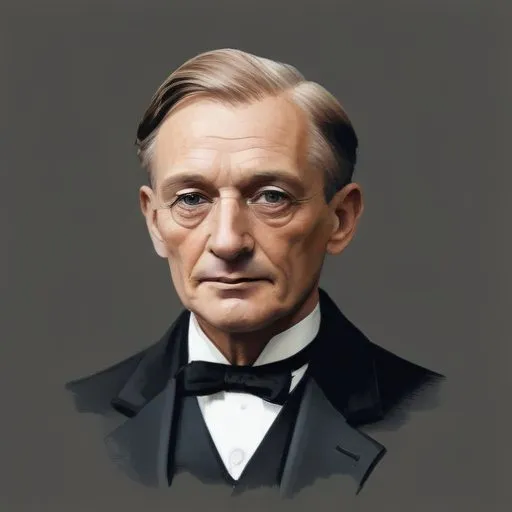
A German novelist and short story writer, known for his critical and satirical portrayals of post-war German society, exploring themes of morality, politics, and identity. His works often blended realism with fantastical elements, offering a unique perspective on the human condition.
Heinrich Bll, a renowned German writer, is celebrated for his poignant and thought-provoking literary works that captured the essence of post-World War II Germany. As a recipient of the Nobel Prize for Literature in 1972, Bll's writing resonated with a generation of Germans grappling with the consequences of war and social upheaval.
Born on December 21, 1917, in Cologne, Germany, Bll grew up in a Roman Catholic and pacifist family that opposed the rise of Nazism. His refusal to join the Hitler Youth and his subsequent conscription into the Wehrmacht during World War II deeply influenced his writing and worldview.
Bll's experiences during the war, including being wounded four times and contracting typhoid, had a profound impact on his writing. After being captured by US Army soldiers in 1945, he was sent to a prisoner-of-war camp, where he began to reflect on the devastating consequences of war.
After the war, Bll returned to Cologne and worked in his family's cabinet shop before taking the risk of becoming a full-time writer at the age of 30. His debut novel, Der Zug war pünktlich (The Train Was on Time), published in 1949, marked the beginning of a illustrious literary career.
Bll's writing served as a moral compass for post-war Germany, confronting the nation with the harsh realities of war and encouraging introspection and self-reflection. Through his work, he inspired a generation of Germans to re-examine their values and principles, earning him the title "the conscience of Germany."
"I am not a writer who wants to teach the German people something. I am a writer who wants to learn from the German people."
Bll's quotes and sayings continue to inspire and motivate readers, offering a glimpse into his profound understanding of human nature and the importance of social responsibility.
In 1942, Bll married Annemarie Cech, with whom he had three sons and collaborated on various literary translations. Their partnership was a testament to the power of love and mutual support in the face of adversity.
Bll's literary contributions have left an indelible mark on German literature and culture. His commitment to social justice, pacifism, and humanism has inspired countless writers, intellectuals, and activists, cementing his place as one of Germany's most esteemed literary figures.
99 Years Old
A renowned German writer and artist, celebrated for his influential and provocative works that explored the human condition, morality, and the complexities of German history and identity.
99 Years Old
A prominent German literary figure, known for his provocative and introspective works that explore the human condition, often focusing on post-war German identity and morality.
Born in 1877
A renowned poet, novelist, and painter, celebrated for his thought-provoking and introspective works that explore the human condition, spirituality, and the search for meaning. His writings often blended elements of psychology, philosophy, and mysticism.
Born in 1875
A renowned literary mastermind, celebrated for crafting complex, psychologically rich novels that probed the human condition, often blending philosophy and art.
Born in 1898
A German-Swiss soldier and author, best known for writing the classic novel "All Quiet on the Western Front", a powerful anti-war tale that vividly depicts the horrors of World War I.
Born in 1878
A Polish-German physician and author who wrote influential novels that explored the human condition, blending psychology, philosophy, and social commentary. His works are considered precursors to magical realism.
Born in 1905
A Bulgarian-Swiss writer who explored the human condition through novels, plays, and memoirs, winning the Nobel Prize in Literature in 1981 for his thought-provoking works.
Born in 1886
Austrian-American author and poet, known for his novels that explored the decay of values in modern society, particularly in his masterpiece "The Death of Virgil".
