


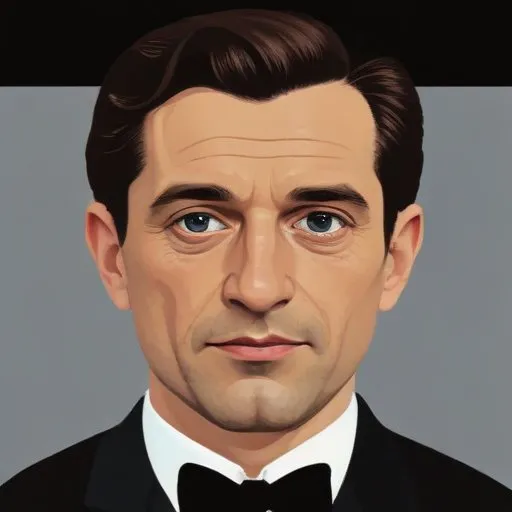
Austrian-American author and poet, known for his novels that explored the decay of values in modern society, particularly in his masterpiece "The Death of Virgil".
Hermann Broch, an Austrian writer, is renowned for his groundbreaking contributions to modernist fiction, particularly with his epic trilogies, The Sleepwalkers (1930-1932) and The Death of Virgil (1945). These towering works of literature have left an indelible mark on the literary landscape, cementing Broch's status as a visionary writer of the 20th century.
Born on November 1, 1886, in Vienna, Austria-Hungary, Broch hailed from a prosperous Jewish family. Despite being expected to take over his family's textile factory, he harbored a deep passion for literature, which he pursued privately. In 1909, he converted to Roman Catholicism and married Franziska von Rothermann, with whom he had a son, Hermann Friedrich Maria, in 1910. The marriage ended in divorce in 1923.
In 1927, Broch sold the textile factory and embarked on a journey of self-discovery, studying mathematics, philosophy, and psychology at the University of Vienna. It was during this period that he began to focus on his literary career, which flourished around the age of 40.
Broch's Magnum Opus, The Sleepwalkers, is a trilogy of novels that explores the decline of morality and the rise of Nazism in pre-World War I Austria. This seminal work is characterized by its innovative narrative structure, which defies traditional storytelling conventions. The trilogy consists of The Romantic, The Anarchist, and The Realist, each novel delving into the complexities of human nature and the disintegration of societal values.
Broch's other notable work, The Death of Virgil, is a novel that reimagines the final days of the ancient Roman poet Virgil. This work is a masterclass in lyrical prose, weaving together themes of mortality, creativity, and the human condition.
Broch's influence on modern literature is profound, with writers such as Elias Canetti, Robert Musil, and Rainer Maria Rilke drawing inspiration from his work. His unique blend of philosophical insights and literary innovation has made him a beloved figure among scholars and readers alike.
In exile, Broch's work was championed by literary luminaries such as James Joyce, Thornton Wilder, and Edwin and Willa Muir, who played a vital role in securing his safe passage to the United States. This unwavering support is a testament to Broch's stature as a literary giant.
Broch's life was not without controversy. His critique of modern society and his rejection of traditional storytelling conventions often sparked heated debates among critics and readers. Additionally, his experiences with the Nazis and his subsequent exile have been subject to much discussion and analysis.
Broch's work is characterized by its deep philosophical insights, drawing from his studies in mathematics, philosophy, and psychology. He was particularly interested in the human condition, morality, and the role of the artist in society. His writing often grapples with the complexities of modern life, making him a precursor to the Existentialist movement.
Through his writing, Broch has left behind a profound legacy that continues to inspire and challenge readers to this day. As a master of modernist fiction, he remains an essential figure in literary history, and his work continues to resonate with scholars, writers, and readers alike.
Born in 1882
A pioneering modernist writer, known for experimental novels and short stories that explore the human experience, particularly in Dublin, Ireland. His works are celebrated for their complex, lyrical prose and innovative narrative structures.
Born in 1871
A French literary mastermind who penned the monumental, introspective novel "In Search of Lost Time", exploring the human experience through vivid, nostalgic storytelling.
Born in 1883
A writer of surreal, psychologically complex fiction that explores the human condition, often featuring isolated protagonists in absurd, nightmarish scenarios.
Born in 1875
A renowned literary mastermind, celebrated for crafting complex, psychologically rich novels that probed the human condition, often blending philosophy and art.
Born in 1898
A German-Swiss soldier and author, best known for writing the classic novel "All Quiet on the Western Front", a powerful anti-war tale that vividly depicts the horrors of World War I.
Born in 1896
A renowned Italian poet and translator, celebrated for his unique and expressive style that explores the human condition, earning him the Nobel Prize in Literature.
Born in 1861
A pioneering figure in modernist literature, known for his influential novels of psychological insight, particularly "The Confessions of Zeno".
Born in 1871
A prominent literary figure of the early 20th century, known for his socially critical and psychologically nuanced novels that explored the darker aspects of German society. His works often targeted the bourgeoisie and the rise of fascism.
