


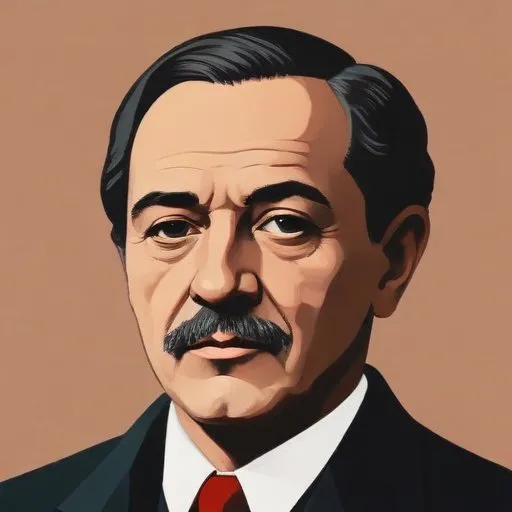
A pioneering figure in modernist literature, known for his influential novels of psychological insight, particularly "The Confessions of Zeno".
Italo Svevo, born Aron Hector Schmitz, is renowned for his groundbreaking contribution to Italian literature, particularly his pioneering work in the psychological novel. His magnum opus, La coscienza di Zeno (1923), is a celebrated classic that has etched his name in the annals of literary history.
Svevo was born on December 19, 1861, in Trieste, then part of the Austrian Empire, to a Jewish German father and an Italian mother. Growing up in a multilingual environment, he developed a passion for literature, devouring works by Goethe, Schiller, Shakespeare, and the French and Russian classics.
In 1880, Svevo returned to Trieste after completing his studies at a boarding school near Würzburg, Germany, where he became fluent in German. He then continued his studies at Istituto Revoltella for two years before taking financial responsibility when his father's glassware business failed.
This 20-year period as a bank clerk at the Unionbank of Vienna served as inspiration for his first novel, Una Vita (1892). During this time, Svevo contributed to the Italian-language socialist publication L'Indipendente and began writing plays, although he rarely finished them before starting work on Una vita in 1887.
Svevo's writing was deeply rooted in his humanistic and democratic socialist beliefs, which guided him towards pacifism and advocacy for social change. This ideological foundation is reflected in his works, which often explored the human condition and the complexities of modern life.
Svevo's life was enriched by his close friendship with the Irish novelist and poet James Joyce. Their bond, forged through shared literary passions and mutual respect, has become the stuff of legend. Joyce, in fact, was instrumental in promoting Svevo's work, recognizing the Italian writer's innovative style and depth.
Svevo's work had a profound impact on modern Italian literature, paving the way for future generations of writers. His innovative style, which blended psychological insight with philosophical depth, has influenced writers such as Umberto Saba and Alberto Moravia.
Italo Svevo's legacy extends beyond his literary output. He embodied a unique blend of humanistic and democratic socialist values, which continue to inspire writers and thinkers today. His philosophical contributions, though often subtle and implicit, have contributed significantly to the development of modern Italian thought.
Svevo's life and work serve as a testament to the power of literature to shape our understanding of the human condition. As we navigate the complexities of modern life, his pioneering work reminds us of the importance of empathy, tolerance, and self-reflection.
Italo Svevo's remarkable life and work continue to captivate readers and scholars alike. As we delve into the intricacies of his writing, we are reminded of the transformative power of literature to shape our understanding of ourselves and the world around us.
Born in 1882
A pioneering modernist writer, known for experimental novels and short stories that explore the human experience, particularly in Dublin, Ireland. His works are celebrated for their complex, lyrical prose and innovative narrative structures.
Born in 1885
A pioneering modernist poet and critic who transformed 20th-century literature with innovative styles and provocative ideas, shaping the course of modern poetry.
Born in 1867
A renowned Italian writer who crafted innovative, psychologically complex works that explored the human condition, earning him the Nobel Prize in Literature. His plays and novels continue to influence modern theatre and literature.
Born in 1883
A writer of surreal, psychologically complex fiction that explores the human condition, often featuring isolated protagonists in absurd, nightmarish scenarios.
Born in 1863
A flamboyant and provocative Italian artist, known for his bold and innovative works that blended literature, politics, and drama, inspiring a generation of artists and intellectuals.
