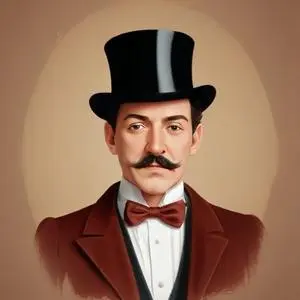
Giacomo Puccini: The Maestro of Italian Opera
Operatic Masterpieces and Lasting Legacy
Giacomo Puccini, the renowned Italian composer, is celebrated for his iconic operas that have captivated audiences for generations. Regarded as the greatest proponent of Italian opera after Verdi, Puccini's works have become an integral part of the operatic repertoire, with masterpieces like
La Bohème,
Tosca,
Madama Butterfly, and
Turandot remaining among the most frequently performed and recorded of all operas.
Family Legacy and Early Life
Born on December 22, 1858, in Lucca, Italy, Giacomo Antonio Domenico Michele Secondo Maria Puccini was the sixth of nine children to Michele Puccini and Albina Magi. The Puccini family was a local musical dynasty, with a long line of composers and musicians dating back to the late Baroque era. Puccini's great-great-grandfather, Giacomo Puccini, was the maestro di cappella of the Cattedrale di San Martino in Lucca, a position held by his successors, including Puccini's father, Michele.
Musical Education and Early Career
Puccini's musical education began under the tutelage of his father, who taught him the fundamentals of music. He later studied at the Conservatorio Pacini in Lucca, where he was exposed to the works of prominent Italian composers. In 1880, Puccini continued his studies at the Milan Conservatory, where he was influenced by the works of Verdi and other prominent Italian opera composers. His earliest operas, such as
Le Villi (1884) and
Edgar (1889), showcased his talent and potential, but it was not until
Manon Lescaut (1893) that he gained widespread recognition.
Development of Verismo Style
In the late 19th century, Puccini's style began to shift towards the realistic verismo movement, which emphasized dramatic intensity and emotional authenticity. This new direction was exemplified in operas like
La Bohème (1896),
Tosca (1900), and
Madama Butterfly (1904). These works not only solidified Puccini's reputation as a master composer but also redefined the opera genre.
Career Highlights and Major Works
- La Bohème (1896): A poignant tale of young love and sacrifice, set in 19th-century Paris.
- Tosca (1900): A gripping drama of love, passion, and politics, set in Rome during the Napoleonic Wars.
- Madama Butterfly (1904): A heart-wrenching story of cultural clashes and unrequited love, set in early 20th-century Japan.
- Turandot (1924): A fantastical tale of love, power, and redemption, set in ancient China.
Personal Life and Controversies
Puccini's personal life was marked by tumultuous relationships and scandals. His marriage to Elvira Gemignani was troubled, and he had a long-standing affair with his servant, Doria Manfredi. Puccini was also known for his love of luxury and extravagance, which often led to financial troubles.
Legacy and Impact on Modern Society
Puccini's operas have had a profound impact on modern society, influencing generations of composers, musicians, and artists. His music has been featured in numerous films, stage productions, and advertisements, introducing his works to a wider audience. The Puccini Festival, held annually in Torre del Lago, Italy, celebrates his life and legacy, attracting music lovers from around the world.
Quotes and Memorable Sayings
- "The most important thing in music is the thing that cannot be put into words."
- "Inspiration is an awakening, a quickening of all the senses, and the whole being."
Historical Context and Legacy
Puccini's legacy extends beyond his operas, as he played a significant role in shaping the course of Italian opera and musical history. His contributions to the verismo movement paved the way for future generations of composers, and his works continue to inspire new productions and adaptations.
Comparative Analysis with Contemporaries
Puccini's contemporaries, such as
Umberto Giordano and
Ruggero Leoncavallo, also made significant contributions to Italian opera. However, Puccini's unique blend of lyricism, drama, and verismo style set him apart, cementing his position as one of the greatest opera composers of all time.
FAQ
What is Giacomo Puccini most famous for?
Giacomo Puccini is most famous for his operas, particularly La Bohème, Tosca, and Madama Butterfly, which are considered some of the most popular operas of all time.
What inspired Giacomo Puccinis music?
Puccinis music was inspired by his love of nature, literature, and the Italian culture. He was also influenced by Verdi, Wagner, and other Romantic-era composers.
Did Giacomo Puccini have any notable students?
Yes, Puccini had several notable students, including Ottorino Respighi, who went on to become a famous composer in his own right. Puccini also taught at the Conservatorio Giovanni Battista Martini in Bologna.
What was Giacomo Puccinis early life like?
Giacomo Puccini was born in Lucca, Italy in 1858. He came from a musical family and began studying music at a young age. He went on to study at the Conservatorio di Milano, where he honed his skills as a composer.
What is the significance of Giacomo Puccinis opera La Bohème?
La Bohème is considered one of Puccinis most important works, and it premiered in 1896. It tells the story of a group of young artists living in Paris in the 1830s and explores themes of love, loss, and identity. Sub-question: What is the significance of the character Mimì in La Bohème?