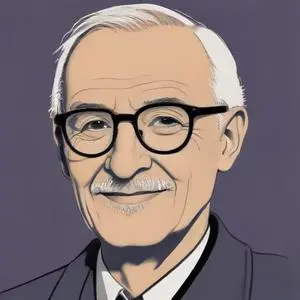
Günter Grass: The Voice of a Generation
A Master of European Magic Realism
Günter Grass is renowned for his thought-provoking literary works that have captivated readers worldwide, earning him the prestigious Nobel Prize in Literature in 1999. As a prolific German novelist, poet, playwright, illustrator, graphic artist, and sculptor, Grass has left an indelible mark on the literary world, with his debut novel,
The Tin Drum, being a cornerstone of European magic realism.
Early Life and Influences
Born on October 16, 1927, in the Free City of Danzig (now Gdańsk, Poland), Grass was raised in a Catholic family with a strong Kashubian-Polish heritage. His childhood experiences during World War II, including being drafted into the military at 17 and later taken as a prisoner of war, would later shape his writing and inform his unique perspective on history.
The Danzig Trilogy and European Magic Realism
Grass's most celebrated works are the Danzig Trilogy, consisting of
The Tin Drum,
Cat and Mouse, and
Dog Years. These novels explore the complexities of German history, identity, and the human condition, often incorporating magical realism to convey the surreal nature of war and its aftermath.
The Tin Drum, in particular, has been praised for its innovative storytelling and has been adapted into a successful film.
Award-Winning Works and Recognition
Throughout his illustrious career, Grass has received numerous accolades for his contributions to literature. In addition to the Nobel Prize in Literature, his works have been recognized with the
Georg Büchner Prize (1965), the Prince of Asturias Award (1999), and the
Samuel Johnson Prize (2000). His writing has been translated into over 40 languages, solidifying his global impact on literature.
Controversies and Public Perception
Grass's unconventional style and controversial themes have sometimes sparked debate and criticism. His outspoken political views, particularly his support for the Social Democratic Party of Germany (SPD), have led to public scrutiny. Despite this, his unwavering commitment to social justice and human rights has earned him respect and admiration from many.
Philosophical Contributions and Beliefs
Grass's writing often explores the intricacies of human nature, morality, and the search for truth. He has been vocal about the importance of confronting the past, acknowledging historical injustices, and promoting peace and tolerance. His philosophical contributions have inspired generations of writers, thinkers, and social activists.
Personal Milestones and Key Life Events
- 1944: Drafted into the military and served in the Waffen-SS
- 1945: Taken as a prisoner of war by US forces
- 1946: Released from captivity and trained as a stonemason and sculptor
- 1950s: Began writing, publishing his first poetry collection, Die Vorzüge der Windhühner (The Advantages of Wind Fowl)
- 1999: Awarded the Nobel Prize in Literature
Legacy and Impact on Modern Society
Günter Grass's remarkable body of work has left an indelible mark on literature, inspiring countless writers, artists, and thinkers. His courageous exploration of the human condition, his commitment to social justice, and his innovative storytelling have cemented his position as one of the most important voices of the 20th century. As a testament to his legacy, Grass's works continue to be widely read, studied, and admired, ensuring his impact on modern society will be felt for generations to come.
FAQ
What is Günter Grasss most famous work?
Günter Grass is best known for his novel The Tin Drum, which won the Nobel Prize in Literature in 1999.
What were Günter Grasss early influences?
Grasss early influences included the works of Friedrich Nietzsche, Franz Kafka, and Bertolt Brecht, which shaped his literary style and worldview.
What were Günter Grasss key themes?
Grasss work often explored themes of German identity, morality, and the human condition, particularly in the context of World War II and the post-war era.
What awards did Günter Grass receive?
Grass was awarded the Nobel Prize in Literature in 1999, as well as numerous other awards, including the Georg Büchner Prize and the Prince of Asturias Award.
What is Günter Grasss legacy?
Günter Grass left a lasting legacy in the world of literature, remembered for his unique voice, unflinching critique of German society, and contributions to the literary canon.