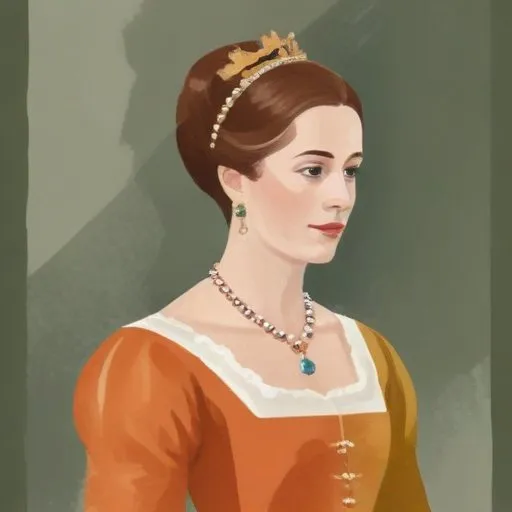
Margaret Paleologa: The Regent of Mantua and Marquise of Montferrat
A Life of Power and Diplomacy
Margaret Paleologa, a member of the illustrious House of Paleologa, is renowned for her remarkable tenure as the ruling Marquise regnant of Montferrat and her subsequent reign as the Duchess of Mantua through her marriage to Federico II, Duke of Mantua. This 16th-century noblewoman left an indelible mark on the history of Italy, serving as a regent for her sons and navigating the complex web of alliances and rivalries that defined the Renaissance era.
Early Life and Marriage
Born on August 11, 1510, in Casale Monferrato, Margaret was the second child of William IX of Montferrat and his wife, Anne of Alençon. Her family's noble lineage and strategic alliances set the stage for her future role as a powerful leader. In 1517, her elder sister, Maria, was initially betrothed to Federico II Gonzaga, but the contract was later annulled. Margaret's mother, Anne, subsequently opted for the link with the House of Gonzaga, and Margaret wed Federico in October 1531. The marriage lasted for nine years, until Federico's death in 1540.
Rise to Power and Regency
Upon the death of her uncle, John George, Marquis of Montferrat, Margaret inherited the title Marquise of Montferrat in 1533. However, the realm was under Spanish occupation at the time, and her husband, Federico, later became the ruling Marquis of Montferrat by right of marriage. Following Federico's death, Margaret's eldest son, Francesco, became Duke of Mantua and Marquis of Montferrat, but as he was only eight years old, Margaret assumed the role of regent. She skillfully navigated the complexities of statecraft, overseeing the duchy's governance and forging important alliances.
Twice a Regent
Margaret's role as regent was not limited to her first stint. When her younger son, Guglielmo, ascended to the dukedom, Margaret again took on the responsibility of regency from 1550 to 1556. Her experience and diplomatic acumen allowed her to maintain stability and promote the interests of her family and the duchy.
Personal Life and Legacy
Throughout her life, Margaret navigated the treacherous waters of Renaissance politics, always prioritizing the interests of her family and realm. Her remarkable career as a regent and leader has left a lasting impact on Italian history. Margaret Paleologa's legacy is a testament to the power and influence of women in the 16th century, serving as a shining example of determination, intelligence, and strategic vision.
Timeline of Key Events
- 1510: Born in Casale Monferrato, Italy
- 1517: Sister Maria's betrothal to Federico II Gonzaga is annulled
- 1531: Marries Federico II Gonzaga
- 1533: Inherits the title Marquise of Montferrat
- 1540: Becomes regent for son Francesco after Federico's death
- 1549: End of first regency
- 1550: Begins second regency for son Guglielmo
- 1556: End of second regency
- 1566: Dies in Mantua, Italy
Legacy in Italian History
Margaret Paleologa's remarkable life and accomplishments have left an enduring mark on Italian history. As a regent, leader, and member of the esteemed House of Paleologa, she played a critical role in shaping the course of the Renaissance era. Her diplomatic prowess, strategic vision, and unwavering dedication to her family and realm have cemented her place as one of the most influential women of the 16th century.
FAQ
What was Margaret Paleologas role in the Italian Wars?
Margaret Paleologa played a significant role in the Italian Wars as the Sovereign Marchioness of Montferrat, leading her state through a period of conflict and turmoil.
How did Margaret Paleologa maintain her power in Montferrat?
Margaret Paleologa maintained her power in Montferrat through strategic alliances, military campaigns, and diplomatic efforts, which helped to protect her state from external threats.
What was Margaret Paleologas relationship like with the French monarchy?
Margaret Paleologa had a complex relationship with the French monarchy, which was marked by periods of cooperation and conflict, as she sought to maintain her independence and protect her states interests.
How did Margaret Paleologa promote the arts in Montferrat?
Margaret Paleologa was a patron of the arts in Montferrat, promoting the work of artists, writers, and scholars, and helping to foster a cultural renaissance in her state.
What is Margaret Paleologas legacy in Italian history?
Margaret Paleologas legacy in Italian history is marked by her role as a strong and effective leader, who protected her states interests and promoted the arts and culture during a period of turmoil and conflict.