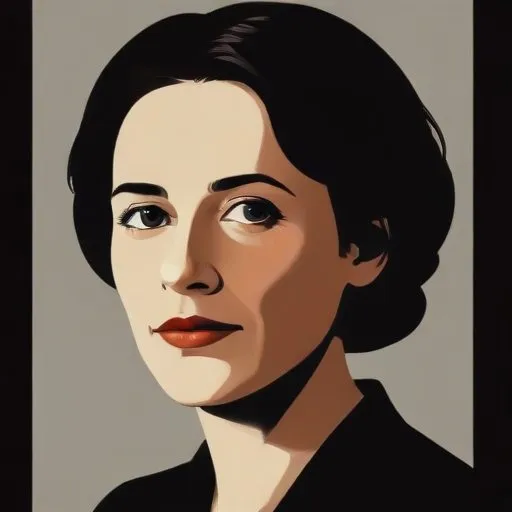
Margarete Bhme: The Prolific German Writer Who Captivated the Early 20th Century
A Literary Phenomenon
Margarete Bhme was one of the most widely read German writers of the early 20th century, leaving an indelible mark on literature with her prolific output of novels, short stories, autobiographical sketches, and articles. Her most famous work, "The Diary of a Lost Girl", first published in 1905, sold over a million copies by the end of the 1920s, cementing her status as a literary sensation.
Early Life and Career
Born Wilhelmina Margarete Susanna Feddersen in 1867, Bhme grew up in Husum, a small town in Northern Germany. She began writing at an early age, publishing her first story, "The Secret of the Rose Passage", in a Hamburg newspaper at just 17. She went on to place her work in weekly magazines, often under the pseudonym Ormanos Sandor.
A Correspondent's Life
Bhme worked as a correspondent for North German and Austrian newspapers, living in Hamburg and Vienna. In 1894, she married Friedrich Theodor Bhme, a newspaper publisher 20 years her senior. After six years, the marriage ended in divorce, and Bhme moved to Berlin, where she attempted to make a living as an author.
Prolific Output
Bhme wrote prolifically, producing articles, essays, and short stories for newspapers and magazines. Some of her early novels were serialized in periodicals, while others were issued in book form by German publishers. Initially, she wrote popular fiction, but as her work matured, she explored deeper themes and styles.
Major Works and Impact
- "The Diary of a Lost Girl" (1905) - Bhme's most famous work, a semi-autobiographical novel that explores themes of love, loss, and identity.
- "The Swamp" (1913) - A novel that critiques the social conventions of the time, exploring the lives of women in rural Germany.
- "The Life of a Woman" (1921) - A novel that examines the lives of three generations of women, exploring themes of love, family, and identity.
Career Highlights and Legacy
Bhme's writing career spanned over four decades, during which she authored 40 novels and numerous short stories, articles, and essays. Her work was widely read and discussed, with many of her novels being adapted into films and stage plays. Despite facing criticism and controversy, Bhme remained a prominent figure in German literature, influencing generations of writers to come.
Personal Life and Milestones
- Married Friedrich Theodor Bhme in 1894, divorcing six years later.
- Moved to Berlin in 1900, where she established herself as a writer.
- Bhme was known for her strong will and independence, living a life that defied social conventions.
Influence on Modern Society
Bhme's writing explored themes of love, family, and identity, resonating with readers across Germany and beyond. Her work challenged social conventions, inspiring future generations of writers and thinkers. Today, Bhme is recognized as one of the most important German writers of the early 20th century, her work continuing to captivate readers and scholars alike.
FAQ
What is Margarete Böhme famous for?
Margarete Böhme is a German novelist, famous for her novel Tagebuch einer Verlorenen ( Diary of a Lost One), which tells the story of a young womans descent into prostitution.
What is the theme of Tagebuch einer Verlorenen?
The theme of Tagebuch einer Verlorenen is the struggle of women in a patriarchal society, and the ways in which they are forced to sacrifice their dignity and autonomy in order to survive.
What is Margarete Böhmes writing style?
Margarete Böhmes writing style is characterized by its frank and unflinching portrayal of the harsh realities of life, as well as its use of introspection and psychological insight to explore the inner lives of her characters.
What other works did Margarete Böhme write?
Margarete Böhme wrote several other novels and collections of stories, including Das Haus zum schwarzen Bozen and Die Tür ist offen, but it is Tagebuch einer Verlorenen that remains her most famous and influential work.
What is the significance of Tagebuch einer Verlorenen?
The significance of Tagebuch einer Verlorenen lies in its unflinching portrayal of the exploitation and oppression of women, and its challenge to the moral and social conventions of its time.