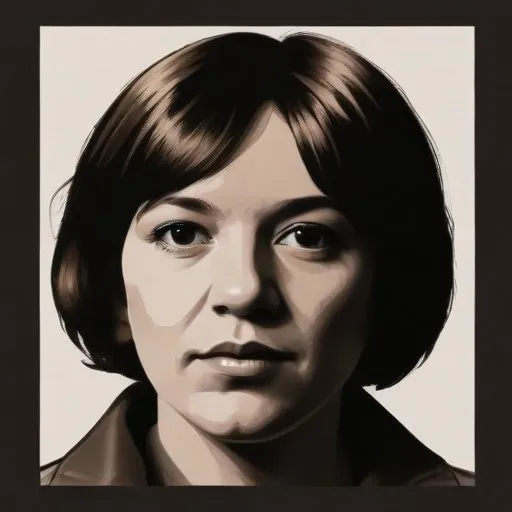
Ingeborg Bachmann: The Austrian Poet and Author Who Shaped 20th-Century Literature
A Literary Giant of the 20th Century
Ingeborg Bachmann is revered as one of the most significant voices in German-language literature of the 20th century. Her profound poetry, thought-provoking essays, and poignant short stories have left an indelible mark on the literary world.
Early Life and Education
Born on June 25, 1926, in Klagenfurt, Austria, Bachmann was the daughter of Olga and Matthias Bachmann, a schoolteacher. Her father's early membership in the Austrian National Socialist Party would later influence her writing. She studied philosophy, psychology, German philology, and law at the universities of Innsbruck, Graz, and Vienna.
A Philosophical Foundation
Bachmann's academic pursuits culminated in her PhD from the University of Vienna in 1949. Her dissertation, "The Critical Reception of the Existential Philosophy of
Martin Heidegger," demonstrated her growing disillusionment with Heideggerian existentialism. This critical thinking laid the groundwork for her later exploration of
Ludwig Wittgenstein's ideas, particularly his
Tractatus Logico-Philosophicus, which significantly influenced her relationship with language.
A Career in Literature
After completing her studies, Bachmann worked as a scriptwriter and editor at the Allied radio station Rot-Weiss-Rot. This position allowed her to engage with contemporary literature and establish connections with prominent literary figures. Her early radio dramas were published by the station, marking the beginning of her literary career.
The Gruppe 47 Circle
Bachmann's involvement with the influential literary circle Gruppe 47, which included Ilse Aichinger,
Paul Celan,
Heinrich Böll,
Marcel Reich-Ranicki, and
Günter Grass, further solidified her position in the literary world. This circle provided a platform for young writers to share their work and receive critical feedback.
An International Acclaim in Rome
In 1953, Bachmann moved to Rome, where she spent several years honing her craft. Her collaborations with composer
Hans Werner Henze on opera libretti earned her international recognition and numerous awards.
Major Works and Legacy
- Die Gestundete Zeit (1953) - a collection of poems that showcases her exploration of themes such as love, history, and identity
- Malina (1971) - a novel that critiques societal norms and expectations, and is considered one of her most important works
- Simultan (1972) - a collection of short stories that examines the complexities of human relationships
Awards and Honors
Bachmann's contributions to literature have been recognized with numerous awards, including the
Georg Büchner Prize (1964) and the Prince of Asturias Award for Literature (1972).
Influence on Modern Society
Bachmann's work has had a profound impact on modern society, encouraging readers to question their perceptions of reality and challenge societal norms. Her literary legacy continues to inspire writers, poets, and thinkers around the world.
Personal Life and Tragedy
Bachmann's life was cut short when she died on October 17, 1973, at the age of 47, due to injuries sustained in a fire in her Rome apartment. Her untimely passing left a void in the literary world, but her work remains a testament to her genius and continues to influence generations of writers and thinkers.
FAQ
What inspired Ingeborg Bachmanns writing style?
Ingeborg Bachmanns writing style was inspired by her experiences as a woman in post-war Austria, her interest in psychoanalysis, and her fascination with the works of philosophers like Martin Heidegger and Emmanuel Levinas. Her unique blend of poetry and prose explored themes of love, violence, and identity.
What is Ingeborg Bachmanns most famous work?
Ingeborg Bachmanns most famous work is her novel Malina, published in 1971. The novel is a complex exploration of love, identity, and the role of women in society, and is considered a classic of Austrian literature.
Was Ingeborg Bachmann a feminist?
Ingeborg Bachmanns work is often associated with feminist themes, as she explored the experiences of women in a patriarchal society. Her writing often criticized the objectification of women and the limitations placed on them by societal norms.
What awards did Ingeborg Bachmann win?
Ingeborg Bachmann won several awards for her work, including the Georg Büchner Prize in 1964 and the Anton Wildgans Prize in 1968. Her work continues to be widely read and translated today.
How did Ingeborg Bachmann die?
Ingeborg Bachmann died on October 17, 1973, at the age of 47, from injuries sustained in a fire in her apartment in Rome. Her death was a tragic accident that shocked the literary world.