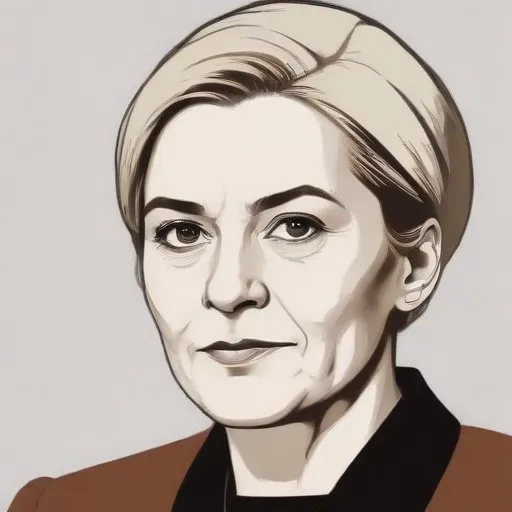
Mari Kiviniemi: A Trailblazing Finnish Politician and OECD Deputy Secretary-General
A Leading Figure in Finnish Politics
Mari Johanna Kiviniemi is a Finnish politician who made history by becoming the second female Prime Minister of Finland, serving from 2010 to 2011. She was the 41st Prime Minister of Finland, and her tenure marked a significant milestone in Finnish political history.
Early Life and Education
Born on September 27, 1968, in Seinäjoki, Finland, Kiviniemi grew up in rural Southern Ostrobothnia, the daughter of a chicken farmer. She spent a year as an exchange student in Germany during her high school years, which sparked her interest in international relations. She pursued higher education at the University of Helsinki, where she earned a master's degree in Social Sciences in 1996.
Rise to Prominence
Kiviniemi's political career began in 1991 when she ran for a seat in the Finnish Parliament, although she didn't win at that time. However, she persisted and won a seat in the 1995 general elections, representing the Southern Ostrobothnia district. She has since been a member of the Finnish Parliament, except for a brief period in 2014.
Leadership Roles
In 2003, Kiviniemi was elected vice-chairman of the Centre Party, a position she held until 2008. She became a special advisor to Prime Minister
Matti Vanhanen in 2004 and served as a Cabinet minister twice, first on a temporary basis in 2005 and then on a full-time basis in 2007.
Prime Minister of Finland
On January 22, 2010, Kiviniemi announced her candidacy for the leadership of the Centre Party, following Prime Minister Vanhanen's decision to step down. She won the party's leadership election on June 12, 2010, and subsequently became the Prime Minister of Finland.
Oecd Deputy Secretary-General
In 2014, Kiviniemi took on a new challenge as the Deputy Secretary-General of the Organisation for Economic Co-operation and Development (OECD), a position she still holds today.
Legacy and Impact
Throughout her career, Kiviniemi has been a strong advocate for education, innovation, and sustainable development. Her leadership has been marked by a commitment to social justice, equality, and human rights. As Prime Minister, she played a key role in steering Finland through the European sovereign-debt crisis.
Awards and Honors
Kiviniemi has received several awards and honors for her contributions to politics and public service, including the Order of the White Rose of Finland and the Order of the Lion of Finland.
Personal Life
In her free time, Kiviniemi enjoys reading, hiking, and spending time with her family. She is married and has two children.
Conclusion
Mari Kiviniemi's remarkable journey from a rural town in Finland to the highest echelons of politics is a testament to her determination, hard work, and dedication to public service. As a trailblazing female politician and OECD Deputy Secretary-General, she continues to inspire future generations of leaders and policymakers around the world.