


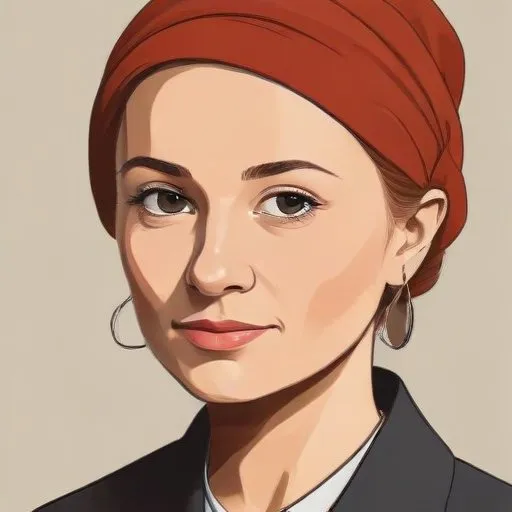
A pioneering cultural anthropologist who studied Siberian and Arctic cultures, shedding light on the lives and traditions of indigenous peoples.
Maria Czaplicka, a Polish cultural anthropologist, is renowned for her groundbreaking ethnographic work on Siberian shamanism, which has had a lasting impact on the field of anthropology. Her exhaustive research and insightful writings have provided an unparalleled glimpse into the captivating world of Siberian shamans.
Born on October 25, 1884, in Warsaw, Poland, Maria Czaplicka was the third of five children to Feliks Czaplicki, a railway clerk and station master, and Zofia Zawisza. Her family's financial struggles led them to move to Latvia, where they lived from 1904 to 1906, before returning to Warsaw.
Czaplicka's innate curiosity and thirst for knowledge drove her to pursue higher education, despite the challenges she faced. She attended the Anna Jasieska Girls School and later joined the Flying University, an underground institution of higher education in Russian-occupied Poland. Her determination to succeed led her to hold various jobs, including teaching and working as a secretary, to support herself.
In 1914, Czaplicka embarked on an extraordinary journey to Siberia, where she spent a year conducting extensive research on the indigenous people and their shamanic practices. Her experiences and findings were meticulously documented in her book, My Siberian Year, published in 1916. This seminal work provides a rich and intimate account of Siberian shamanism, offering invaluable insights into the spiritual beliefs and traditions of the region.
Czaplicka's research and writings have been compiled into three major works:
In 1999, Curzon Press republished these volumes, along with a fourth volume of articles and letters, cementing Czaplicka's legacy as a pioneering anthropologist.
Maria Czaplicka's groundbreaking research has had a profound impact on the field of anthropology, shedding light on the fascinating world of Siberian shamanism. Her work has inspired generations of anthropologists, scholars, and researchers, and continues to be a valuable resource for those interested in cultural anthropology and shamanic studies.
Czaplicka's legacy extends beyond the academic realm, as her work has also contributed to a greater understanding and appreciation of indigenous cultures and their spiritual practices.
Despite facing numerous challenges, including illness and financial struggles, Czaplicka remained committed to her research and writing. She spent time in Zakopane, where she wrote for the Pedological Society and published poetry in Warsaw's Odrodzenie magazine.
Tragically, Maria Czaplicka's life was cut short when she passed away on May 27, 1921, at the age of 36. Her remarkable achievements, however, continue to inspire and educate, ensuring her legacy as a pioneering anthropologist endures.
75 Years Old
A Polish athlete who won Olympic medals in the 400 meters hurdles and 4x400 meters relay at the 1964 Tokyo Olympics, setting multiple national records.
Born in 1858
Pioneering anthropologist and linguist who challenged prevailing racial and cultural stereotypes, establishing modern anthropology and contributing significantly to our understanding of human diversity and cultural relativity.
Born in 1901
A pioneering anthropologist and author who studied and wrote about diverse cultures, shedding light on human behavior and societal norms. Her groundbreaking work continues to influence modern anthropology and beyond.
Born in 1891
A celebrated author and anthropologist who explored African-American culture through novels, stories, and folklore, particularly in the rural South during the early 20th century.
Born in 1908
A founder of modern anthropology, known for structuralism and deciphering the underlying patterns of human culture and society. His work bridges the gap between sociology, psychology, and philosophy.
