


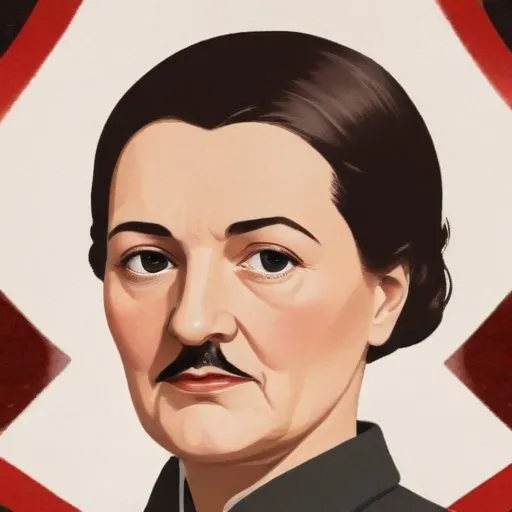
The paternal grandmother of Adolf Hitler, a woman who played a significant role in shaping the family dynamics that influenced the notorious dictator's upbringing. She is known for her mysterious and tumultuous life, which has sparked much speculation and intrigue.
Maria Schicklgruber is perhaps best known as the mother of Alois Hitler, and the paternal grandmother of Adolf Hitler. Her life, though marked by simplicity and hardship, would ultimately shape the trajectory of one of history's most infamous figures.
Born on April 15, 1795, in the village of Strones, Waldviertel, Archduchy of Austria, Maria was the daughter of farmer Johannes Schicklgruber and Theresia Pfeisinger. She was one of eleven children, only six of whom survived infancy. Her early life was typical of a poor peasant child in rural Austria, marked by hard work and limited opportunities.
According to historian Werner Maser, Maria was a "thrifty, reserved, and exceptionally shrewd peasant woman." This is evident in her handling of her inheritance from her mother's death in 1821. She invested the 74.25 gulden in the Orphans Fund, which more than doubled to 165 gulden by 1838. This pragmatic approach to finance would serve her well in a life marked by uncertainty.
In 1837, at the age of 42, Maria gave birth to her only child, Alois. The circumstances surrounding his birth were shrouded in mystery, with Maria refusing to reveal the identity of the father. The priest baptized the baby Alois Schicklgruber, noting "illegitimate" in place of the father's name on the baptismal register. Historians have debated the paternity of Alois, with Johann Georg Hiedler, Johann Nepomuk Hiedler, and others being touted as potential candidates.
Maria's silence on the matter of Alois's father has contributed to the mystique surrounding her life. While she lived a life of quiet industry, her actions would ultimately have far-reaching consequences. Her legacy is inextricably linked with the Hitler family, and the tumultuous history that followed.
Maria's story serves as a poignant reminder of the power of women's agency in shaping the course of history. Her determination, resourcefulness, and unwavering commitment to her family have left an indelible mark on the world. As we reflect on her life, we are forced to confront the complexities of family, identity, and the human condition.
Maria passed away on January 6, 1847, leaving behind a legacy of quiet strength and resilience. Her life, though marked by the uncertainties of rural Austria, would ultimately transcend borders and generations, forever entwining her name with the annals of history.
Maria Schicklgruber's life is a testament to the enduring power of women's stories, and the profound impact they can have on the world.
Born in 1837
Father of Adolf Hitler, a mid-level customs officer who had a significant influence on his son's early life and worldview.
Born in 1889
The dictator of Nazi Germany, responsible for the genocide of six million Jews and millions of other people during World War II, and infamous for his extreme nationalist and anti-Semitic ideology.
Born in 1912
The longtime companion and eventually wife of the Nazi leader, known for her devotion to him and her ultimate fate of dying alongside him in the final days of World War II. She kept a private life, but her relationship with Hitler remains a subject of fascination and scrutiny.
Born in 1896
Younger sister of the infamous dictator, known for her loyalty and proximity to the Nazi regime, leaving behind a trail of intriguing historical questions.
