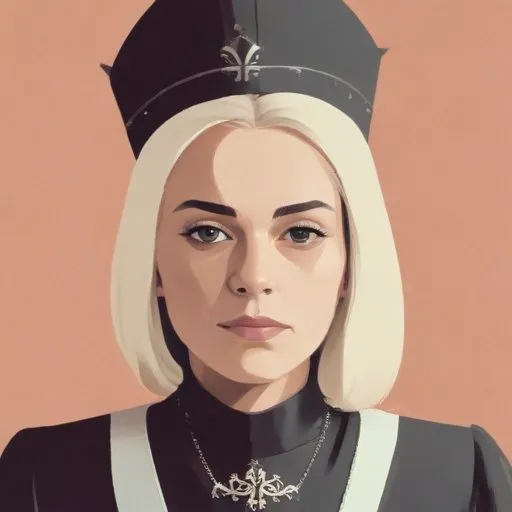
Maria of Jever: The Unyielding Lady of Jeverland
A Legacy of Strength and Determination
Maria of Jever, also known as Frulein Maria, was the last ruler of the Lordship of Jever from the Wiemken family, reigning from 1517 until her death in 1575. She is renowned for her unwavering dedication to maintaining her family's legacy and protecting her domain against external threats, earning her a reputation as one of the most formidable female leaders of her time.
Early Life and Succession
Born on September 5, 1500, Maria was the third child of East Frisian chieftain Edo Wiemken the Younger and his second wife, Heilwig. Her mother, sister of Count John V of Oldenburg, passed away when Maria was just one year old, and her father followed suit about a decade later. A council of five village elders took on the responsibility of governing Jeverland and raising Maria and her siblings. While her brother Christopher was being groomed to become the next Lord of Jeverland, Maria and her sisters were prepared for strategic marriages to secure favorable alliances.
A New Era of Independence
However, fate had other plans. Christopher's sudden death at the age of 18 led to Maria inheriting the Lordship of Jeverland, making her the first female ruler in the region.
Edzard I, Count of East Frisia, seized this opportunity to demonstrate his military prowess at the common border, prompting Maria to seek protection from Emperor Charles V. In 1531, she made the bold decision to request assistance from the Emperor, who took possession of Jeverland and subsequently granted it back to her as a fief. This move not only secured her independence but also solidified her position as a formidable leader in the region.
A Life of Unwavering Determination
Throughout her reign, Maria faced numerous challenges, including the occupation of Jever Castle by Enno and John, sons of Edzard I, in 1527. However, with the help of the East Frisian Landdrost Boing of Oldersum, who had romantic feelings for Maria, she was able to drive the invaders out of Jeverland. Despite these setbacks, Maria remained resolute in her determination to protect her domain and her people.
- Key Milestones:
- Became the last ruler of the Lordship of Jever from the Wiemken family (1517-1575)
- Sought protection from Emperor Charles V to assert her independence (1531)
- Successfully defended Jeverland against external threats, including the occupation by Edzard I's sons
A Legacy of Strength and Inspiration
Maria of Jever's remarkable story serves as a testament to her unwavering determination, strategic thinking, and strength in the face of adversity. Her legacy continues to inspire generations, offering a powerful reminder of the impact that strong female leadership can have on the course of history.
Trivia and Fun Facts
- Maria never married, despite being approached by several suitors
- She was known as Frulein Maria in Jeverland
- Her decision to seek protection from Emperor Charles V marked a significant turning point in her reign
Maria of Jever's remarkable life and reign serve as a shining example of female empowerment, offering valuable lessons for leaders and individuals alike. Her indomitable spirit and unwavering commitment to her people have cemented her place in history as one of the most remarkable women of her time.
FAQ
What was Maria of Jevers role in the Lordship of Jever?
Maria of Jever was the ruler of the Lordship of Jever from 1575 to 1603, and played a significant role in the governance and development of the territory.
What were Maria of Jevers achievements as a ruler?
Maria of Jever achieved significant economic and cultural developments in the Lordship of Jever, including the promotion of trade, commerce, and education.
How did Maria of Jever navigate the complexities of medieval politics?
Maria of Jever navigated the complexities of medieval politics with skill and diplomacy, maintaining relationships with powerful nobles and royal figures.
What was Maria of Jevers impact on the region of East Frisia?
Maria of Jevers rule had a significant impact on the region of East Frisia, promoting stability, prosperity, and cultural development.
What is Maria of Jevers legacy in German history?
Maria of Jever is remembered as a wise and effective ruler who promoted the development of the Lordship of Jever and the region of East Frisia.