


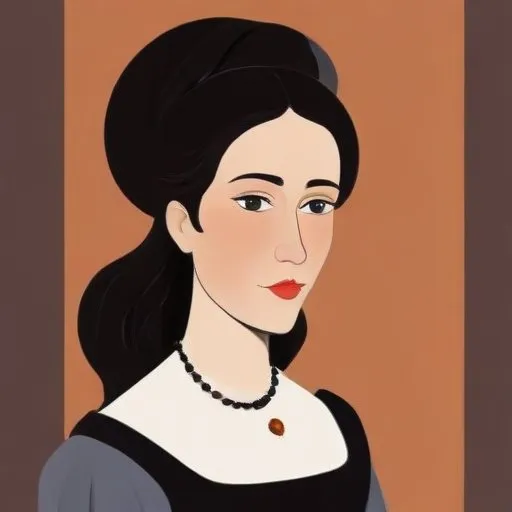
Duchess of Burgundy and mother of Louis XV, known for her strong will and influence on French politics during the early 18th century.
Marie Adlade of Savoy, born on 6 December 1685, was the eldest daughter of Victor Amadeus II, Duke of Savoy, and Anne Marie d'Orlans. As a member of the House of Savoy, she was destined for a life of royalty and played a significant role in shaping the future of the French monarchy.
As part of the Treaty of Turin, signed on 29 August 1696, Marie Adlade was betrothed to the Duke of Burgundy, Louis, further solidifying the alliance between the Kingdom of France and the Duchy of Savoy. This strategic marriage would eventually secure her position as the Duchess of Burgundy and, subsequently, the Dauphine of France.
Described as "doll-sized," Marie Adlade was known for her petite stature, chestnut hair, and striking features, including large, dark eyes surrounded by long eyelashes. She enjoyed a close relationship with her mother, who defied protocol by raising her children herself, and her grandmother, Marie Jeanne of Savoy, who played a significant role in her early life.
Marie Adlade's marriage to the Duke of Burgundy in 1697 produced three children, including the future King Louis XV of France. As the Duchess of Burgundy, she played an important role in the French court, eventually becoming the Dauphine of France upon the death of her father-in-law, Le Grand Dauphin, in 1711.
Although her life was cut short by measles in 1712, Marie Adlade's influence on the French monarchy was significant. As the mother of King Louis XV, she played a crucial role in shaping the future of the kingdom, and her marriage to the Duke of Burgundy cemented the alliance between France and Savoy.
Marie Adlade's life was marked by the tumultuous events of the late 17th and early 18th centuries. Her marriage and subsequent position in the French court took place amidst the backdrop of the Nine Years' War and the Treaty of Turin, which solidified the alliance between France and Savoy.
Marie Adlade of Savoy's life, though marked by tragedy and brevity, left an indelible mark on the French monarchy. As the Duchess of Burgundy and the mother of King Louis XV, her influence extended far beyond her lifetime, shaping the course of French history for generations to come.
Born in 1710
The monarch who ruled France from 1715 to 1774, known as the "Sun King's" great-grandson, and remembered for his extravagance, absolutism, and the decline of the French monarchy.
Born in 1721
The influential royal mistress who dominated the French court with her beauty, wit, and politics, shaping the country's art, fashion, and culture. She was a patron of the arts and a trendsetter in 18th-century Europe.
Born in 1755
The last queen of France before the French Revolution, known for her extravagance and mismanagement of the French economy, which contributed to the downfall of the monarchy.
Born in 1769
A French military leader who rose to prominence during the French Revolution and became Emperor of France, known for his military conquests and reorganization of Europe. He is also famous for his Napoleonic Code, which remains a foundation of modern law.
Born in 1652
The 18th-century Pope who banned Freemasonry and reformed the Roman Curia, leaving a lasting impact on the Catholic Church's governance and relations with secret societies.
Born in 1666
King of Sardinia from 1720 to 1730, he played a crucial role in the War of the Spanish Succession and was eventually crowned King of Sicily. He's known for his military campaigns and territorial expansions.
Born in 1720
Leader of the Jacobite rising of 1745, attempting to restore the Stuart dynasty to the British throne, and famously defeated at the Battle of Culloden. Romanticized as "Bonnie Prince Charlie" in Scottish folklore.
